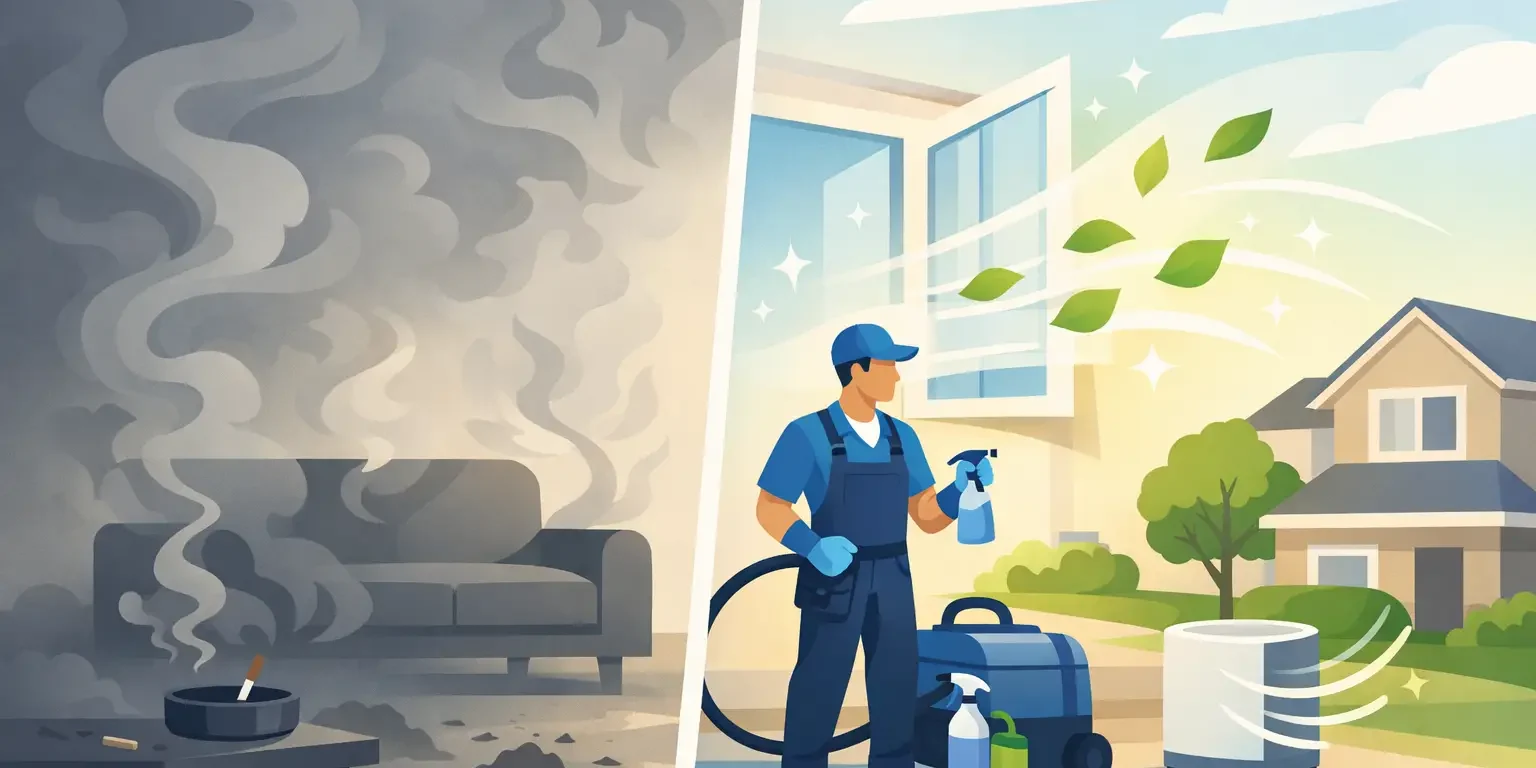
The smell usually hits first. Even after visible soot is cleaned up and the area looks under control, smoke odor can stay trapped in drywall, insulation, carpets, HVAC ducts, and furniture for weeks or months. If you are trying to figure out how to remove smoke odor, the key is understanding that the smell is not just in the air – it is in the residue left behind on and inside materials.
That distinction matters. Air fresheners, candles, and household sprays may cover the odor for a short time, but they do not remove the source. In a home or commercial property after a fire, smoke particles travel farther than most people expect. They settle into porous surfaces, circulate through mechanical systems, and react differently depending on what burned.
How to remove smoke odor the right way
Effective smoke odor removal starts with three priorities: safety, source removal, and material-specific treatment. If the fire was recent, make sure the property is safe to enter and that any electrical, structural, or air quality concerns have been addressed first. Smoke damage often comes with hidden hazards, especially after larger losses.
The next step is removing soot and residue before trying deodorization. This is where many cleanup attempts go wrong. If you skip directly to odor products without cleaning the residue, the smell tends to return because the contamination is still there. Odor removal works best when it follows a controlled cleanup process.
The final piece is knowing which materials can be restored and which ones should be replaced. Hard surfaces often respond well to proper cleaning. Porous materials like insulation, some ceiling tiles, heavily affected upholstery, and smoke-saturated carpet pad may not.
Why smoke odor lingers after a fire
Smoke is made up of microscopic particles and gases created by combustion. Those particles can be dry, oily, wet, protein-based, or a mix, depending on the heat level and the materials involved. A kitchen fire leaves a different residue than an electrical fire or a structural fire involving plastics, wood, and synthetic materials.
That is why smoke odor is not a one-size-fits-all problem. Some residues wipe away with the right cleaner. Others smear, absorb deeper into materials, or continue releasing odor long after the fire is out. If water was used to extinguish the fire, the added moisture can also push odor further into walls, flooring, and contents.
HVAC systems add another layer. If the system ran during or after the fire, smoke particles may have been distributed throughout the property. In that case, the odor source is not limited to the room where the fire started.
Start with ventilation, but do not stop there
Fresh air helps, especially in the first phase of cleanup. Open windows if weather and security allow, and use fans to create outward airflow rather than pushing contaminated air deeper into the property. Replace HVAC filters and avoid running the system until it has been inspected if there is a chance smoke entered the ductwork.
Ventilation reduces the immediate intensity of the smell, but it is not a complete fix. If smoke residue remains on ceilings, walls, soft goods, or inside the HVAC system, the odor will continue to cycle back. Think of ventilation as a support step, not the main solution.
Clean all affected surfaces before deodorizing
For light smoke damage, careful surface cleaning can make a major difference. Walls, ceilings, trim, cabinets, counters, doors, and non-porous flooring should be cleaned with products designed for smoke and soot residue. Standard household cleaners do not always work well, and some can make residues harder to remove.
Dry soot often needs to be lifted first with specialized sponges or controlled vacuuming using the right filtration. Rubbing soot into a wall or fabric can spread staining and embed contamination further. Once loose residue is removed, wet cleaning can begin using the correct method for the surface.
This is also where patience matters. Smoke travels upward and outward, so odor can come from places people overlook – the tops of cabinets, inside closets, around vents, on window coverings, and behind furniture. If only the obvious areas are cleaned, the smell usually stays.
Soft materials are often the hardest part
Curtains, upholstered furniture, rugs, carpet, mattresses, and clothing hold smoke odor more aggressively than hard surfaces. Some items can be professionally cleaned and deodorized. Others may not be worth restoring if the odor penetration is severe.
Carpet is a common example. Cleaning the top fibers may improve the smell, but if smoke and moisture reached the pad or subfloor, the odor can return. Upholstered furniture has a similar challenge because smoke can settle into padding, wood framing, and fabric at the same time.
For clothing and washable textiles, prompt laundering with odor-targeted treatment may help. For high-value or heavily affected contents, professional contents restoration is usually more reliable than repeated DIY cleaning.
How to remove smoke odor from HVAC systems
If smoke entered the heating and cooling system, deodorizing the rooms alone will not solve the problem. The system can continue reintroducing odor every time it turns on. Filters should be replaced, but filter changes alone are not enough if contamination reached ducts, registers, coils, or internal components.
Professional HVAC cleaning may be necessary, especially after a structural fire or any event with widespread smoke distribution. This is one of the clearest cases where it makes sense to bring in restoration professionals rather than trying to manage the issue with store-bought products.
Odor counteractants, thermal fogging, and ozone
Once residue is cleaned and damaged materials are removed, targeted deodorization can begin. This may include odor counteractants, thermal fogging, hydroxyl treatment, or ozone treatment, depending on the situation. Each method has a role, and each has limitations.
Thermal fogging can help neutralize odor in hard-to-reach areas by mimicking the way smoke penetrated materials. Hydroxyl and ozone equipment can help treat airborne and surface-level odor, but they are not substitutes for cleaning. If contamination is still present, the odor often returns.
Ozone in particular requires caution. It should only be used in controlled conditions by trained professionals because occupied use is not safe. It can be effective in certain settings, but it is not the first answer for every property and should never be treated like a shortcut.
When repainting helps and when it does not
Painting over smoke damage without proper cleaning almost always fails. The odor can bleed through, and stains may reappear. If walls or ceilings still carry residual odor after cleaning, sealing with an odor-blocking primer before repainting is often part of the restoration process.
That said, primer is not magic. It works best after soot removal, deodorization, and drying have already been completed. If the drywall itself is heavily saturated, replacement may be the better option.
Signs you need professional smoke odor removal
If the fire affected multiple rooms, involved the HVAC system, damaged insulation, or left visible soot on ceilings and contents, professional restoration is usually the faster and more reliable path. The same is true if the odor gets stronger when the property is closed up, if previous cleaning attempts have failed, or if occupants are experiencing irritation from the indoor air.
A restoration team can identify where the odor is actually coming from, not just where it is most noticeable. That matters because smoke often moves into attics, wall cavities, crawlspaces, and ventilation pathways that are easy to miss. A company focused on fire damage restoration, such as Fire and Flood Experts, approaches odor removal as part of a broader contamination and recovery process rather than a surface cleaning job.
What not to do
Do not use household fans to blast soot around before residue is stabilized. Do not shampoo carpets before determining whether the pad and subfloor are contaminated. Do not mask the smell with fragrances and assume the issue is solved. And do not repaint or seal surfaces before proper cleaning.
These steps can waste time, increase costs, and make professional restoration harder later. Smoke odor is persistent because the source is persistent. If you want the smell gone, the residue has to be dealt with directly.
The practical answer to how to remove smoke odor is this: clean the contamination, remove what cannot be saved, treat the air and hidden spaces, and verify that the HVAC system is not spreading the problem back through the property. When the work is thorough, the odor does not just fade – the space starts to feel usable again.