The first hours after a fire are rarely just about burned materials. Smoke gets into drywall, insulation, and HVAC lines. Water used to extinguish the fire keeps spreading. Soot starts etching glass, staining surfaces, and corroding metal fast. That is why the fire damage restoration process has to start with speed, control, and a clear plan.
For most property owners, the hardest part is not knowing what happens next. You may be looking at visible fire damage in one room while hidden smoke residue and water intrusion are affecting the rest of the structure. A professional restoration team is there to stabilize the property first, then move it through cleanup, drying, deodorization, and repairs in the right order.
What the fire damage restoration process actually involves
Fire restoration is not one task. It is a sequence of technical steps designed to make the property safe, prevent further damage, and return the structure to pre-loss condition as closely as possible. The exact scope depends on how hot the fire burned, what materials were involved, how long smoke circulated, and how much water was used during suppression.
A kitchen fire, for example, may leave heavy grease-based residue in a concentrated area but also send smoke odor through nearby rooms and vents. A larger structural fire can create charred framing, widespread soot contamination, and major water damage at the same time. That is why no serious restoration company should promise the same timeline or process for every loss.
Step 1: Emergency contact, inspection, and site stabilization
The process usually begins with an emergency response call. Once the scene is released for entry, restoration professionals inspect the property, identify immediate hazards, and determine whether the structure can be safely accessed. This is where experience matters. Fire damage often leaves unstable ceilings, weakened floors, damaged electrical systems, and compromised roofing.
Stabilization may include board-up services, roof tarping, and temporary containment. These steps protect the building from weather, unauthorized entry, and additional loss. In commercial settings, stabilization may also involve securing critical areas so business interruption does not get worse than it already is.
During this early stage, the team documents damage in detail. That record supports the restoration scope and helps with insurance communication. Good documentation is not paperwork for its own sake. It helps establish what was damaged by fire, what was affected by smoke, and what was impacted by suppression water.
Step 2: Damage assessment and restoration planning
Once the property is secure, the next phase is a detailed assessment. This determines what can be cleaned and restored, what must be removed, and what requires specialty treatment. Fire affects materials differently. Some surfaces respond well to cleaning, while others absorb odor and residue so deeply that replacement is the only practical option.
Drywall, insulation, carpet, cabinetry, and HVAC components often need close evaluation. The same is true for contents inside the property. Furniture, electronics, documents, and textiles may be restorable, but not always. The decision comes down to contamination level, heat exposure, replacement cost, and health or safety concerns.
This planning stage also sets the sequence of work. That matters more than many owners realize. If demolition starts before proper documentation, insurance disputes can follow. If deodorization begins before the source of contamination is removed, odor problems can return. Restoration is a technical workflow, not general cleanup.
Step 3: Water removal and structural drying
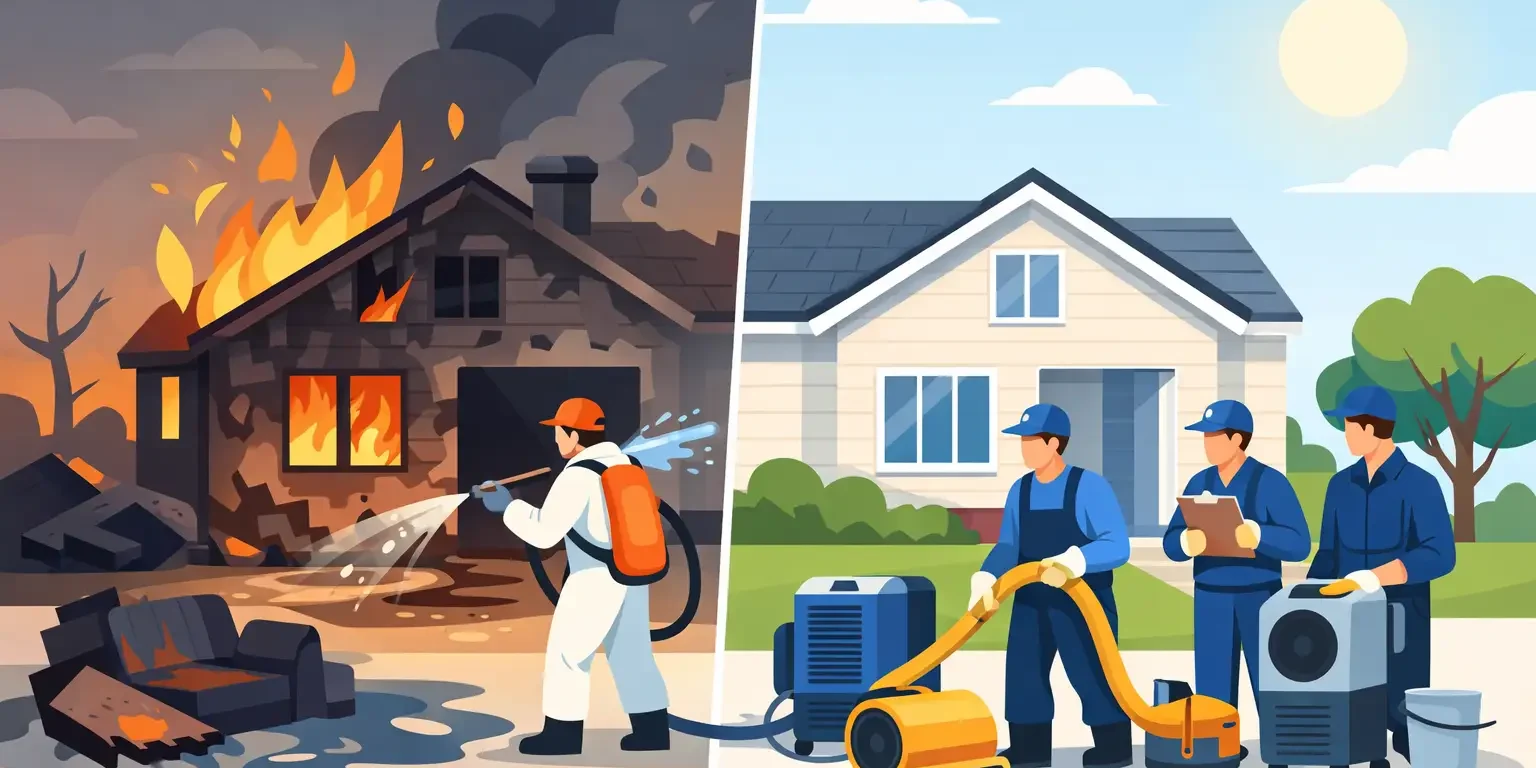
A lot of fire losses are also water losses. Firefighting efforts can leave standing water, saturated insulation, soaked framing, and wet subfloors. If drying is delayed, mold growth and material failure can quickly add to the original fire damage.
Water extraction comes first when there is active saturation. After that, commercial drying equipment is used to bring moisture levels down in structural materials. Air movers, dehumidifiers, and moisture monitoring tools are standard here. The goal is not to make the building feel dry. It is to verify that hidden moisture is no longer trapped behind walls, under flooring, or inside assemblies.
This is one of the main reasons fire restoration should not be treated as a simple repair project. A contractor may be able to replace visible materials, but if drying is incomplete, the property can develop secondary damage that costs more to fix later.
Step 4: Smoke and soot removal
Smoke and soot are often more widespread than the burn area itself. Fine particles can travel through open spaces, settle inside cabinets, cling to ceilings, and circulate through HVAC systems. Different types of fires also create different residues. Dry soot, wet soot, protein residue, and fuel-related residues all behave differently and require different cleaning methods.
That is why technicians do not use the same approach on every surface. Some materials can be dry-cleaned with specialty sponges. Others require wet cleaning, abrasive methods, or controlled removal. Using the wrong method can smear soot, drive residue deeper into a surface, or permanently damage finishes.
HVAC cleaning may also be necessary if the system circulated smoke. If that step is skipped, the property can continue to spread odor and particulate contamination even after visible cleanup is complete.
Step 5: Odor removal and air quality treatment
One of the biggest mistakes after a fire is assuming odor can be handled with masking agents or basic cleaning products. Persistent smoke odor means smoke particles are still present somewhere in the structure, contents, or ventilation system. Covering the smell is not restoration.
Proper odor removal starts after contaminated materials are cleaned or removed. Depending on the loss, technicians may use thermal fogging, hydroxyl generators, air scrubbers, or other professional deodorization methods. The right choice depends on occupancy, material type, and how deeply the odor has penetrated.
This part of the fire damage restoration process can take time, especially in older buildings or properties with porous materials. If smoke reached insulation, framing cavities, or soft contents, deodorization becomes more involved. Fast treatment helps, but there are cases where replacement is still the better option.
Step 6: Content cleaning and salvage
Many fire losses involve more than structural damage. Clothing, furniture, inventory, electronics, and personal items may be affected by soot, smoke, or water. Content restoration can reduce replacement costs, but only if items are assessed and handled correctly.
Some belongings can be cleaned onsite. Others need to be packed out for specialized treatment. Electronics require particular caution because residue can corrode internal components even when the item looks intact from the outside. Documents and photographs may also require specialty drying or restoration methods.
For homeowners and property managers, this stage can be emotionally difficult. Not every item can or should be saved. A qualified team should be direct about what is recoverable and what is not, because false reassurance only delays decisions and adds frustration.
Step 7: Repairs, reconstruction, and final restoration
Once cleanup, drying, and deodorization are complete, the property moves into repairs and reconstruction. This can range from replacing drywall and flooring to rebuilding major structural sections. The scope depends on the severity of the loss and whether the building systems were affected.
In smaller losses, restoration may end with targeted repairs and painting. In larger losses, reconstruction can involve framing, electrical, mechanical, insulation, finishes, and code-related upgrades. This is where project coordination matters. The best outcome comes from moving from mitigation to rebuild with a clear scope, documented progress, and realistic expectations.
Not every fire-damaged property returns to normal on the same timeline. Occupied homes may need phased repairs. Commercial buildings may require work sequencing around tenant access, equipment protection, or reopening deadlines. There is no single template that fits every property.
Insurance coordination is part of the job
Most owners are also dealing with an insurance claim while trying to protect the property. A restoration company should help support that process with documentation, photos, moisture records, and detailed scope information. That does not mean every claim is simple or every item is automatically covered. Policy terms, deductibles, exclusions, and depreciation all affect the outcome.
Still, experienced restoration professionals can help reduce confusion by documenting the loss properly and communicating the technical basis for cleanup, removal, and repairs. For many clients, that support is nearly as important as the physical restoration work itself.
Why speed matters after a fire
Fire damage keeps changing after the flames are out. Soot residues become harder to remove. Odors settle deeper. Water continues to migrate. Corrosion starts on metal surfaces and electronics. Delays can turn a manageable restoration project into a larger, more expensive one.
That is why specialized response matters. A company focused on fire and water losses, such as Fire and Flood Experts, understands that post-fire conditions are layered. Burn damage, smoke contamination, moisture intrusion, and structural concerns all have to be managed together, not as separate problems.
If you are facing a fire loss, the best next step is not guessing which damage matters most. It is getting a qualified restoration team onsite quickly, so the property can be stabilized, documented, and moved into the right recovery plan before more damage takes hold.
The sooner the process starts, the more options you usually have to protect the structure, salvage materials, and regain control of the situation.