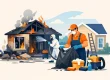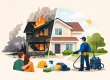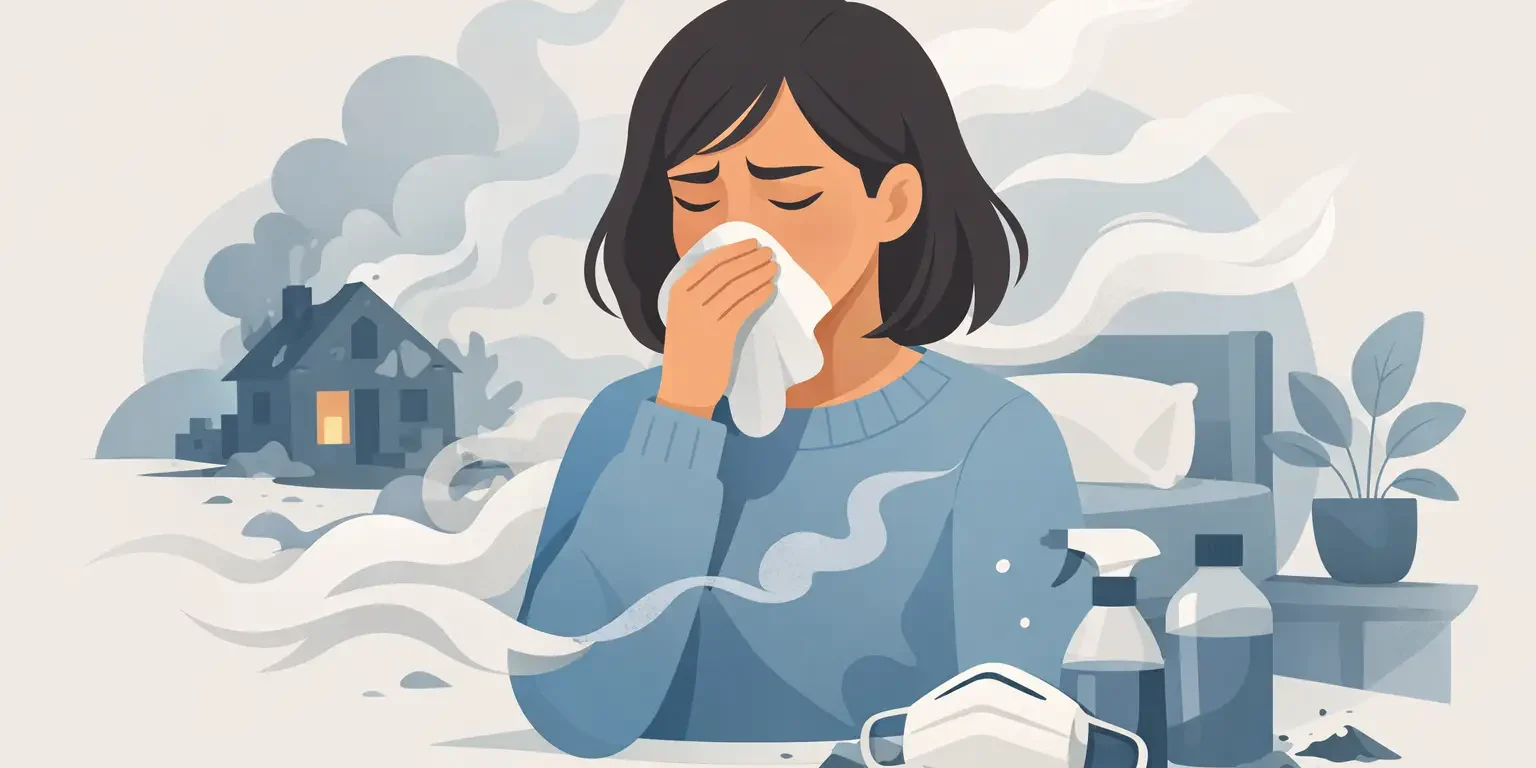
A fire does not have to destroy a structure to create a serious health problem. If you are asking, can smoke damage make you sick, the short answer is yes. Even after the flames are out, smoke particles, soot, and chemical residue can stay in the air, settle into surfaces, and keep affecting the people who live or work in the property.
That risk is often underestimated because smoke damage does not always look dramatic. A room may only have a strong odor, light staining, or dust-like residue around vents, walls, ceilings, and contents. But the real issue is what that residue contains and how long it remains in the building if cleanup is delayed or done incorrectly.
Can smoke damage make you sick after a fire?
Yes, and the severity depends on several factors: what burned, how much smoke spread, how long exposure lasted, how well the area was ventilated, and whether the building was professionally cleaned. Smoke from burned wood is one thing. Smoke from insulation, plastics, electronics, furniture foam, flooring adhesives, wiring, and synthetic fabrics is another.
When modern building materials and household contents burn, they can release a mix of fine particles and toxic byproducts. Those contaminants can irritate the eyes, nose, throat, and lungs. In heavier exposure situations, they can also trigger headaches, nausea, dizziness, fatigue, and breathing problems.
For some people, symptoms show up right away. For others, the reaction builds over time after repeated exposure inside a smoke-damaged home, apartment, office, or commercial space. That is why a property that looks mostly intact can still be unsafe to occupy without proper assessment.
What in smoke damage causes health problems?
Smoke residue is not just dirt. It is a mix of microscopic particles, acids, ash, and chemical compounds produced during combustion. Soot is especially concerning because the particles are extremely small and can be inhaled deep into the respiratory system.
Residue can settle into porous materials such as drywall, insulation, carpet, upholstery, ceiling tiles, and HVAC components. Once it is embedded, normal household cleaning rarely removes it completely. In some cases, disturbed soot can become airborne again when someone walks through the space, turns on the HVAC system, or starts demolition without containment.
The exact health risk depends on the source. A kitchen flare-up that produced limited smoke in one area is not the same as a structure fire that sent smoke through multiple rooms and ductwork. A commercial building with burned plastics, equipment, and inventory may present a more complex contamination problem than a small residential fire. It depends on the fire load, the spread pattern, and what materials were consumed.
Common symptoms after exposure
People exposed to smoke damage often report burning eyes, coughing, sore throat, sinus irritation, chest tightness, shortness of breath, headaches, and nausea. Skin irritation can also happen if residue is left on surfaces, fabrics, or personal items.
Those symptoms may be more intense in enclosed spaces with poor ventilation. They can also worsen when smoke odor persists, because odor is often a sign that contamination remains in materials or air pathways.
Who is at higher risk?
Children, older adults, pregnant women, and anyone with asthma, COPD, allergies, or other respiratory conditions are usually more vulnerable. The same goes for people with compromised immune systems or underlying heart conditions.
In a mixed-use building, apartment complex, school, office, or healthcare setting, that matters even more. A level of contamination one person tolerates may trigger a serious reaction in someone else.
Why smoke damage keeps causing problems after the fire
One of the biggest mistakes property owners make is assuming the danger ends when the smoke clears. In reality, smoke damage can continue affecting indoor air quality long after the fire department leaves.
Smoke migrates. It moves through hallways, wall cavities, attics, crawl spaces, and HVAC systems. It clings to hard surfaces and penetrates soft materials. If those materials are not cleaned, sealed, or removed correctly, the contamination can remain active inside the structure.
That is also why DIY cleanup often falls short. Wiping visible soot with the wrong product can smear residue deeper into surfaces or spread acidic deposits. Vacuuming with standard equipment may recirculate particles instead of capturing them. Using fragrances or household deodorizers only masks the odor. It does not remove the contamination causing it.
Can smoke damage make you sick even without visible soot?
Yes. Visible damage is not the only measure of risk. Some of the most problematic smoke particles are too fine to notice easily, especially once they have settled into fabric, insulation, or ventilation systems.
A property may smell like smoke even after walls are repainted or floors are cleaned. That usually means residue remains somewhere in the structure or contents. If the HVAC system was running during the fire, contaminants may have been distributed far beyond the room where the fire started.
This matters in rental properties and commercial buildings where people re-enter quickly. If occupants return before proper smoke remediation is completed, they may continue breathing contaminated air or touching affected surfaces without realizing it.
Signs smoke damage may still be affecting your property
Persistent smoke odor is one of the clearest warning signs. Yellowing or dark staining on walls, ceilings, vents, blinds, and around door frames is another. You may also notice increased coughing, throat irritation, or headaches when spending time inside the building.
If the HVAC system produces a burnt smell when it runs, that deserves immediate attention. The same is true if soot appears around supply vents or if residue transfers onto hands, clothing, or cleaning cloths. In commercial spaces, complaints from tenants, staff, or customers about air quality should not be brushed aside.
What proper smoke remediation should include
Effective smoke cleanup starts with identifying how far the contamination spread. That includes more than the room with visible fire damage. A restoration team should inspect adjacent rooms, hidden cavities where applicable, contents, and the HVAC system if smoke circulation is possible.
From there, the response typically involves source removal, specialized soot cleaning, odor treatment, HEPA filtration, and disposal of materials that cannot be restored safely. In some cases, sealing affected structural materials is part of the process, but sealing should not be used as a shortcut for incomplete cleaning.
Different residues require different methods. Dry soot, wet soot, protein residue, and fuel-related smoke do not clean the same way. The wrong approach can make staining, odor, and contamination worse. That is why fire damage restoration is not just janitorial work. It is a technical remediation process.
For occupied buildings, containment and air management are also critical. The goal is to keep contaminants from spreading while cleanup is underway. In larger losses, documentation may also be necessary for insurance and scope validation.
When to call a professional
If the fire affected more than a very small, contained area, professional evaluation is the safest move. That includes situations where smoke odor lingers, soot is visible, multiple rooms were affected, or anyone in the building is experiencing symptoms.
You should also call for expert help if smoke reached your duct system, attic, insulation, or contents, or if the fire involved plastics, appliances, electrical components, or synthetic materials. Those burns can leave behind more complex residues than a simple paper or wood source.
For landlords and commercial property managers, speed matters. Delayed action can increase health complaints, expand cleaning scope, and create longer business interruption. A specialist restoration company like Fire and Flood Experts approaches smoke damage as both a property problem and an indoor environmental concern.
What to do right away
Do not assume fresh air and a few fans will solve the problem. Limit unnecessary occupancy, especially for children, older adults, and anyone with respiratory issues. Avoid disturbing soot-covered materials. Do not run the HVAC system unless a qualified professional confirms it is safe to do so.
If you must enter the property, keep time inside as short as possible and focus on essential tasks only. The priority should be assessment, containment, and a plan for proper remediation.
Smoke damage is not always obvious, but it can still affect your health, your building, and your recovery timeline. If something feels off after a fire – the air, the odor, the residue, or how people feel inside the space – trust that signal and get it checked before a manageable problem turns into a longer one.