A burst supply line at 2 a.m. does not give you time to research. If you are figuring out how to clean up water damage, the first priority is not appearance – it is stopping the spread, protecting the structure, and reducing the chance of mold, electrical hazards, and costly secondary damage.
Water damage moves fast. Drywall absorbs it. Baseboards trap it. Flooring can hold moisture long after the surface looks dry. That is why a proper cleanup is part emergency response, part damage control, and part moisture management. A quick towel-and-fan approach may help with a minor spill, but it is not enough for a soaked room, hidden wet materials, or contaminated water.
How to clean up water damage: first actions that matter
Before you touch anything, identify whether the area is safe to enter. If water is near outlets, appliances, or electrical panels, keep out until power to the affected area is shut off. If the source involves sewage, storm flooding, or visibly contaminated water, treat it as a health hazard and avoid direct contact.
Next, stop the source if you can do it safely. Shut off the local supply valve for a leaking fixture or the main water line if a pipe has failed. For roof or weather-related intrusion, contain active drips with buckets and move contents away from the wet area. Fast source control is what keeps a manageable loss from becoming a major restoration project.
Once the water is no longer actively entering the space, document the damage. Take clear photos of wet flooring, damaged drywall, stained ceilings, affected furniture, and any visible source. This matters for insurance, but it also gives you a baseline before cleanup and demolition begin.
Remove standing water as quickly as possible
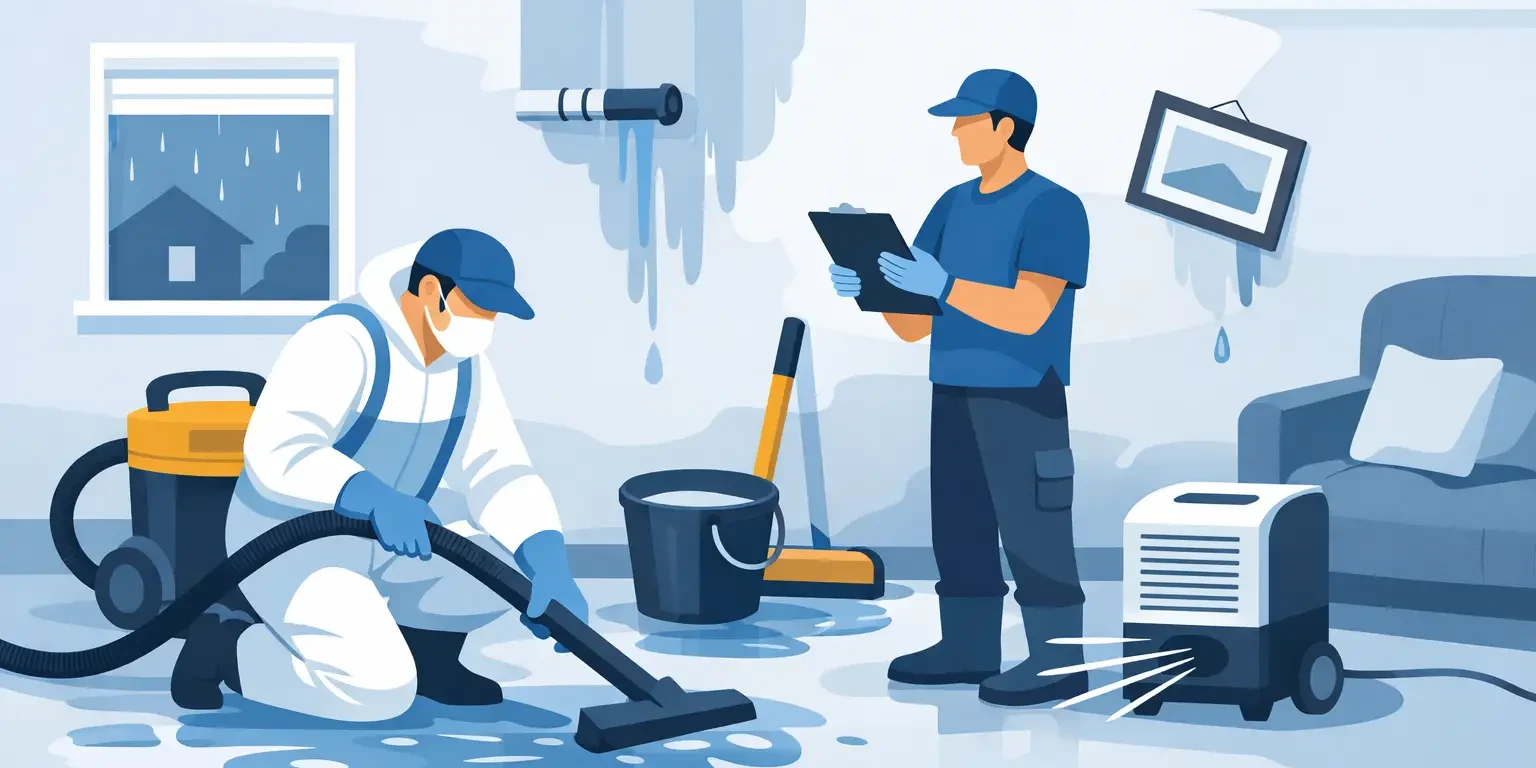
Standing water is where cleanup starts. The right method depends on the volume. For a small, clean-water event, you may be able to use towels, mops, and a wet/dry vacuum. For anything more than a minor incident, water extraction equipment is faster and far more effective.
Time matters here. The longer water sits, the more it migrates into subfloors, wall cavities, insulation, and trim. Hardwood can cup. Laminate often swells and fails. Carpet pad becomes a moisture reservoir. Even concrete slabs can hold moisture that continues to affect flooring adhesives and finishes.
If the water came from a broken clean-water line and was addressed quickly, some materials may be salvageable. If water sat for too long or came from outside flooding, sewer backup, or appliance discharge with contamination, cleanup becomes more restrictive. Porous materials exposed to contaminated water are often not candidates for cleaning and drying.
Sort contents before they create more damage
Move wet items out of the affected area as soon as possible. Rugs, upholstered furniture, paper goods, electronics, boxes, and soft contents can keep moisture trapped in the room. They also slow airflow, which slows drying.
Separate contents into three groups: salvageable, questionable, and unsalvageable. Hard, non-porous items can often be cleaned and dried. Upholstered items, mattresses, swollen particle board furniture, and wet cardboard usually require closer evaluation and are often losses depending on water category and exposure time.
Do not stack wet belongings in another room and assume they will dry on their own. Spread items out, increase airflow, and inspect them for odor, staining, and material breakdown. Secondary damage to contents is common when people focus only on the floor and ignore what was sitting on it.
Remove wet materials that cannot dry properly
One of the biggest mistakes in water cleanup is trying to save every material. Some materials simply do not dry well in place. Carpet padding, saturated insulation, swollen laminate, and water-damaged baseboards often need removal to let the structure dry.
Drywall is a case-by-case call. A small clean-water event caught early may allow limited drying if saturation is minor. But if drywall is soft, swollen, stained throughout, or exposed to contaminated water, removal is usually the safer path. The same goes for insulation inside exterior walls or around plumbing chases.
This is where experience matters. Removing too little leaves hidden moisture behind. Removing too much increases repair costs unnecessarily. The goal is controlled demolition based on moisture impact, not guesswork.
Dry the structure, not just the surface
If you want to know how to clean up water damage correctly, this is the part most people underestimate. Drying is not the same as removing visible water. Surfaces can feel dry while framing, subfloors, and wall cavities remain wet.
Use air movement and dehumidification together. Fans help evaporate moisture from wet materials. Dehumidifiers remove that moisture from the air so it does not settle elsewhere. Open windows only if outdoor humidity is lower than indoor conditions. In many parts of the US, especially in summer, open windows can work against you.
Focus airflow across wet surfaces, not randomly around the room. Lift carpet edges if the carpet is being dried and is still a salvage candidate. Remove toe-kicks or drill access points only if you understand how to do it without worsening the damage. Drying equipment placement affects results.
A moisture meter is the most reliable way to know whether structural materials are still wet. Without one, you are estimating. That is why many water losses that look fine after a few days still develop odor, staining, or mold later. Professional drying is measured, documented, and adjusted as the structure responds.
Clean and disinfect based on the water source
Not all water damage is the same. Clean water from a broken supply line is different from gray water from an appliance overflow, and both are very different from black water involving sewage or floodwater. Your cleaning approach has to match that risk level.
For clean-water losses, affected hard surfaces can usually be cleaned with appropriate detergent and then dried thoroughly. Gray water requires more caution because it may contain contaminants that make direct contact and material salvage less predictable. Sewage and floodwater losses require proper protective equipment, containment, and disinfection protocols. In those cases, DIY cleanup often creates unnecessary health risk.
Do not rely on fragrance products or household sprays to solve a contamination issue. Odor masking is not cleaning. The issue is source removal, material evaluation, and proper antimicrobial treatment where appropriate. Overusing disinfectants is not helpful either. The key is using the right method for the actual category of water involved.
Watch for hidden damage and early mold growth
Water rarely stays where you first see it. It runs behind baseboards, under flooring, through wall cavities, and into adjacent rooms. A ceiling stain below an upstairs bathroom may represent a much larger wet area than the stain itself suggests.
Pay attention to warning signs over the next several days. Musty odor, peeling paint, buckling floorboards, swollen trim, persistent humidity, and discoloration can all indicate moisture that was missed. Mold can begin developing quickly when materials stay damp, especially in enclosed spaces with limited airflow.
If you suspect hidden moisture, thermal imaging and moisture mapping help identify where drying or removal is still needed. This is often the difference between a contained repair and a recurring problem that keeps resurfacing after repainting or flooring replacement.
When professional water damage cleanup is the right call
Some situations need professional response immediately. That includes water affecting multiple rooms, damage involving ceilings or wall cavities, contaminated water, hardwood or specialty flooring exposure, commercial spaces, and any loss that has been wet for more than a day or two.
Professional restoration teams bring extraction equipment, dehumidifiers, air movers, moisture meters, and drying plans built around the structure itself. They also understand material salvage limits, contamination protocols, and documentation that supports insurance claims. For property managers and commercial operators, speed matters even more because downtime affects tenants, operations, and liability.
A specialist response can also prevent a common cost spike: paying once for cleanup and then again for mold remediation or reconstruction caused by incomplete drying. Fire and Flood Experts handles this type of loss with that bigger picture in mind – stop the damage, dry the structure, and reduce what has to be rebuilt.
What not to do during water damage cleanup
Do not wait to see if it dries on its own. Do not paint over stains before confirming the material is dry. Do not leave wet carpet pad in place. Do not run household fans into contaminated water areas without containment. And do not assume a room is dry because the surface no longer feels damp.
The trade-off in water damage cleanup is simple. Moving too slowly increases damage. Acting too aggressively without understanding the materials can increase unnecessary demolition. The best results come from quick action, safe decisions, and drying that is verified, not guessed.
If you are dealing with water damage right now, think beyond cleanup as a cosmetic task. Treat it like a time-sensitive structural issue, because that is exactly what it is. The sooner you remove the water, evaluate the materials, and get the building dry, the better your chances of keeping the damage contained.