Water dripping from a ceiling is not just a roofing problem. It can soak insulation, weaken drywall, damage electrical systems, ruin inventory, and create conditions for mold growth behind finished surfaces. A fast, disciplined roof leak emergency response protects people first, limits the spread of water, and gives restoration professionals the best chance to dry and recover affected materials.
The goal is not to perform a permanent repair in the middle of a storm. The goal is to control the emergency safely until the source can be repaired and the property can be properly dried.
Roof Leak Emergency Response Starts With Safety
Do not stand beneath a sagging ceiling, especially if the area is actively dripping or bulging. Water can add substantial weight to drywall and ceiling materials. A collapse may happen with little warning, and the water may have traveled farther than the visible stain suggests.
If water is near light fixtures, ceiling fans, outlets, electrical panels, or equipment, avoid the area. Shut off power to the affected portion of the property only if you can do so without stepping through water or approaching an unsafe electrical condition. When there is any uncertainty, leave the electrical work to a qualified professional.
For commercial properties, restrict access immediately. Move employees, tenants, customers, and visitors away from wet floors and affected rooms. Place warning signs around slip hazards, and notify building maintenance or management according to your emergency procedures.
A roof leak can also expose occupants to contaminated water. Rainwater may pick up debris, bird droppings, insulation fibers, or other contaminants as it moves through the roof assembly and interior cavities. Wear gloves and use caution when handling wet materials.
Stop Water From Spreading Inside
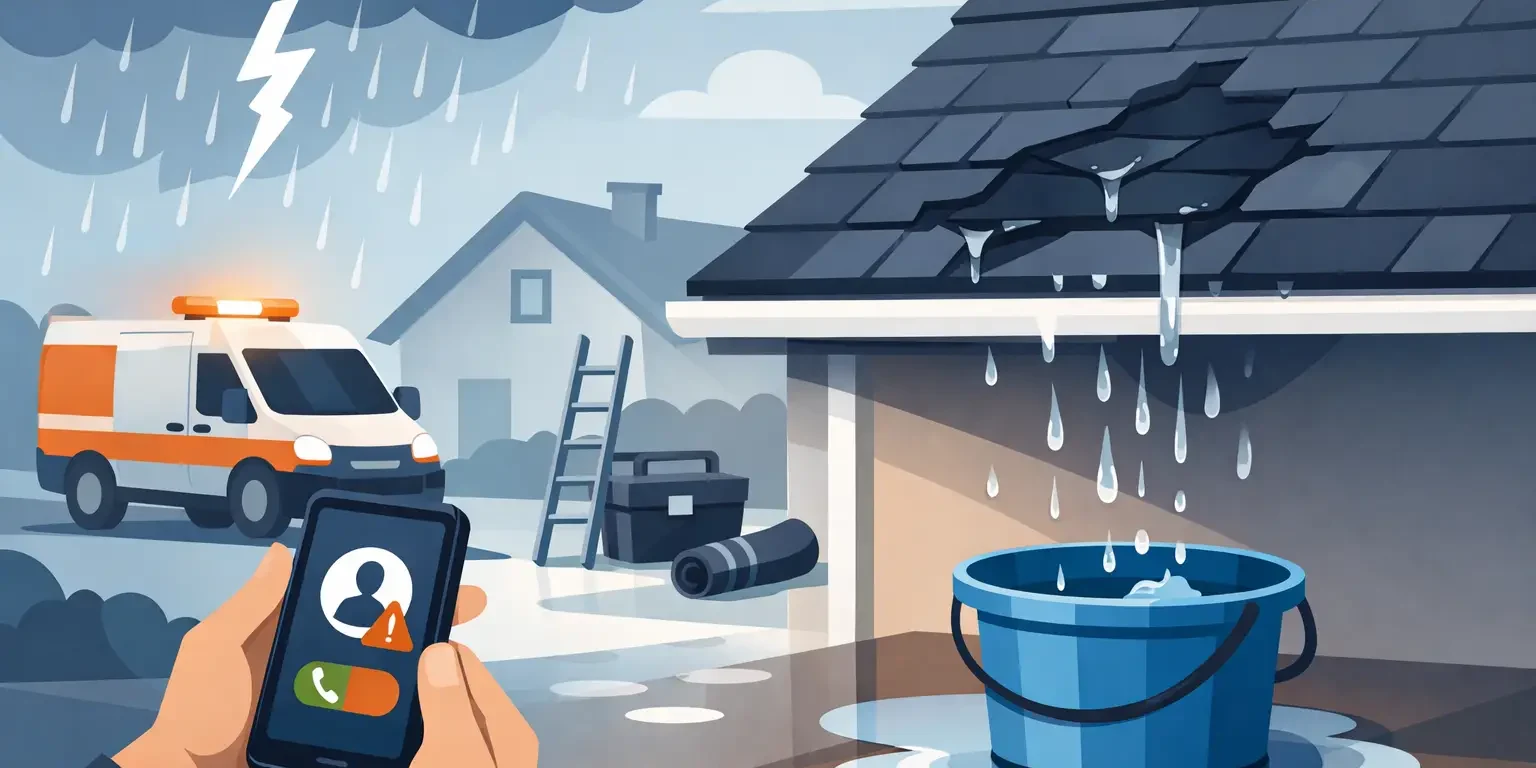
Once the area is safe to enter, focus on catching and redirecting water. Place buckets, trash cans, or other stable containers beneath active drips. Use towels around the containers to manage splashing and protect nearby flooring.
Move furniture, electronics, files, merchandise, and other contents away from the wet area. If an item cannot be moved, raise it off the floor using blocks or plastic bins, when safe to do so. Avoid stacking wet belongings together. That traps moisture and can transfer dyes, cause wood finishes to bleed, and accelerate mold growth.
If water is pooling on a ceiling and the ceiling is already sagging, do not puncture it unless you have been trained to do so and can perform the work safely. Releasing pooled water can reduce the chance of a broader collapse, but it also creates a sudden, heavy discharge and may expose electrical hazards. In many cases, the safer decision is to isolate the area and wait for emergency restoration support.
Use towels, mops, or a wet vacuum on accessible hard flooring if the water is limited and there is no electrical risk. Do not use a standard household vacuum on water. It is not designed for wet extraction and can create a shock hazard.
Protect what matters most
Prioritize items that cannot be easily replaced: paper records, computers, medications, irreplaceable family items, tenant files, and business equipment. Take quick photos before moving damaged contents if possible. Documentation helps establish their original condition and can support an insurance claim.
For paper documents, avoid trying to separate soaked pages. Place them in a dry area with airflow and get professional guidance quickly. Wet records can often be stabilized, but handling them aggressively can cause more loss.
Find the Source Without Taking Unnecessary Risks
A visible drip does not always sit directly below the roof opening. Water can run along rafters, decking, pipes, wiring, or framing before it enters the ceiling. The leak may originate several feet away from the water damage you can see indoors.
From inside, look for obvious clues such as a roof penetration, damaged flashing, a skylight, an attic vent, or a recently repaired section of roof. Do not enter an attic if the ceiling framing appears unstable, the space is wet around electrical wiring, or water is actively coming through the roof deck.
Avoid climbing onto a wet roof. Emergency roof work is dangerous in dry conditions and becomes far more hazardous during rain, wind, ice, or low visibility. A tarp can be an effective temporary measure, but it must be installed securely and only when conditions allow safe access. An improperly placed tarp can fail, tear loose, or cause additional damage.
If weather conditions are still severe, interior containment and professional response are usually the right next steps. Once conditions improve, a qualified roofing professional can identify the entry point and make an appropriate temporary or permanent repair.
Document the Damage Early
Before cleanup changes the scene, photograph and video record the affected areas. Capture the active leak, ceiling stains, wet flooring, damaged contents, exterior conditions visible from the ground, and any temporary protective measures you take.
Write down when the leak was discovered, when rain or weather events began, which rooms are affected, and what actions were taken. For a commercial site, include tenant notifications, equipment affected, and any operational interruption. This creates a clear timeline for property management, insurers, and restoration teams.
Do not throw away damaged materials until your insurer or restoration professional has had an opportunity to assess them, unless the materials present an immediate safety or sanitation concern. Save receipts for emergency supplies, temporary protective work, and other reasonable loss-mitigation expenses.
Insurance coverage depends on the policy and the cause of loss. Damage from a sudden storm-created opening may be handled differently than damage tied to long-term roof deterioration or deferred maintenance. Reporting the loss promptly and preserving evidence gives you a stronger starting position regardless of the coverage decision.
Drying Cannot Wait for the Roof Repair
A common mistake is waiting until the roof is repaired before addressing the interior water damage. Stopping the source is essential, but drying should begin as soon as conditions are safe. Wet insulation, carpet padding, ceiling cavities, and wall systems can retain moisture long after surface water has been removed.
Drying a property correctly is more than placing a few fans in the room. Restoration professionals assess the category of water, identify affected materials, measure moisture levels, extract water, establish controlled airflow and dehumidification, and monitor progress until materials reach an acceptable drying standard.
Some materials can be dried and saved. Others, including saturated insulation, swollen particleboard, delaminated flooring, and compromised drywall, may need removal. The right decision depends on how long materials were wet, how deeply water traveled, the type of material involved, and whether contamination is present.
A roof leak in an attic can be especially deceptive. Insulation may hold water while the room below appears only lightly stained. Water can also migrate down wall cavities and emerge later at baseboards or lower-level ceilings. Moisture mapping helps locate these hidden paths before odor, staining, or microbial growth develops.
When to Call for Emergency Restoration
A small, contained drip from a known source may only need a roofer and basic cleanup. The situation changes when water reaches finished rooms, electrical components, structural materials, multiple floors, or valuable contents.
Request emergency restoration help when you see a sagging ceiling, wet insulation, spreading stains, soaked carpet or flooring, water near electrical systems, visible mold, or a leak that continued for hours before discovery. Commercial properties should also act quickly when water affects operations, tenant spaces, inventory, server rooms, or safety systems.
Fire and Flood Experts can help coordinate the urgent interior response after a roof leak, including water extraction, moisture inspection, structural drying, cleanup, and restoration planning. The roofing repair and the water mitigation effort should work in sequence: secure the roof as soon as it is safe, then dry the building thoroughly enough to prevent secondary damage.
After the Immediate Emergency
Once the leak is contained, do not assume the problem is over because the dripping stopped. Continue checking ceilings, walls, baseboards, flooring, and attic spaces for new staining, soft materials, peeling paint, musty odors, or changes in humidity. These signs can indicate moisture still trapped inside the structure.
Ask for clear documentation of moisture readings, affected materials, drying equipment, and completed work. For landlords and facility operators, retain these records with the incident file. They can be useful for insurance, tenant communication, maintenance planning, and future property decisions.
A roof leak may begin as a single drip, but the response in the first few hours determines whether it becomes a limited repair or a major restoration project. Keep people out of danger, contain the water, document what happened, and bring in qualified help before hidden moisture has time to take hold.