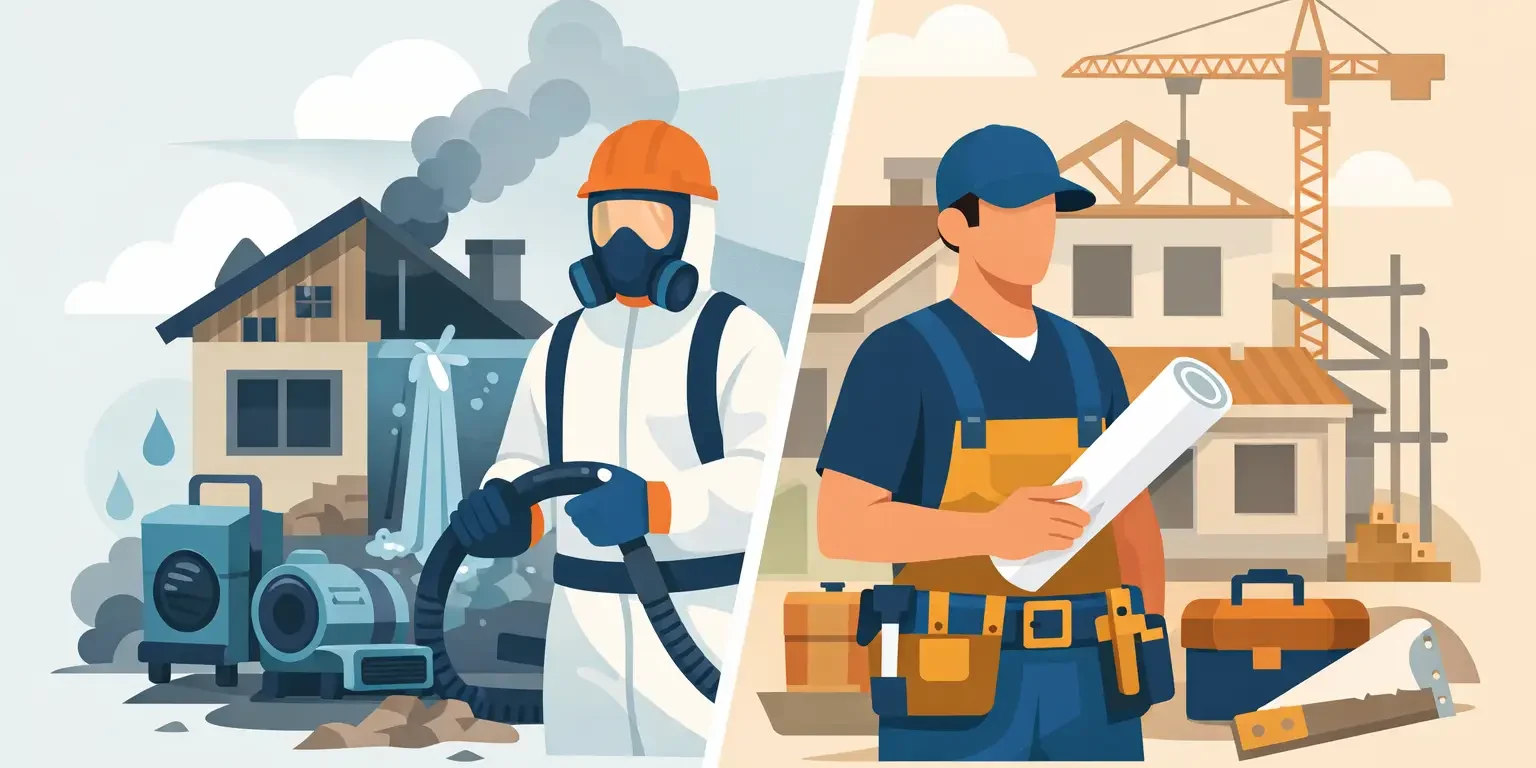
A burst pipe at 2 a.m., a kitchen fire, or rising floodwater creates a decision that cannot wait: restoration company versus general contractor. Both may repair property, but their roles are not the same. The first hours after a loss are about stopping damage, protecting health and safety, documenting conditions, and preserving as much of the structure as possible. That is restoration work.
A general contractor is often the right professional for planned construction or a defined rebuild. But when water, smoke, soot, mold risk, or contamination is still affecting the property, repairs should not begin before the loss is stabilized. Installing new materials over unresolved damage can turn a manageable claim into a larger, more expensive problem.
Restoration Company Versus General Contractor: The Core Difference
A restoration company is built to respond to property damage caused by water, fire, smoke, flooding, sewage backups, storms, and similar events. Its work begins with mitigation: the actions that limit additional loss and make the property safe enough to recover. This can include emergency water extraction, structural drying, board-up, roof tarping, smoke and soot removal, odor control, debris removal, cleaning, and documentation.
A general contractor manages construction projects. Their strengths typically include estimating rebuild work, coordinating skilled trades, obtaining permits when required, scheduling construction, and completing renovations or structural repairs. They may be highly qualified builders, but many are not equipped for the technical, time-sensitive work required immediately after a disaster.
The distinction matters because damage does not pause while estimates are being gathered. Wet drywall can deteriorate. Moisture can migrate under flooring and behind cabinets. Smoke residue can corrode metal surfaces and continue to release odors. Contaminated water can create a health concern. A restoration specialist is trained to identify those conditions and act before they spread.
What Happens During Emergency Restoration
Restoration is more than cleaning up visible damage. A professional response starts with an assessment of the loss source, affected materials, safety conditions, and extent of moisture or contamination. The team then develops a mitigation plan based on what happened and how far the damage has traveled.
For a water loss, that may mean locating and stopping the source, extracting standing water, removing unsalvageable materials, placing commercial drying equipment, monitoring moisture levels, and documenting progress until materials reach an acceptable dry standard. The goal is not simply to make the room look dry. It is to address hidden moisture that could damage the structure or support microbial growth later.
After a fire, the priorities may include securing openings, assessing structural and electrical hazards, removing damaged contents, cleaning soot from affected surfaces, controlling odors, and preventing secondary damage from firefighting water. Smoke can move well beyond the room where the fire started, entering HVAC pathways, closets, wall cavities, and adjacent units. A surface-level cleaning is rarely enough.
Restoration companies also understand how to organize the job around an insurance claim. They can document emergency conditions, equipment use, affected materials, and mitigation steps in a way that helps establish what occurred and why immediate work was necessary. The property owner still controls the claim and should review all documents, but clear records reduce confusion at a stressful time.
When a General Contractor Is the Better Choice
A general contractor is often the better choice after emergency mitigation is complete and the project moves into reconstruction. This might include reframing walls, installing insulation and drywall, replacing cabinets, repairing roofing, rebuilding a bathroom, installing flooring, or restoring a commercial space to operating condition.
They are also appropriate for projects with no active damage event. If you are remodeling a kitchen, updating a tenant space, building an addition, or replacing finishes due to age and wear, you need construction expertise rather than emergency mitigation.
Some restoration companies provide reconstruction services in-house or coordinate them through qualified construction professionals. That can simplify the handoff from cleanup to rebuild. However, property owners should still ask who is responsible for each phase, what work is included, whether permits are needed, and how changes will be approved.
The best choice is not always one company or the other. On larger losses, the right approach may involve a restoration specialist first, followed by a general contractor for the rebuild. What matters is that the sequence protects the property.
Why Repairing Too Soon Can Create Bigger Problems
The most common mistake after water or fire damage is treating the event as a simple repair job. Replacing damaged drywall or flooring before the building is dry and clean may hide the problem instead of resolving it.
For example, a contractor may be ready to replace a water-damaged ceiling. But if moisture remains above that ceiling or has traveled into insulation and framing, closing the area can trap wet materials. The result may be staining, odor, damaged finishes, or mold growth that requires another round of demolition.
Fire losses create similar issues. Fresh paint does not remove soot contamination from porous materials, and it will not eliminate smoke odor that has penetrated insulation, fabrics, ducts, or unfinished surfaces. Proper cleaning and odor treatment must occur before reconstruction materials are installed.
This does not mean a general contractor cannot be part of the solution. It means reconstruction should follow verified mitigation, not replace it.
Questions to Ask Before You Hire
Whether you hire one company for the entire project or separate specialists, ask direct questions before work begins. A capable provider should explain the scope clearly and give you practical answers.
Ask how quickly they can respond, what emergency steps they recommend, and how they will protect unaffected areas. Ask how they determine the extent of moisture, smoke, or contamination beyond what is visible. Ask who will document the loss, communicate with the insurer if requested, and manage the transition from mitigation to repairs.
For reconstruction, ask for a clear repair scope, expected schedule, permit responsibilities, and change-order process. Confirm that the contractor is properly licensed and insured for the work required in your state or locality. If the property is commercial, also ask how the work plan will address tenant access, business interruption, security, and code requirements.
Be cautious with anyone who promises an instant final price before inspecting the loss, pressures you to sign without explaining the scope, or dismisses the need for drying, cleaning, or documentation. Property losses are not always simple, and honest professionals explain what they know, what still needs to be inspected, and what happens next.
How Insurance Fits Into the Decision
Insurance claims can make the restoration company versus general contractor choice feel more complicated, but the basic order remains the same. Take reasonable steps to prevent further damage, document the condition of the property, report the claim promptly, and keep records of conversations and work performed.
Emergency mitigation is generally intended to prevent additional loss. Delaying extraction, drying, board-up, or roof protection while waiting for a rebuild estimate can increase the damage. At the same time, do not authorize work you do not understand. Request clear authorization documents and keep copies of estimates, photos, invoices, and drying or cleaning records.
Coverage depends on your policy, the cause of loss, deductibles, limits, exclusions, and the insurer’s claim review. A restoration professional can provide damage documentation and explain the work being performed, but cannot guarantee coverage or make the final coverage decision.
Choose the Specialist for the Stage of the Loss
If there is active water, smoke, soot, odor, contamination, structural exposure, or a need for emergency protection, call a restoration company first. The priority is to contain the event and establish a safe, documented path to recovery. Fire and Flood Experts focuses on that critical stage: protecting the property before hidden damage becomes a larger rebuild.
Once the property is stabilized, dry where appropriate, cleaned, and ready for reconstruction, a general contractor can take the lead on returning it to its finished condition. In some cases, one provider can manage both phases. In others, separating mitigation and rebuilding gives the owner more control.
When your property has been damaged, do not let the urgency push you into the wrong kind of work. Start with the professional equipped to stop the loss, then rebuild with a clear scope and a property that is truly ready for repair.