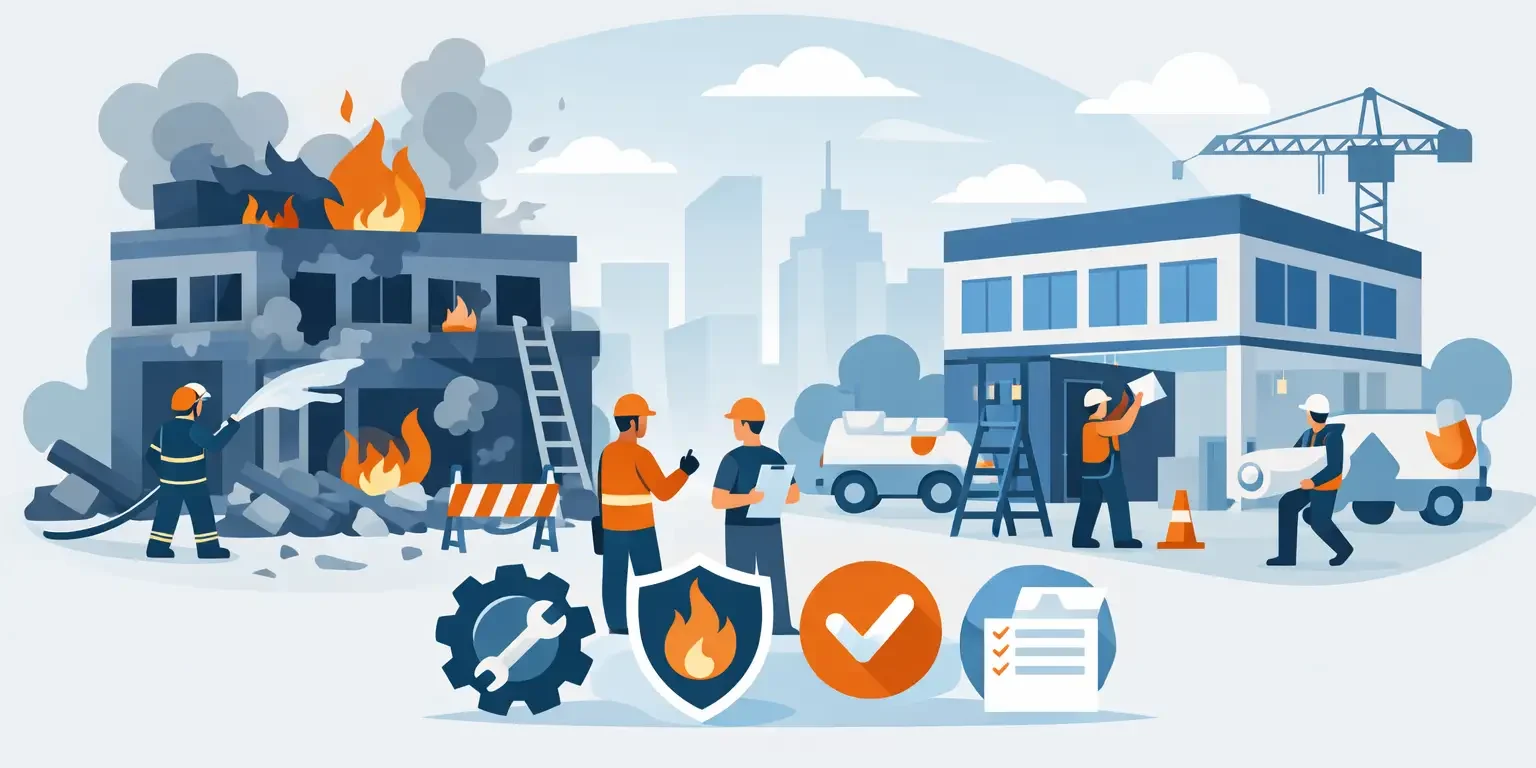
A fire in a commercial building does not end when the flames are out. Smoke spreads farther than most owners expect, water from suppression systems keeps soaking into materials, and every hour of delay can increase business interruption. Commercial fire damage repair is not just about fixing what burned. It is about stabilizing the property, protecting occupants, preserving what can be saved, and getting operations back on track with as little disruption as possible.
For property managers, facility operators, landlords, and business owners, the first challenge is knowing what has to happen first. The order matters. If the site is not secured, cleaned, dried, and documented correctly, a manageable loss can turn into a much larger repair project.
What commercial fire damage repair actually includes
In a commercial setting, fire loss usually affects more than the visibly burned area. Heat can weaken structural components, smoke can contaminate HVAC systems and adjacent rooms, and firefighting water can create hidden moisture inside walls, flooring, insulation, and equipment spaces. That is why commercial fire damage repair typically combines emergency response, mitigation, demolition, cleaning, drying, deodorization, and reconstruction.
The scope depends on the building type and the severity of loss. A retail suite with limited kitchen damage will need a different approach than a warehouse with roof compromise or an office building with heavy smoke migration through shared air systems. In some cases, contents restoration is a major part of the project. In others, the priority is structural stabilization and rapid tenant recovery.
This is also where commercial losses differ from most residential jobs. Commercial properties often involve life safety systems, code upgrades, lease obligations, sensitive equipment, inventory concerns, and occupancy deadlines. The repair plan has to account for all of it.
The first 24 hours after a commercial fire
The early phase is about control. Before repairs begin, the property must be made safe for entry and further damage has to be contained. That usually starts with a site assessment to identify structural hazards, electrical risks, water intrusion, and contamination levels.
Board-up and temporary roof tarping may be needed to secure the building envelope. If windows, doors, or roofing were damaged, leaving those openings exposed can lead to weather intrusion, theft, or additional smoke spread. Power may need to stay off in affected areas until systems are evaluated.
Documentation is just as important as physical stabilization. Photos, moisture readings, visible damage mapping, and inventory notes help support insurance claims and establish a repair strategy. In a commercial loss, that record should also reflect tenant spaces, shared systems, and operational areas that may be indirectly affected.
A common mistake is assuming cleanup can wait until claim decisions are finalized. Some steps can and should begin right away, especially when they prevent secondary damage. Standing water, soot residue, and exposed materials do not pause while paperwork catches up.
Smoke, soot, and water are often bigger problems than flames
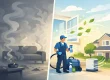
After a commercial fire, many owners focus on charred materials and overlook the less visible damage. That can be costly. Smoke residues vary depending on what burned, how hot the fire got, and how much oxygen was available. Dry soot, oily soot, and protein residues all behave differently, and each requires the right cleaning approach.
Improper cleaning can make things worse. Wiping soot with the wrong method can grind residue into surfaces. Using water where specialized dry cleaning is needed can spread contamination. In facilities with electronics, medical devices, or production equipment, residue left behind can affect performance long after the property looks clean.
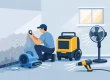
Then there is the water. Sprinkler discharge, hose streams, and firefighting runoff often travel beyond the fire zone. If drying does not begin quickly, materials that survived the fire may still be lost to swelling, corrosion, or microbial growth. Commercial fire damage repair almost always includes moisture mapping and structural drying because suppression water is part of the loss, not a separate issue.
Why a phased repair plan works best
Commercial properties rarely benefit from a one-size-fits-all restoration approach. A phased plan allows critical work to begin immediately while larger repair decisions are still being coordinated. This often starts with emergency mitigation, then selective demolition, environmental cleaning, drying, odor control, and finally rebuild work.
That sequencing matters for cost control and downtime. If demolition happens before the full extent of smoke migration or moisture intrusion is understood, unaffected materials may be removed unnecessarily. If rebuild starts too soon, trapped odor or hidden moisture can create repeat problems later.
A phased plan also helps businesses reopen in stages when possible. A multi-tenant property, office floor, or mixed-use building may not need full shutdown across every area. In some situations, isolating affected zones and restoring operations elsewhere reduces revenue loss while permanent repairs continue.
Commercial fire damage repair and business interruption
The repair itself is only part of the commercial impact. Lost operating time, tenant disruption, canceled appointments, damaged stock, and interrupted service can outweigh the direct physical damage. That is why restoration planning should account for occupancy and workflow, not just construction tasks.
For example, an office building may prioritize server room recovery, HVAC cleaning, and access control systems before cosmetic finishes. A restaurant may need kitchen exhaust inspection, odor removal, and health-related cleaning standards addressed early. A retail space may focus first on inventory salvage, smoke odor control, and getting a limited public-facing area back into service.
It depends on the property and the business model. The right repair strategy is the one that addresses safety, protects long-term building performance, and supports the fastest realistic return to use.
Working with insurance without slowing down the job
Commercial fire losses are document-heavy. Owners may be dealing with building coverage, contents claims, business interruption, tenant improvements, and code-related repairs. Delays often happen when the restoration scope is vague or when emergency work is not documented clearly enough.
A professional restoration team should provide detailed records of what was damaged, what mitigation was performed, and why each step was necessary. That includes photographs, equipment logs, moisture data, demolition notes, and cleaning or content handling records when applicable.
Still, not every decision should be made by waiting for perfect clarity from the claim side. Emergency stabilization, water extraction, smoke containment, and drying are time-sensitive. The longer contaminants and moisture remain in place, the more difficult and expensive the repair becomes.
What to look for in a commercial restoration contractor
Commercial fire losses require more than basic repair skills. The contractor or restoration firm needs experience with smoke and soot behavior, water mitigation, containment procedures, odor control, and reconstruction sequencing. They also need the operational discipline to work around occupied areas when feasible and communicate clearly with stakeholders.
Responsiveness matters, but so does technical judgment. Fast arrival means little if the team cannot identify hidden moisture, evaluate contamination spread, or set up a repair plan that fits the building. Commercial clients should look for a provider that understands documentation, coordination, and the pressure of getting a property functional again.
This is where a specialist approach matters. A company focused on fire and water restoration is better positioned to manage the full chain of loss, from emergency response through drying and repair, instead of treating the event like a standard construction project.
Preventing repeat issues after the rebuild
A completed repair does not always mean the problem is fully resolved. Lingering odor, overlooked soot in concealed spaces, and moisture left in structural cavities can show up later as complaints, corrosion, staining, or air quality concerns. Final verification should be part of the process.
That may include confirming dry standards, checking cleaned HVAC components, reviewing repaired assemblies, and making sure odor sources were actually removed rather than temporarily masked. In commercial environments, post-repair quality matters because tenants, employees, and customers notice the details quickly.
Fire and Flood Experts understands that commercial fire damage repair is about more than replacing materials. It is about controlling damage, reducing downtime, and restoring confidence in the property.
When a commercial building has been through a fire, speed matters, but so does sequence, documentation, and technical skill. The best next step is not rushing into cosmetic fixes. It is getting the property stabilized and repaired in the right order so the building is safe, functional, and ready for business again.