A burst supply line at 2 a.m. does not give you time to compare contractors, read long proposals, or wait until morning. When water is spreading across floors, soaking drywall, and moving into baseboards and cabinets, emergency water extraction services are not a convenience. They are the first step in controlling a property loss before it gets more expensive.
Water damage moves fast, but the real problem is what happens after the visible water is gone. Moisture keeps traveling into subfloors, wall cavities, insulation, and structural materials. That is why the right response is not just removing puddles. It is stopping the source, extracting water, identifying hidden moisture, and setting up a drying plan that matches the building and the category of water involved.
What emergency water extraction services actually include
Most property owners hear the phrase and picture a truck-mounted vacuum removing standing water. That is part of the job, but only part of it. A professional emergency response typically starts with safety, source control, and an assessment of how far the water has spread.
Technicians first determine whether the property is safe to enter. If water has reached electrical systems, appliances, or outlets, power may need to be shut off before work begins. If the loss came from sewage backup or floodwater, contamination changes the cleanup process and the materials that can be saved.
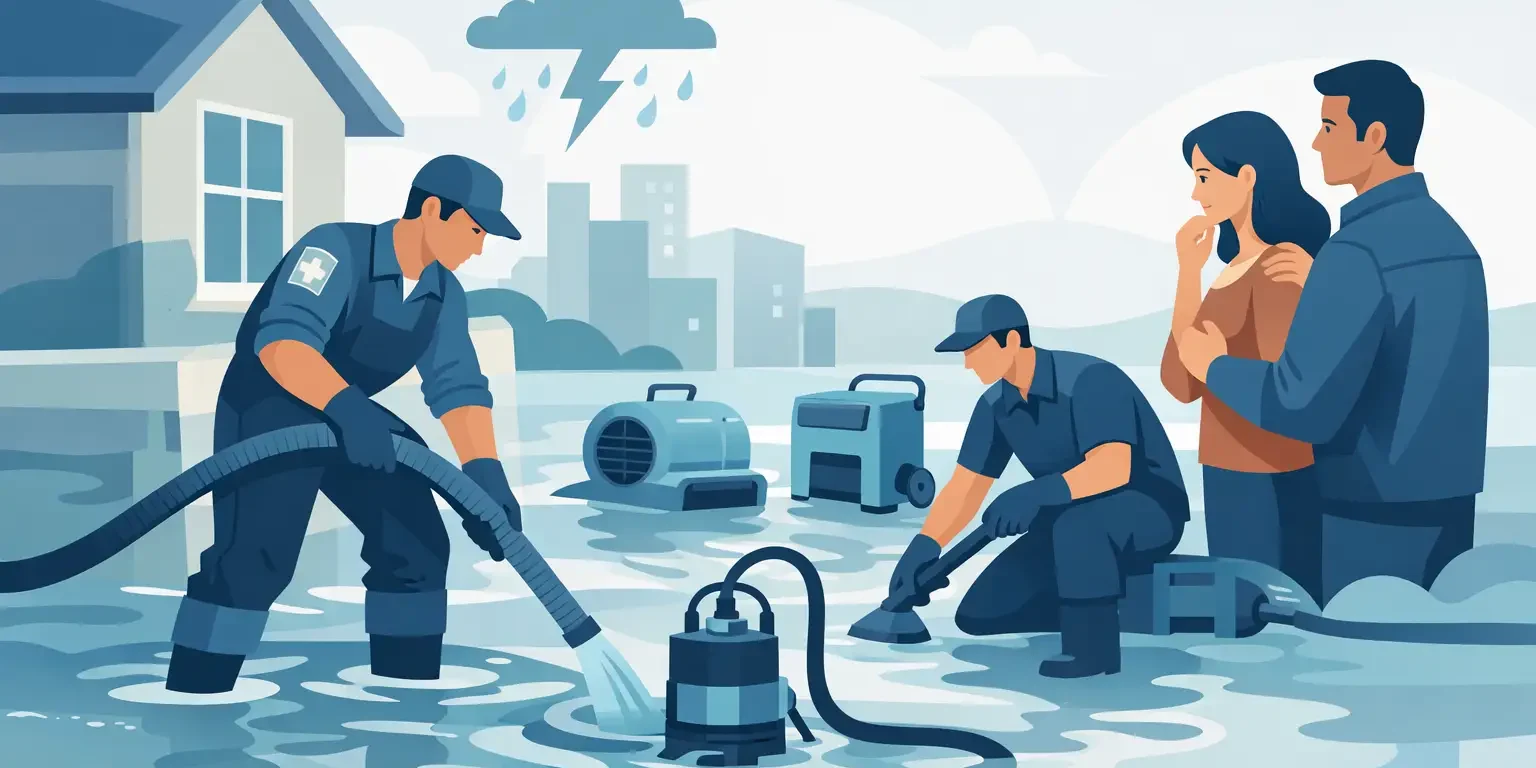
Once conditions are stabilized, extraction begins. Commercial-grade pumps, weighted extractors, and specialized wet vac systems remove as much water as possible from flooring and surfaces. The goal is speed and volume. Every gallon removed through extraction is a gallon that does not have to evaporate later during drying.
After extraction, a qualified crew checks moisture levels in materials that may still look dry on the surface. Carpet padding, engineered wood, drywall, insulation, and cabinetry can hold moisture long after standing water is removed. This is where technical experience matters. A surface that looks fine can still be setting up mold growth, delamination, swelling, or structural weakening.
Why the first 24 to 48 hours matter
Water loss does not stay static. It gets worse by the hour if it is not addressed correctly. Drywall softens, wood swells, adhesives begin to fail, and odors can start developing quickly. In many cases, materials are not ruined by the initial incident alone. They are ruined by delayed extraction and incomplete drying.
That timeline is even tighter in commercial settings. A retail space, office, medical suite, or multi-unit property can face business interruption, tenant complaints, and liability concerns on top of the physical damage. Fast extraction helps limit downtime, but it also creates a documented starting point for mitigation and insurance reporting.
There is also an important difference between visible drying and actual drying. Fans from a hardware store may help circulate air, but they do not replace moisture mapping, dehumidification planning, and monitored drying. If water has migrated under flooring or behind walls, surface airflow alone will not solve the problem.
Not all water losses are the same
One reason emergency water extraction services require trained professionals is that the water source affects the cleanup strategy. Clean water from a broken supply line is different from gray water from an appliance discharge, and both are different from black water involving sewage or flood contamination.
That distinction matters because it affects what can be cleaned, what needs to be removed, and what health precautions are required. A minor clean water loss caught immediately may allow more materials to be saved. A delayed response or contaminated water source usually means more aggressive demolition and disinfection are necessary.
It also depends on where the water traveled. Water in a concrete basement is one scenario. Water that ran through a second-floor bathroom, into insulation, light fixtures, and a first-floor ceiling is another. The extraction method, containment needs, and drying equipment setup will change based on the structure.
What a professional response should look like
A proper emergency response is organized, not improvised. You should expect a crew to identify the source of loss, evaluate safety risks, inspect affected areas, begin extraction immediately, and document conditions. They should also explain what happens next instead of leaving you guessing.
The drying phase is where many jobs are won or lost. After extraction, technicians place air movers and dehumidifiers based on the building layout, material type, and moisture readings. Equipment is not just dropped off. It should be positioned with a purpose, then adjusted as conditions change.
Monitoring matters as much as setup. Moisture readings, humidity levels, and material condition should be checked throughout the drying process. If certain areas are not responding, the drying plan may need to change. In some losses, controlled removal of unsalvageable material is the fastest way to protect the rest of the structure.
A specialist restoration company should also understand the handoff between mitigation and repairs. Property owners do not just need water removed. They need a path from emergency response to dry-out, cleanup, and restoration. That continuity reduces delays and confusion when the property needs to get back into service.
Common mistakes property owners make
The biggest mistake is waiting. Some owners assume a small leak can be handled later if they mop up the floor and open a window. That works only in the rarest, most limited situations. Water usually spreads farther than expected, especially under flooring and behind finished surfaces.
Another mistake is assuming all contractors handle water losses the same way. General repair companies may be able to rebuild damaged areas, but emergency water extraction and structural drying require different tools and training. If extraction is incomplete, repair work that happens later may cover up moisture instead of resolving it.
People also underestimate secondary damage. Mold is the issue most often mentioned, but it is not the only one. Warped flooring, compromised drywall, damaged insulation, stained finishes, electrical concerns, and indoor air quality problems are all part of the risk profile.
How emergency water extraction services help with insurance claims
Most property owners are dealing with more than cleanup. They are also trying to document damage, understand coverage, and keep the claim moving. While no contractor should promise claim outcomes, an experienced restoration team can support the process with detailed documentation of affected areas, moisture conditions, equipment usage, and mitigation steps.
That record matters. Insurers generally expect property owners to take reasonable action to prevent further damage after a loss. Fast mitigation helps show that the situation was addressed promptly and professionally. It also creates a clearer timeline of what was damaged by the original event and what was done to contain it.
For landlords, facility managers, and commercial operators, this documentation becomes even more important. There may be tenant communications, maintenance records, incident reports, and operational impacts to account for. A disciplined emergency response helps keep that process organized.
Residential and commercial needs are similar, but not identical
Homeowners usually focus on protecting personal property, preventing mold, and getting daily life back to normal. Commercial clients often have a wider set of pressures, including code concerns, tenant disruption, access coordination, and lost operating time. The core extraction process may be similar, but the response plan should reflect how the building is actually used.
In occupied homes, minimizing disruption and explaining the process clearly is essential. In commercial buildings, scheduling, containment, and phased work may be just as important as the extraction itself. A specialist team knows how to adjust without losing speed.
That is one reason property owners often turn to focused restoration companies instead of general service providers. Fire and Flood Experts, for example, operates in the space where urgency, technical drying knowledge, and restoration coordination all need to work together.
When to call immediately
If water is actively entering the property, if ceilings are sagging, if electrical systems may be affected, or if the source involves sewage or outside floodwater, this is an immediate call. The same goes for water affecting multiple rooms, commercial tenant spaces, or any building where hidden moisture is likely.
Even losses that look manageable on the surface deserve a fast assessment when flooring, drywall, cabinets, or insulation are involved. The cost difference between early mitigation and delayed repairs can be substantial.
The right emergency water extraction services do more than remove water. They interrupt the chain reaction that turns a leak into structural damage, contamination concerns, and major reconstruction. When the call cannot wait, neither should the response. Acting fast gives your property the best chance to come back cleaner, safer, and with less damage left behind.