The first hours after a fire are rarely just about burned materials. Smoke has traveled into rooms the flames never touched. Soot is settling into vents, cabinets, and porous surfaces. Water from firefighting efforts is already soaking framing, insulation, and flooring. When people ask what does fire restoration include, they are usually asking a bigger question: what has to happen to make this property safe, clean, and functional again?
The answer is more involved than basic cleanup. Fire restoration is a structured process that addresses safety hazards, smoke contamination, water damage, odor, debris, and repair needs. The exact scope depends on the size of the loss, how long the property sat before mitigation began, and what materials were affected.
What does fire restoration include in practice?
Fire restoration typically starts with emergency response and damage stabilization. Before anyone talks about repainting walls or replacing flooring, the property has to be secured and evaluated. That may mean restricting access to unsafe areas, shutting off compromised systems, and documenting conditions for the owner and insurer.
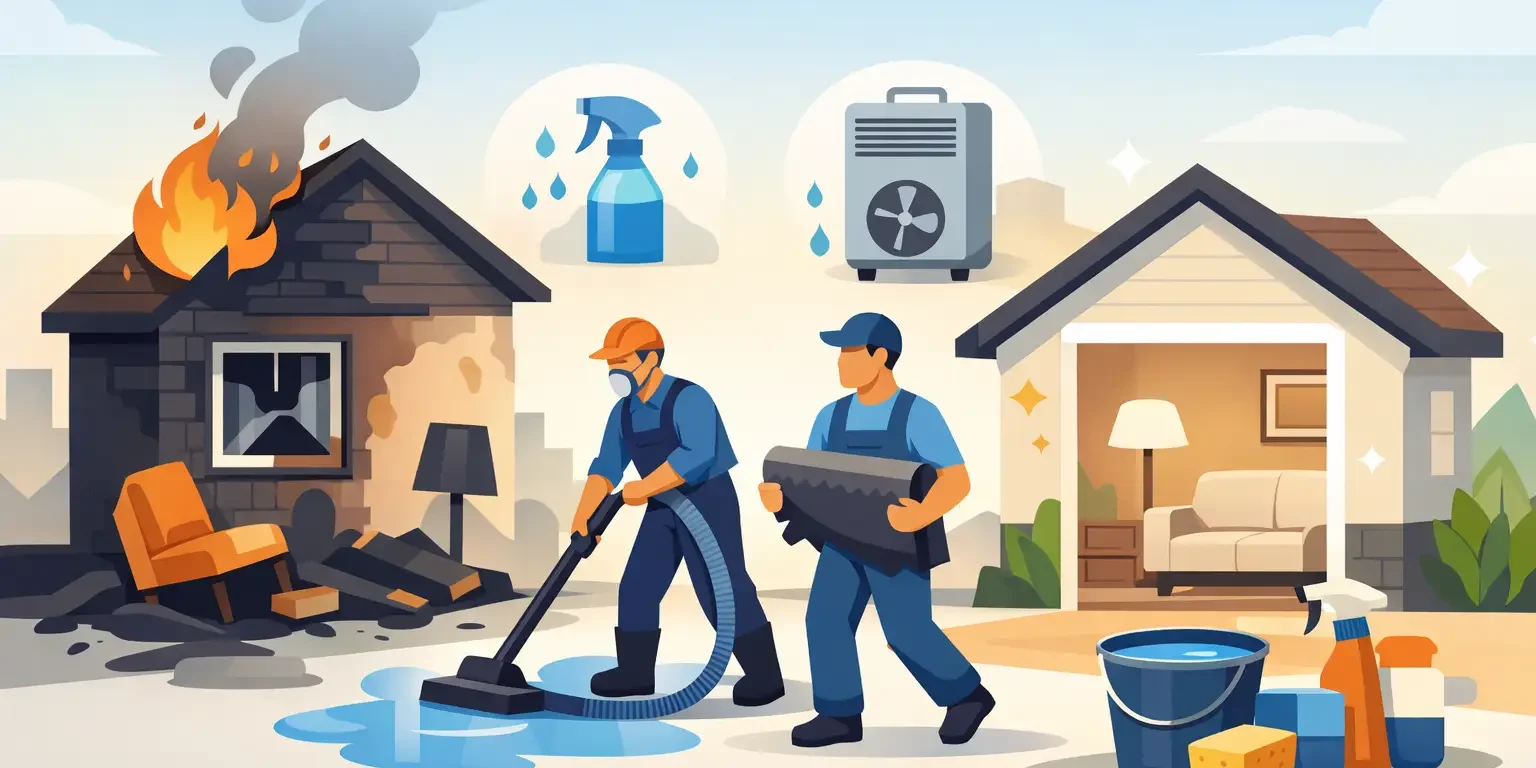
From there, the work usually moves into mitigation and cleanup. Soot and smoke residues are removed from surfaces. Wet materials are extracted or dried. Contents may be cleaned on site or packed out for specialized treatment. Odor control starts early, not at the end, because smoke moves deep into materials and enclosed spaces.
Only after the structure is stabilized and contamination is addressed does the repair and rebuild phase begin. In a small loss, restoration may involve cleaning, sealing, and replacing a few finishes. In a major fire, it can include partial demolition, structural repairs, and full reconstruction of affected areas.
Immediate safety assessment and site stabilization
A fire-damaged property can present hazards that are not obvious at first glance. Structural members may be weakened. Electrical systems may be unsafe to energize. Ceilings can hold hidden moisture and debris. HVAC systems may have pulled smoke and soot through the building.
That is why the first step is usually a detailed inspection. Restoration professionals assess visible fire damage, smoke spread, water intrusion, and potential safety risks. They also identify what can be saved, what needs specialized cleaning, and what is too damaged to restore.
Stabilization often includes emergency board-up, roof tarping, and temporary barriers. If windows, doors, or sections of the roof were compromised, securing the property matters for both safety and loss control. Openings allow weather, theft, and further contamination to make the damage worse.
Water removal and drying after firefighting
One part of fire restoration that many property owners do not expect is water mitigation. Even a contained fire can leave behind significant moisture from hoses, sprinklers, or suppression systems. If that water is not removed quickly, a fire loss can turn into a secondary water damage and mold problem.
Restoration crews extract standing water, remove soaked debris, and set up drying equipment to reduce moisture in structural materials. Depending on the property, that may include air movers, dehumidifiers, moisture monitoring, and controlled demolition of materials that cannot be dried effectively.
This step is especially important with insulation, subflooring, drywall, and cabinetry. Some materials can be dried and saved. Others trap moisture and break down quickly. The right decision depends on how much water is present, how long it has been there, and whether the material is also contaminated by soot or smoke residues.
Soot and smoke residue removal
Not all fire damage looks the same because not all soot behaves the same way. A fast-burning, high-oxygen fire can leave a dry residue that cleans differently than the sticky, oily soot produced by low-oxygen fires or burned plastics. Protein residues from kitchen fires can be nearly invisible but create strong odors and stubborn surface contamination.
That is why fire restoration is not the same as ordinary janitorial cleaning. Technicians use methods matched to the residue and the surface. Dry sponges, HEPA vacuuming, wet cleaning, abrasive cleaning, and specialty chemical treatments all have a place depending on the conditions.
Walls, ceilings, trim, flooring, fixtures, and contents may all need individual treatment. Cleaning the wrong way can smear soot, drive contamination deeper into materials, or permanently damage finishes. On some jobs, non-salvageable materials have to be removed first so remaining surfaces can be properly treated.
Odor removal is a separate step, not a spray-and-go fix
Smoke odor is one of the most persistent parts of a fire loss. It settles into insulation, framing, textiles, HVAC systems, and porous finishes. If the source residues are still present, no deodorizer will solve the problem for long.
Real odor removal starts with source removal. That means cleaning or removing materials that are carrying smoke particles. After that, restoration professionals may use air scrubbers, thermal fogging, hydroxyl generators, or ozone treatment where appropriate. The right method depends on occupancy, material sensitivity, and the extent of smoke penetration.
This is one area where shortcuts tend to fail. If odor treatment is done before deep cleaning, or if hidden residues inside wall cavities or ductwork are missed, the smell often returns when humidity rises or the HVAC system runs.
Contents cleaning and pack-out services
Fire restoration often includes personal property and business contents, not just the building itself. Furniture, electronics, documents, clothing, inventory, and equipment may be affected by soot, smoke, or water even if they were not burned.
On some losses, items can be cleaned inside the property. On others, contents are inventoried, packed out, and moved to a controlled facility for cleaning and storage. This is common when the building needs heavy mitigation work or when contents require specialized treatment.
Whether an item can be restored depends on material type, contamination level, heat exposure, and replacement cost. Soft goods may respond well to deodorization and cleaning. Paper records and electronics are more case-specific. The right restoration company will separate salvageable contents from non-salvageable items instead of treating everything the same.
Demolition, debris removal, and cleaning the structure
Part of what fire restoration includes is selective demolition. Burned framing, collapsed drywall, charred insulation, and unsalvageable finishes may need to be removed so the remaining structure can be cleaned and repaired. The goal is not demolition for its own sake. It is controlled removal of materials that are unsafe, structurally compromised, or too contaminated to restore.
Debris removal also clears the way for accurate moisture readings, odor treatment, and reconstruction planning. Once damaged materials are out, the structure can be cleaned in more detail. Exposed framing may need HEPA vacuuming, wire brushing, media blasting, or sealing, depending on the residue and condition.
Some losses are straightforward. Others involve hidden smoke migration behind walls, above ceilings, or through mechanical chases. That is where experienced inspection matters. If contamination remains concealed, repairs can look finished while the property still smells damaged.
Repairs and reconstruction
After mitigation and cleaning, the job moves into repairs. This may include replacing drywall, insulation, trim, flooring, cabinets, paint, electrical components, roofing materials, or structural elements. In some cases, code upgrades or permit-related corrections become part of the rebuild.
This phase varies more than any other. A small contained fire might require minor finish repairs after smoke cleanup. A larger event may require rebuilding multiple rooms or restoring a commercial space in stages so operations can resume sooner.
For owners, this is where project coordination matters. The best outcome usually comes when mitigation, documentation, and repair planning are aligned from the start. Fire and Flood Experts approaches this as a full restoration process, not disconnected trades showing up one after another.
Insurance documentation and scope coordination
Most fire losses involve insurance, and documentation is a practical part of the restoration process. Photos, moisture readings, inventory records, demolition notes, and cleaning scopes all help support the claim and clarify what work is necessary.
That does not mean every claim proceeds the same way. Coverage depends on the policy, the cause of loss, the extent of damage, and any pre-existing issues. Still, a well-documented restoration scope reduces confusion and helps property owners make faster decisions.
For landlords, property managers, and commercial owners, good documentation also supports tenant communication, operational planning, and budgeting. When multiple units or business areas are involved, clarity is not optional.
What fire restoration includes depends on the loss
A kitchen fire, an electrical fire in a utility room, and a multi-room structure fire all require different levels of intervention. The same is true for a single-family home versus a retail suite or multifamily building. Fire restoration is never one fixed package.
The main variables are heat damage, smoke spread, water exposure, material type, and response time. A property that receives professional mitigation quickly usually has more salvage options. A delayed response often means deeper odor penetration, more corrosion, more staining, and a longer path to recovery.
If you are trying to evaluate a property after a fire, the key is to think beyond what looks burned. The visible damage is only part of the problem. Smoke, soot, and water often drive the real scope of restoration. Getting the right assessment early can save time, reduce avoidable replacement costs, and keep a manageable loss from becoming a much larger one.
When the property is still unstable and the next step is unclear, the most useful move is simple: treat it like a restoration project from day one, not just a cleanup job.