A hardwood floor can go from stable to severely damaged in a matter of hours after a leak, pipe break, appliance failure, or flood. Hardwood floor water damage repair is time-sensitive because wood absorbs moisture quickly, expands, cups, stains, and can begin supporting mold growth if drying is delayed. The first decisions made after water exposure often determine whether the floor can be restored or needs to be removed.
Solid and engineered hardwood do not respond the same way to water, and not all damage is visible from the surface. A floor may look salvageable while moisture is still trapped in the subfloor, underlayment, baseboards, or wall cavities nearby. That is why effective restoration starts with containment, moisture testing, and a clear understanding of how far the water traveled.
What hardwood floor water damage repair actually involves
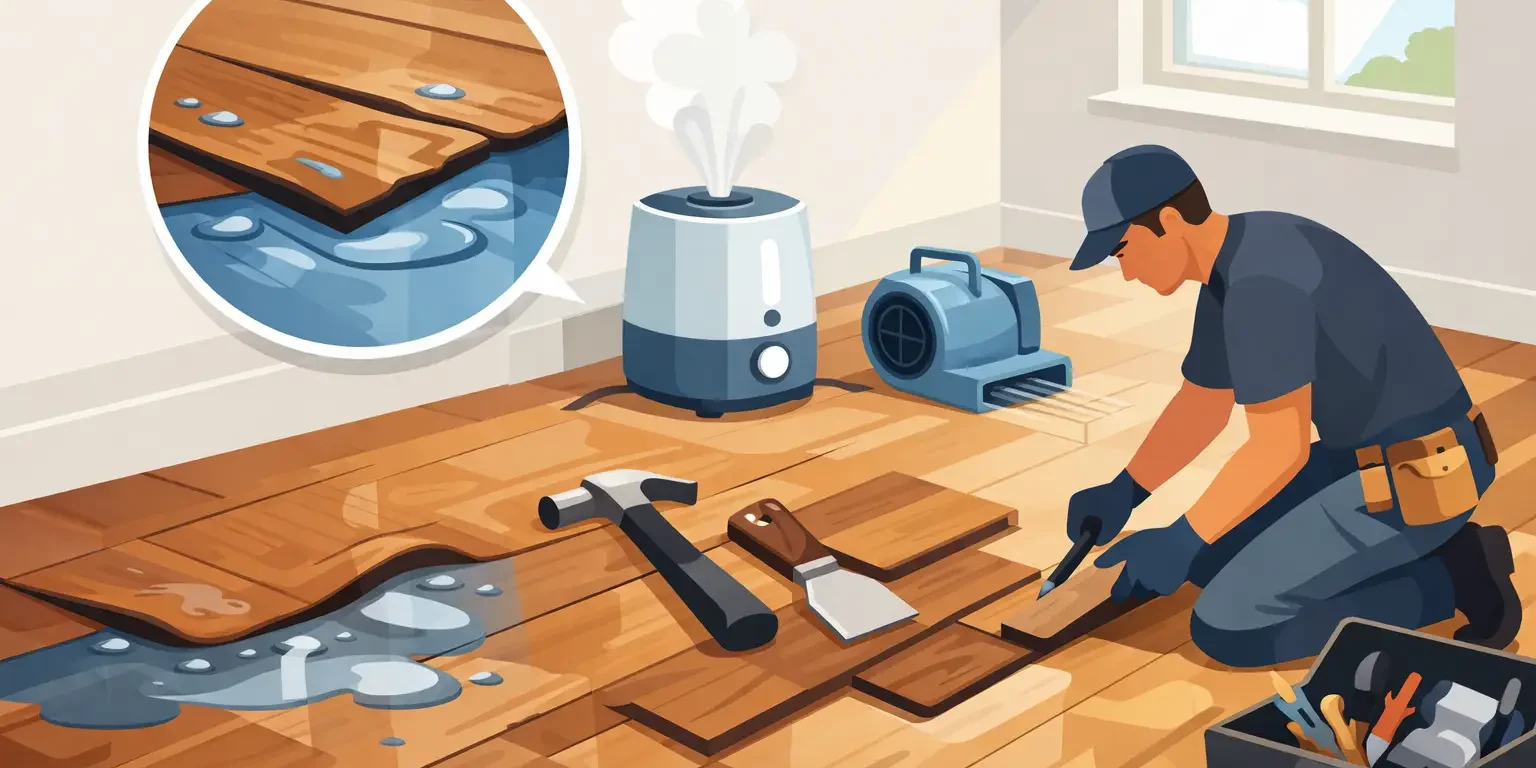
Many property owners assume this type of repair means sanding and refinishing. Sometimes it does. Often, it involves much more. The real process can include water extraction, controlled structural drying, removal of affected trim, moisture mapping, board replacement, subfloor inspection, odor control, and final finish work once moisture levels return to acceptable range.
The source of the water matters just as much as the visible floor damage. Clean water from a supply line is a different situation than gray water from an appliance backup or black water from sewage intrusion or floodwater. If contamination is involved, repair options narrow quickly because affected porous materials may no longer be safe to keep.
Timing matters too. A floor exposed to water for one hour is not the same as a floor left wet overnight or through a weekend. The longer the water sits, the more likely the boards are to swell, the finish to fail, fasteners to loosen, and the subfloor to take on moisture.
First response after hardwood gets wet
The priority is to stop the source and limit further spread. If a plumbing line is leaking, shut off the water. If the cause is storm or flood intrusion, keep people out of unsafe areas until electrical and structural hazards are addressed. Wet hardwood is not just a finish issue. It can become a slip hazard, an electrical risk near outlets or appliances, and a larger structural moisture problem if ignored.
Standing water should be extracted immediately. Towels and fans help with a minor spill, but they are not enough for significant water loss. Surface drying alone does not remove moisture trapped beneath boards or inside the subfloor system. Professional drying equipment uses airflow, dehumidification, and moisture monitoring to bring materials down gradually and evenly.
This is where many DIY efforts fail. Running heat or blasting fans without measuring moisture can dry the top of the flooring too quickly while the underside stays wet. That uneven drying can increase warping, splitting, and finish stress.
Signs your hardwood floor may be salvageable
Some wet hardwood floors can be restored if the response is fast and the contamination level is low. Floors are more likely to be salvageable when the water source is clean, the affected area is limited, and moisture has not been allowed to sit for long.
Early cupping is not always permanent. In some cases, boards that lift slightly at the edges will settle back as the floor dries under controlled conditions. Isolated staining may also be corrected through spot repair or refinishing if the wood fibers have not deteriorated deeply.
Engineered hardwood can sometimes be saved, but it depends on the product thickness and how much swelling has occurred. A high-quality engineered floor with a thicker wear layer may allow partial restoration. Lower-grade products often delaminate after saturation, which usually means replacement.
When hardwood floor water damage repair may not be enough
There are situations where repair is no longer the right call. Severe buckling, widespread black staining, soft subfloor areas, persistent odor, mold growth, or contamination from sewage or floodwater can push the project into removal and replacement.
If boards are lifting off the subfloor, separating at seams, or breaking apart, structural integrity may be compromised. If moisture readings remain high after drying efforts, that suggests deeper trapped moisture or concealed damage below the finish layer. In those cases, replacing only the visible boards can leave the actual problem in place.
Commercial properties and rental units also have a practical threshold. Even if partial restoration is technically possible, the labor involved in selective repair, sanding, blending, and downtime may make full replacement more efficient. The right decision depends on moisture conditions, contamination, occupancy demands, and whether the repaired floor will perform reliably long term.
The professional repair process
A proper restoration starts with inspection and moisture measurement, not guesswork. Technicians evaluate the floor surface, check for movement or separation, inspect adjacent walls and trim, and take readings from the hardwood and subfloor. This establishes how far the moisture migrated and whether drying can begin with the flooring in place.
If there is standing water, extraction comes first. After that, drying equipment is set based on the layout, material type, and severity of loss. In some cases, baseboards or sections of trim are removed to allow better airflow and to inspect hidden moisture. If the floor system is trapping water underneath, parts of the flooring may need to be lifted so the subfloor can dry correctly.
Drying is monitored over multiple days. This is critical. A floor is not ready for cosmetic repair just because it looks dry. Moisture levels must return close to normal equilibrium for that property and region. Starting repairs too soon can lock in movement and lead to later failure.
Once the floor is dry and stable, the repair phase begins. That may involve replacing individual boards, securing loose sections, sanding uneven areas, and refinishing to restore a consistent appearance. Matching stain, sheen, species, and board width can be straightforward on newer floors and much harder on older ones. Sun fade, discontinued materials, and prior finish wear often affect how invisible a repair can be.
Solid hardwood vs. engineered hardwood
Solid hardwood generally offers more repair flexibility because it can often be sanded and refinished multiple times. If the boards have not twisted too severely and the subfloor is sound, isolated damage can sometimes be corrected without replacing the entire floor.
Engineered hardwood is less predictable after water exposure. Its layered construction gives it dimensional stability in normal conditions, but once saturated, those bonded layers can separate. If delamination starts, refinishing will not fix it. The floor may look better briefly but continue failing underneath.
This distinction matters during inspection. Two floors may show similar surface staining, but one may be a candidate for restoration and the other may need replacement based on material construction alone.
Insurance and documentation
If the water damage came from a sudden covered event, documentation should start immediately. Photos, moisture readings, source identification, and a record of emergency mitigation all help support the claim process. Waiting too long can complicate coverage questions because insurers may argue that delayed mitigation allowed avoidable secondary damage.
Property managers and commercial operators should also document affected units, common areas, and business interruption concerns as early as possible. Hardwood damage rarely stays isolated to what is visible from standing height. Subfloor moisture, wall absorption, and base trim damage often expand the scope.
Working with a restoration company that understands both drying science and repair sequencing can prevent a common problem: cosmetic work being scheduled before the structure is actually dry.
How to reduce permanent damage before help arrives
If the area is safe to enter, remove rugs, lift movable furniture off the wet floor, and dry obvious surface water. Do not use harsh cleaners, and do not assume the floor is dry because the finish feels dry to the touch. Avoid forcing heat directly onto the wood. Controlled drying is safer than aggressive drying.
If floodwater or sewage is involved, limit contact and keep occupants away until the area is properly assessed. Contaminated water changes the response entirely and can affect not only the floor but also indoor air quality and surrounding materials.
For larger losses, fast professional intervention is the best way to improve salvage potential. Fire and Flood Experts responds to these conditions with the urgency they require because every hour matters once hardwood takes on water.
Choosing the right repair path
Hardwood floor water damage repair is rarely a one-size-fits-all project. A minor appliance leak in a kitchen may only require drying and selective board repair. A long-term plumbing failure beneath flooring may require removal, subfloor work, and a full reinstall. The right path depends on water category, exposure time, wood type, subfloor condition, and whether the floor can be restored without leaving hidden risk behind.
The most expensive mistake is waiting for the floor to fix itself. Wood may flatten a little as it dries, but trapped moisture, hidden microbial growth, and subfloor deterioration do not resolve on their own. If your hardwood has been exposed to more than a small surface spill, treat it like a restoration issue, not a cosmetic one, and act before repair options narrow.