The first few hours after a fire are when property losses often get worse. Once the flames are out, the building may still be open to trespassers, weather, collapse risk, and secondary water damage. If you are trying to figure out how to secure fire damaged property, the priority is simple: protect people first, then stabilize the structure, then prevent any further loss that could have been avoided.
That sounds straightforward, but every fire scene has variables. A small kitchen fire in a single-family home does not create the same security issues as a commercial fire with broken storefront glass, exposed utilities, and partial roof failure. The right response depends on the extent of structural damage, where the fire occurred, whether the property is occupied, and what hazards remain on site.
How to secure fire damaged property safely
Before anyone starts boarding windows or moving contents, the property has to be cleared for safe entry. Fire can weaken framing, floors, stair systems, ceilings, and roof sections in ways that are not obvious from the street. Smoke residue can also hide damage, and water used during suppression often adds weight and instability.
Start by confirming what the fire department, building official, or other responding authority has said about access. If the structure has been red-tagged, partially condemned, or restricted, do not allow tenants, staff, or family members to go back inside just to collect belongings. Unauthorized entry after a fire creates both safety and liability problems.
Utilities are the next concern. Gas, electric, and sometimes water service may need to remain shut off until the property has been inspected. A damaged panel, melted wiring, or compromised gas line can turn a post-fire site into a second emergency. If utilities have not been formally addressed, treat them as unsafe until qualified professionals confirm otherwise.
Secure the perimeter before you secure the interior
Many owners focus first on what is inside the building. In practice, perimeter control usually matters more in the opening phase. If the site is easy to access, you are exposed to theft, vandalism, squatters, and injury claims.
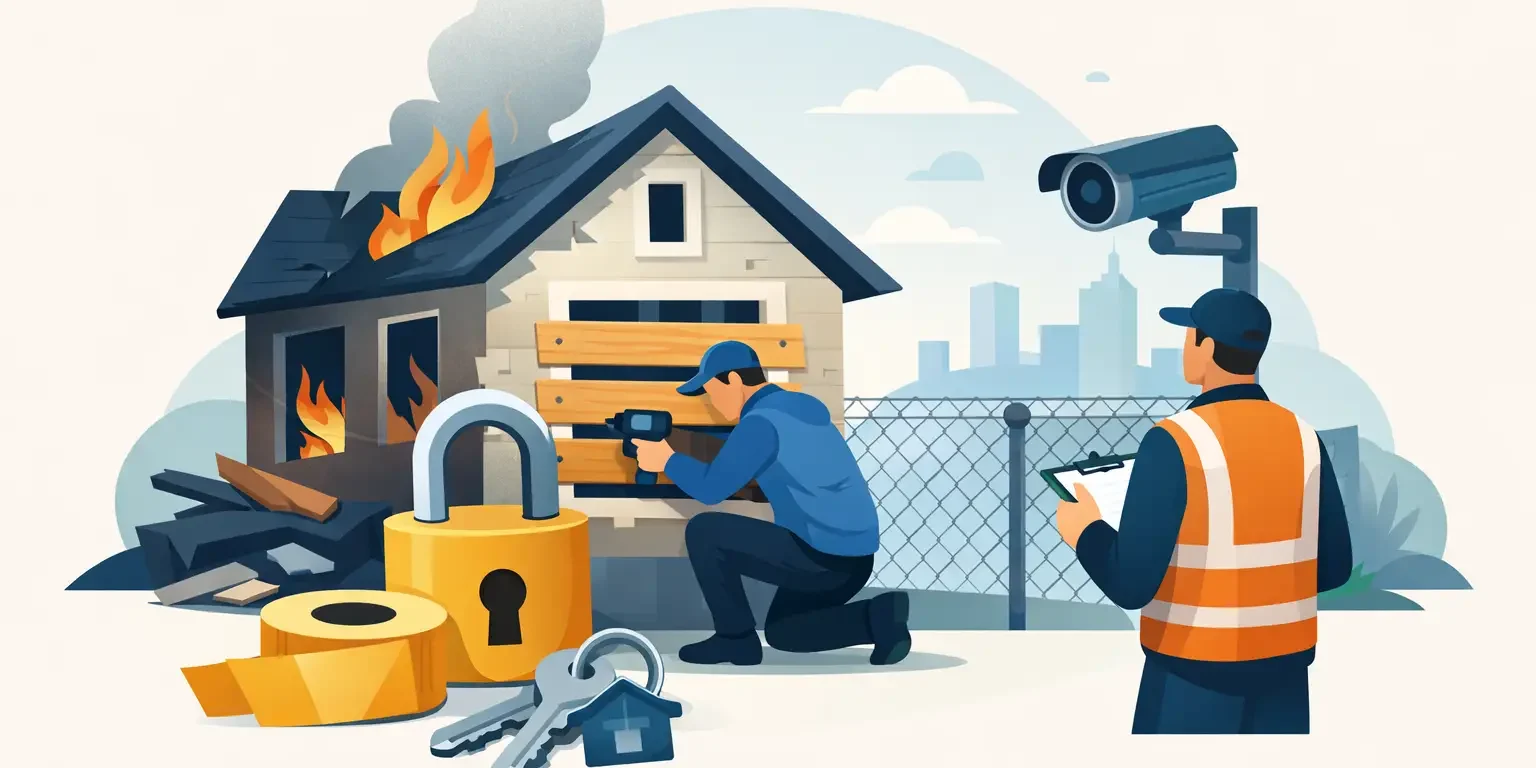
Temporary fencing is often the right move when the fire affects a large section of the structure, leaves debris in the yard or parking area, or creates openings that cannot be secured immediately. For smaller losses, controlled access points and visible warning signage may be enough, but it depends on the property type and neighborhood conditions.
Broken windows, damaged doors, and compromised garage openings should be boarded as soon as the structure is stable enough for that work. Boarding is not just about crime prevention. It also limits rain intrusion, wind-driven debris, animal entry, and public access. For commercial properties, storefront glass and loading areas should be treated as high priority because they are common access points and create clear exposure to theft.
If the roof has been breached, tarping is usually urgent. Even a modest opening can allow major water intrusion, especially if weather changes overnight. The trade-off is that roof tarping should never be rushed by unqualified crews on unstable framing. If the roof system is fire-weakened, safety has to override speed.
Document conditions as you secure them
Take photos and video before any emergency board-up, fencing, or tarping begins, then continue documenting as each measure is installed. That record helps support insurance claims and shows that you acted promptly to mitigate damage. It also helps establish what happened before versus after the fire response.
Owners sometimes worry that securing the property will interfere with the claim. In reality, insurers generally expect reasonable emergency mitigation. Leaving the building exposed because you are waiting for an adjuster can create avoidable damage that becomes harder to explain later.
Control access and protect against liability
Once the building is physically closed off, access needs to be managed. This is where many fire-damaged properties remain vulnerable. If multiple people can come and go, you lose control over safety, documentation, and contents.
Choose one point of contact to approve entry. For a home, that may be the owner. For an apartment building, retail site, or office property, it may be the property manager, facility lead, or designated insurance representative. Entry should be limited to authorized personnel only, including restoration crews, inspectors, engineers, and approved contractors.
Keep a basic log of who entered, when they entered, and why. That may sound formal for a residential property, but it becomes important if contents go missing, conditions change, or someone is injured. On commercial losses, this record should be standard procedure.
Warning notices should be visible at all major access points. They do not replace proper barriers, but they support your effort to restrict entry and reduce legal exposure. If the structure has exposed hazards such as unstable floors, hanging drywall, soot contamination, or standing water, those risks should be treated as active, not theoretical.
Interior stabilization matters more than cleanup at first
A common mistake after a fire is jumping straight into debris removal and general cleanup. The first interior objective is stabilization. That includes identifying wet materials, checking for structural compromise, and securing salvageable contents that may be damaged further if left in place.
Water from firefighting can continue to spread through floors, wall cavities, and lower levels long after the fire is out. If that moisture is not addressed quickly, mold growth can begin and material damage can expand well beyond the burn area. Smoke and soot also move farther than most owners expect, especially through HVAC pathways and open framing.
That is why securing a fire-damaged property is not limited to boards and locks. In many cases, it also means emergency extraction, containment, odor control planning, and selective removal of unstable or unsalvageable materials. The correct sequence matters. Pulling materials too early can disturb soot and contaminants. Waiting too long can increase corrosion, staining, and microbial growth.
High-value contents need immediate protection
If the property contains equipment, records, electronics, inventory, or personal valuables, those items should be assessed early. Some contents can be packed out and relocated to a secure facility. Others should remain in place until documented and evaluated.
For landlords and commercial property owners, tenant spaces raise an added issue. Each unit may contain separate property interests, and access should be coordinated carefully. Do not assume that letting tenants back in informally is the fastest solution. It often creates confusion and increases risk.
Professional board-up and mitigation are usually the right call
Owners sometimes ask whether they can handle initial security themselves. In limited cases, yes. If the fire was minor, the structure is clearly safe, and damage is confined to one part of the building, temporary steps may be possible. But most meaningful fire losses require professional emergency service.
The reason is not convenience. It is because post-fire security involves more than covering openings. You may need structural shoring, roof tarping, water mitigation, smoke damage assessment, debris segregation, and coordinated documentation for insurance. A general handyman approach can leave serious gaps.
A specialized restoration company understands how to secure the site without making later recovery work harder. At Fire and Flood Experts, that kind of emergency response is built around containment, safety, and preventing secondary damage while the next phase of restoration is being organized.
Insurance, weather, and time all work against you
The longer a fire-damaged property sits unsecured, the more expensive the claim usually becomes. Rain enters. Metal corrodes. Soot etches surfaces. Contents disappear. Odors settle deeper into materials. Unauthorized people get inside. None of that helps your position.
Insurance carriers generally want prompt action to reduce further damage, but they also want reasonable documentation and controlled work. That balance matters. You do not need to wait passively, and you should not allow uncontrolled demolition under the label of emergency service. The right response is targeted, documented, and necessary.
If severe weather is expected, roof protection and opening closure move to the top of the list. If the property is in a dense urban area, perimeter security and access control may be the bigger concern. If the building supports business operations, securing records, equipment, and limited continuity assets may be urgent alongside structural measures. It depends on what is most exposed and what loss is most likely to happen next.
When you are deciding how to secure fire damaged property, think in layers. First stop unsafe access. Then close the building envelope. Then stabilize what the fire and water have compromised. Then control who enters and what gets moved. Fast action matters, but disciplined action matters more. The best next step is the one that prevents the next avoidable loss.