Floodwater can leave a room looking salvageable when the real damage is still happening inside the walls. If you are asking can drywall be saved after flooding, the honest answer is sometimes – but only under the right conditions, and only if the decision is made quickly.
Drywall is not a finish material you can judge by appearance alone. It absorbs water fast, loses strength when saturated, and can trap moisture where mold growth starts behind the surface. In a flood situation, the question is not just whether the wall can dry. The real question is whether it can dry safely, completely, and without leaving contamination or hidden damage behind.
Can drywall be saved after flooding or does it need removal?
It depends on three things: the type of water involved, how long the drywall stayed wet, and how far the moisture traveled.
If the water source was clean, the exposure was brief, and professional drying starts almost immediately, some drywall can be saved. This is more likely with a small plumbing overflow than with true floodwater. Once water has wicked high into the wall cavity or the drywall has been wet for more than a day or two, the odds drop fast.
If the water came from outside the structure, a river overflow, storm surge, groundwater intrusion, or sewage backup, replacement is usually the safer path. That water often carries bacteria, silt, chemicals, and organic matter. Even if the drywall looks intact after drying, contamination can remain in the gypsum core, the paper facing, and the wall cavity.
For most real flooding events, drywall near the affected area is removed rather than preserved. That is not overkill. It is standard damage control.
Why drywall fails so quickly after flood exposure
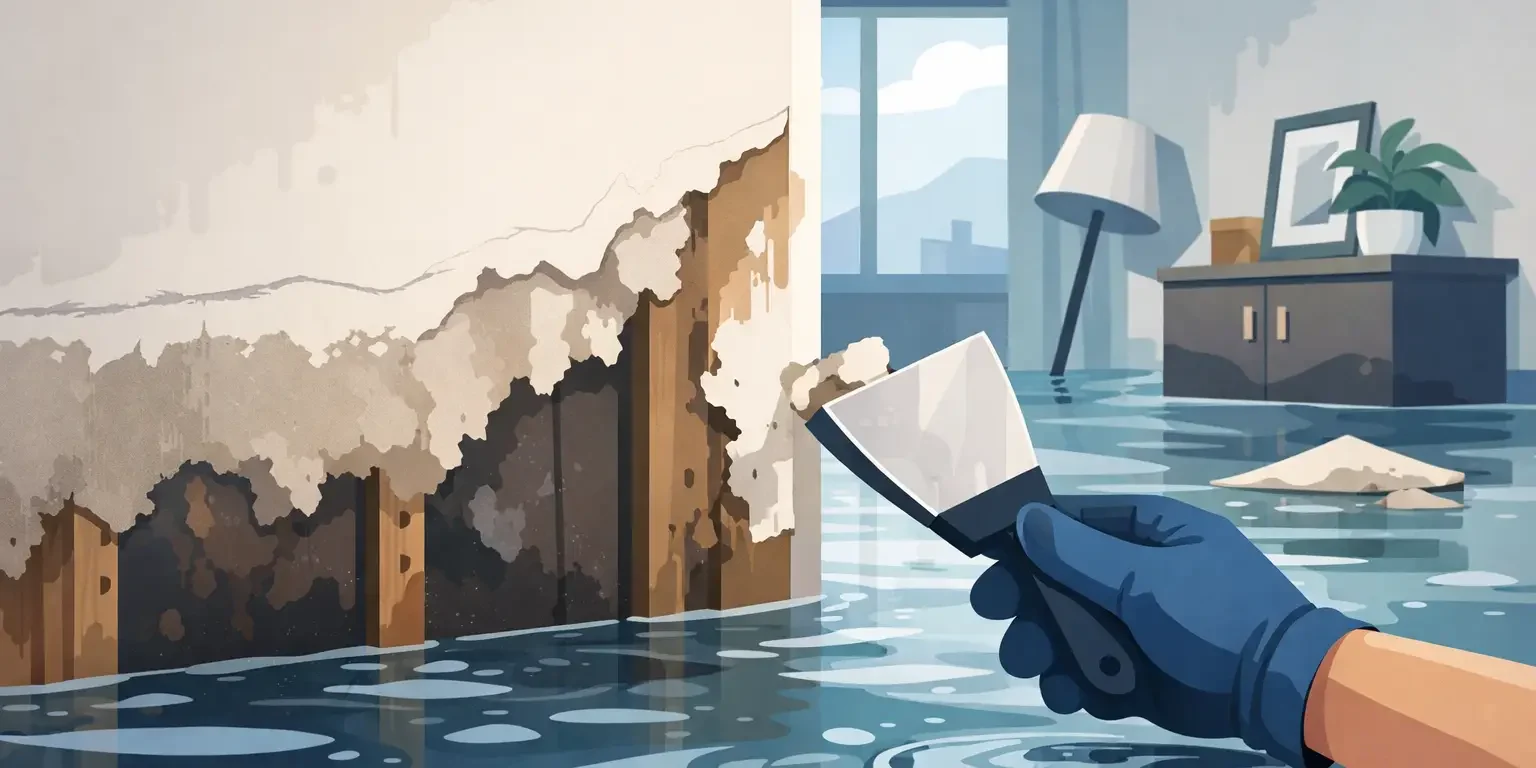
Drywall is a layered material with a gypsum core and paper facing. The paper acts like a sponge. The core softens when saturated. Fasteners can loosen, joints can swell, and the board may crumble or bow.
What makes this tricky is that drywall often dries unevenly. The surface may feel dry while the back side stays wet against insulation or framing. That hidden moisture is where mold growth and material breakdown continue. A wall can look stable and still be compromised.
This is also why painting over water damage or running a few fans in the room is not a restoration plan. Drying has to reach inside the assembly, not just the exposed face of the wall.
When drywall can sometimes be saved after flooding
There are limited situations where saving drywall is reasonable. The water must be clean, the wetting must be recent, and the wall must respond well to controlled drying.
For example, if a supply line burst and was shut off quickly, restoration technicians may be able to dry the drywall in place. Moisture readings, thermal imaging, and cavity checks help confirm whether water stayed localized or spread upward and sideways.
In some cases, baseboards are removed and small access openings are made to improve airflow inside the wall cavity. If the drywall remains firm, contamination is not a factor, and moisture levels return to acceptable ranges, replacement may not be necessary.
That said, saving drywall is a technical decision, not a hopeful guess. If the wall was soaked, if insulation behind it is wet, or if the material starts to delaminate, removal is usually the better call.
When drywall should be removed
If any of the following are true, replacement is generally the safer and more cost-effective option.
Floodwater was contaminated. The drywall was wet for more than 24 to 48 hours. The wall feels soft, swollen, or crumbly. Moisture has traveled above the visible waterline. Insulation behind the wall is wet. There is visible mold, staining, odor, or evidence that the cavity cannot dry fully.
In commercial properties and managed residential buildings, removal is often the more defensible decision because it reduces liability. Leaving compromised wall material in place can create bigger problems later – mold claims, odor complaints, recurring damage, and failed repairs.
This is one reason experienced restoration crews often cut drywall above the affected area rather than only where staining is visible. Water wicks upward. The visible line on the wall is rarely the full extent of the damage.
The water category matters more than most people realize
Not all water damage is equal. In restoration, the water source changes the salvage decision.
Category 1 water starts clean, such as a broken supply line. Even then, time matters. If that water sits, it can degrade into a more contaminated condition.
Category 2 water contains a significant level of contamination, often from appliance discharge, drain overflows, or other sources that are not safe to treat as clean.
Category 3 water is grossly contaminated. This includes sewage backup and most outdoor floodwater. When drywall is affected by Category 3 water, removal is typically the proper course. Drying alone does not remove embedded contamination from porous materials.
This is where property owners get into trouble. They assume that if the wall dries, it is saved. With contaminated floodwater, dry does not mean clean.
Insulation, framing, and hidden wall cavities
Drywall decisions cannot be made in isolation. What is behind the wall matters just as much.
Wet fiberglass insulation loses effectiveness and slows drying. Cellulose insulation can hold moisture even longer. Wood framing may be salvageable if it is cleaned and dried correctly, but it still needs to be exposed enough for inspection and airflow. Metal framing resists water better, but adjacent materials may not.
If drywall is left in place while wet insulation stays trapped behind it, the wall system remains compromised. That can produce odor, microbial growth, and ongoing moisture issues long after the room looks normal again.
Professional drying is built around the whole assembly. Moisture mapping, air movement, dehumidification, and targeted demolition are used to get all affected materials back to a dry standard, not just the visible surfaces.
Why timing changes everything
The first 24 to 48 hours after flooding are critical. The longer drywall stays wet, the less likely it is to be salvageable.
Quick extraction and controlled drying can limit damage. Delay makes removal more likely. That is true even with relatively clean water, and it is especially true in warm, humid conditions where microbial growth accelerates.
Property owners sometimes wait because the wall does not look bad yet or because they want to see whether it dries on its own. That waiting period often turns a manageable dry-out into a larger demolition and remediation project.
Urgency matters because moisture does not stay where it started. It spreads through insulation, flooring edges, trim, subfloors, and adjacent rooms.
Can you test drywall instead of removing it?
Yes, but testing needs to be done with the right tools and judgment. Moisture meters, infrared cameras, and invasive cavity inspection can show how far the damage extends and whether drying is working.
This is not just about finding wet spots. It is about determining whether the material still has structural integrity, whether contamination is present, and whether the wall can return to a safe, dry condition within a reasonable timeframe.
Testing is useful when the water source was clean and the exposure was limited. It is far less useful as a justification to save drywall hit by contaminated floodwater. In that case, the problem is not only moisture. It is also what the water brought with it.
The insurance angle
Insurance carriers often expect mitigation decisions to be based on accepted restoration standards, not guesswork. That means documenting the water source, the affected materials, moisture readings, and the reason drywall was dried or removed.
Trying to save drywall that should have been cut out can backfire if mold develops later or if repairs fail. On the other hand, removing drywall without documenting why can also create issues. A professional mitigation team helps establish the scope early, which matters for both loss control and claim support.
For homeowners, landlords, and facility managers, this is one of the biggest advantages of calling a specialist early. You are not just drying a wall. You are protecting the building and the file that explains what was done and why.
The practical answer for property owners
If you are dealing with true flooding, assume damaged drywall may need to come out until proven otherwise. If the water was contaminated, treat removal as the likely path. If the water was clean and the event was caught fast, drywall may be saved – but only after moisture inspection confirms that the wall cavity and surrounding materials can dry fully.
The safest approach is not the one that preserves the most material. It is the one that prevents hidden damage from turning into a bigger restoration problem. At Fire and Flood Experts, that is the standard that should guide every flood response decision.
When the wall is questionable, speed and accuracy matter more than optimism. The sooner the damage is evaluated correctly, the better your chance of limiting what has to be rebuilt.