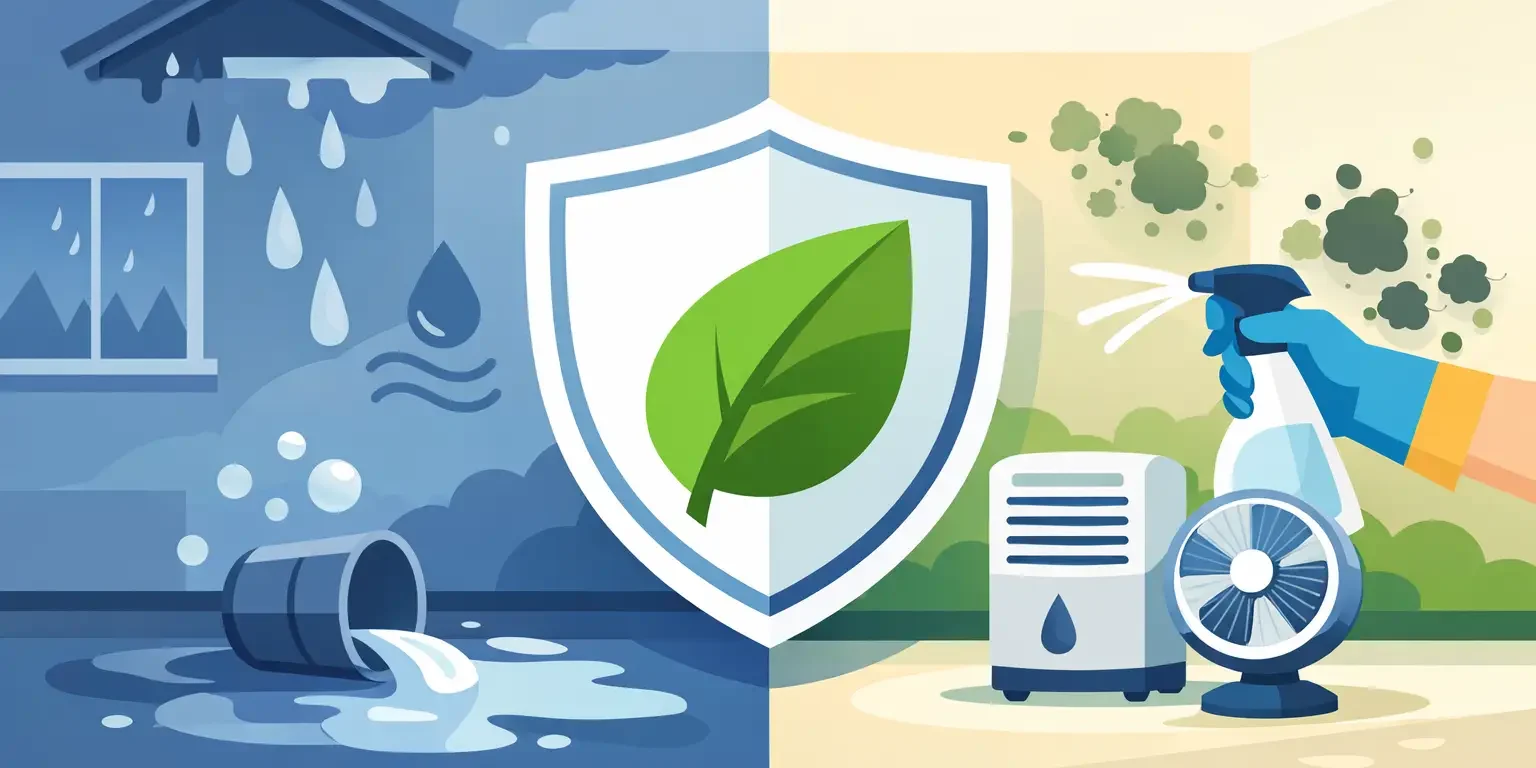
Water that remains in a building for even a day or two can turn a manageable loss into a mold problem. Effective mold prevention after water damage depends on immediate extraction, controlled drying, and careful inspection of materials that hold moisture out of sight. The goal is not to make a room look dry. The goal is to return the affected structure and contents to safe moisture levels before mold has the conditions it needs to grow.
Why the First 48 Hours Matter
Mold spores are naturally present in indoor and outdoor air. They become a property problem when water, a food source, and the right temperature come together. Drywall paper, wood framing, insulation, carpet backing, ceiling tile, and dust can all support growth after a leak, burst pipe, appliance failure, roof intrusion, or flood.
Under favorable conditions, mold can begin growing within 24 to 48 hours. That timeline is why waiting for a room to air-dry is risky. A wet carpet may feel dry at the surface while its pad and subfloor remain saturated. A ceiling stain may appear small while insulation above it is wet. Water can also travel through wall cavities, under baseboards, and beneath flooring without leaving obvious signs.
Fast action limits the affected area, reduces the amount of material that must be removed, and helps protect indoor air quality. It can also create a clearer record of the loss for insurance purposes when the condition of the property is documented early.
Start With Safety and Stop the Water Source
Before cleanup begins, make sure the area is safe to enter. Shut off the water source if possible. If water is near electrical outlets, appliances, wiring, or the electrical panel, do not enter standing water until power hazards have been assessed. Sewage backups, outdoor floodwater, and water from a toilet overflow may contain contaminants that require professional handling and appropriate protective equipment.
Photograph and video the affected rooms, damaged contents, and visible source of the water before moving items when it is safe to do so. Keep a record of emergency work, equipment placement, and damaged materials. This documentation can be useful during an insurance claim, but it should not delay mitigation.
Clean water from a supply line has different handling requirements than gray water from appliances or black water from sewage or flooding. The longer any category of water remains in the property, the greater the chance of contamination and material deterioration. When the source is contaminated or uncertain, treat it as a health and safety issue rather than a standard cleanup project.
Remove Standing Water, Then Remove Hidden Moisture
Extraction comes before drying. Wet vacuums, pumps, and professional extraction equipment remove bulk water far more effectively than towels or household fans. The faster standing water is removed, the less opportunity it has to wick into walls, cabinets, flooring, and structural components.
After extraction, remove wet contents from the affected area when practical. Furniture, boxes, rugs, and stored belongings can block airflow and keep moisture trapped against walls or floors. Place salvageable items in a dry, protected location. Avoid stacking wet materials, since that slows drying and can transfer moisture and contamination.
Some materials can be dried successfully, while others may need removal. Non-porous surfaces such as metal, glass, and certain plastics are often cleanable. Solid wood may be salvageable if it is dried promptly and has not warped or delaminated. By contrast, saturated carpet padding, cellulose insulation, ceiling tile, and heavily wet drywall often retain moisture and may not be dependable candidates for drying, particularly after contaminated water exposure.
The decision is not based on appearance alone. It depends on the water category, how long materials were wet, whether water reached concealed spaces, and whether moisture readings show the material is drying as expected.
Mold Prevention After Water Damage Requires Measured Drying
Opening windows and running fans can help in limited situations, but uncontrolled airflow is not a complete drying plan. If outdoor humidity is high, open windows can introduce more moisture. Fans may also move spores or contaminated dust if mold is already present. Professional drying uses air movement, dehumidification, temperature control, and moisture monitoring together.
Dehumidifiers remove water vapor from the air so materials can release moisture. Air movers increase evaporation across wet surfaces. In some losses, technicians create containment or use negative air equipment to control dust and protect unaffected spaces. The equipment setup should match the size of the loss, the materials involved, and the moisture conditions in the building.
Moisture meters and thermal imaging help locate water behind finished surfaces and confirm drying progress. A wall can look normal while its lower framing remains wet. Hardwood flooring can cup days after the initial incident because moisture was trapped below the surface. Controlled drying is complete when measurements show affected materials have returned to an acceptable moisture range compared with unaffected areas of the property.
Do not remove drying equipment simply because the room feels comfortable or because surfaces feel dry to the touch. Premature equipment removal is one of the most common reasons hidden moisture becomes a later mold or odor problem.
Clean Surfaces Without Spreading the Problem
Once bulk water is removed and drying is underway, affected surfaces need appropriate cleaning. For small areas of visible mold on hard, non-porous surfaces, careful cleaning with suitable products and physical removal may be effective. Porous materials with established growth, such as insulation, carpet padding, or heavily affected drywall, are often better removed than repeatedly treated.
Bleach is not a universal answer. It may discolor materials, create fumes, and does not reliably solve mold rooted in porous surfaces. Never mix cleaners, and do not use chemicals in an enclosed area without ventilation and proper protective measures. The priority is removal of contamination and correction of moisture conditions, not simply making a stain disappear.
Avoid disturbing suspected mold growth with a household fan, dry sweeping, or aggressive scraping. Those actions can release particles into the air and spread them to unaffected rooms. If visible growth covers more than a small, isolated area, if there is a persistent musty odor, or if mold is suspected inside walls or HVAC components, bring in trained remediation professionals.
Inspect the Places Water Reaches Quietly
A complete inspection follows the water path, not just the visible damage. Check behind baseboards, inside lower wall cavities, beneath cabinets, around door frames, under floating floors, and above ceiling areas below bathrooms or roof leaks. In commercial properties, inspect storage rooms, mechanical spaces, plenum areas, and wall sections behind shelving or equipment.
HVAC systems need special attention. Do not run a system that may have pulled in contaminated water or has wet insulation, wet duct liner, or suspected mold growth. A system can distribute moisture, odor, and particles throughout the building. A qualified assessment can determine whether components can be cleaned and dried or require replacement.
Property managers and facility operators should also inspect adjacent units or suites. Water commonly moves through shared walls, floor assemblies, and utility penetrations. Addressing only the unit where water first appeared can leave a hidden moisture source active next door.
Know When to Call a Restoration Specialist
A small, clean-water spill that is extracted and dried immediately may be manageable with prompt action. Larger losses need a more controlled response. Professional restoration is especially warranted after sewage backups, flooding, water that has been present longer than 24 hours, widespread wet drywall or flooring, recurring leaks, visible mold, or strong musty odors.
A restoration team can document conditions, identify hidden moisture, establish drying goals, remove unsalvageable materials, and coordinate the work needed to return the property to a stable condition. For owners dealing with a claim, detailed moisture records and photographs can also help demonstrate why mitigation work was necessary.
Fire and Flood Experts approaches water losses with the urgency they require: contain the damage, dry the structure properly, and address conditions that could lead to mold before they become a larger repair and health concern.
The best time to prevent mold is while the water event is still being handled. If drying has stalled, an odor has appeared, or materials still test wet, treat that as an active restoration issue and act before the damage becomes harder to contain.