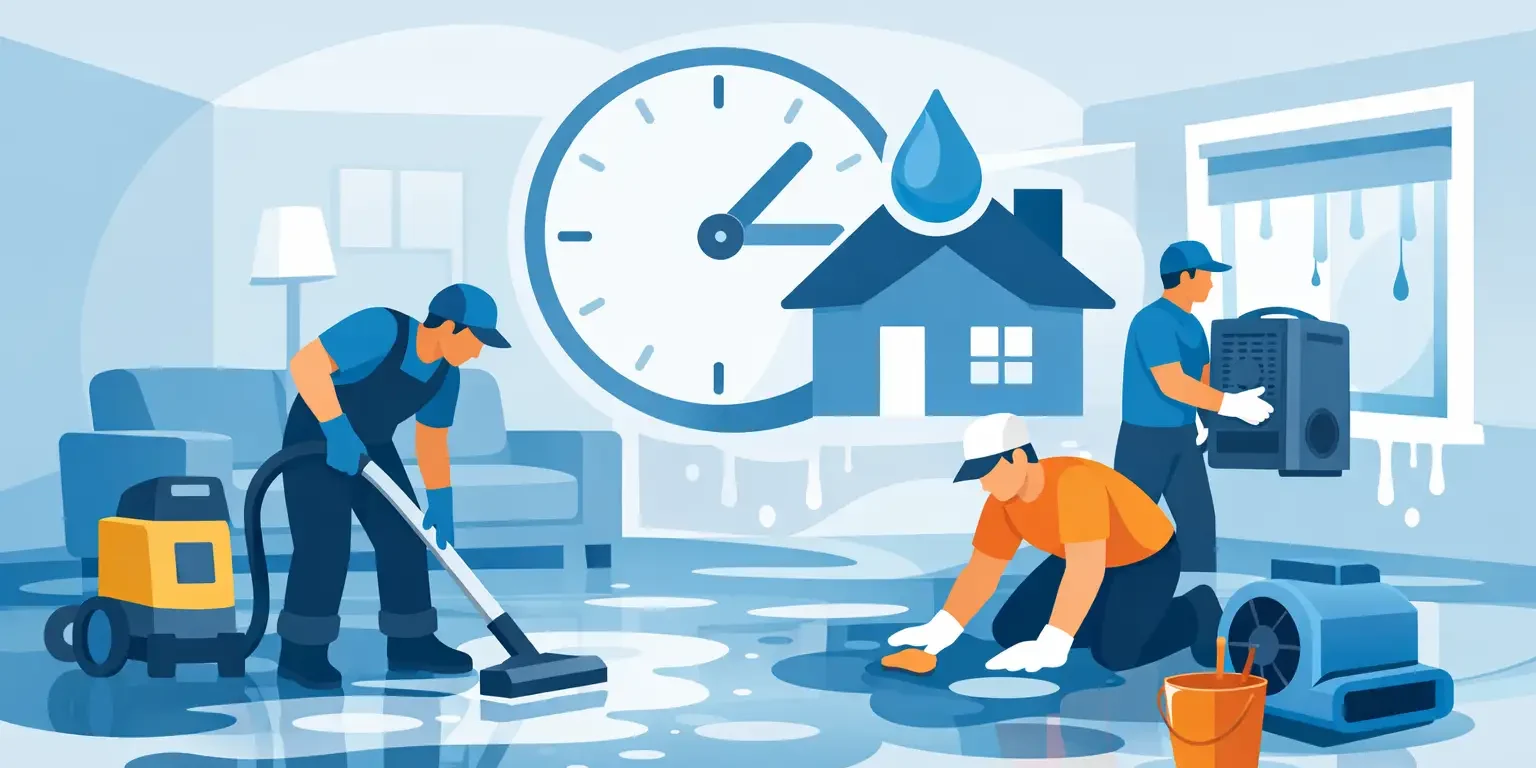
A wet carpet is only the visible part of the problem. Water can move under flooring, behind baseboards, into wall cavities, and through ceilings long before a room looks severely damaged. Fast water damage cleanup protects the building, reduces business or household disruption, and gives you a clearer record for your insurance claim.
The first 24 hours matter because water damage is progressive. Materials that may be saved with prompt extraction and drying can become candidates for removal when moisture remains trapped. The right response is not simply to remove standing water. It is to stop the source, protect people, document the loss, remove moisture, and verify that the affected structure is actually drying.
Make the Area Safe Before Cleanup Begins
Do not enter a flooded room if water may have reached electrical outlets, appliances, extension cords, or a breaker panel. If it is safe to do so, shut off electricity to the affected area at the main panel. If you cannot safely access the panel, stay out of the area and contact qualified help.
Water source matters as much as water volume. A supply-line leak or rainwater entering through a roof may be treated differently from a toilet overflow, sewage backup, or outside floodwater. Water that may contain sewage, chemicals, or other contaminants requires protective measures and often calls for removal of porous materials such as carpet, pad, insulation, and affected contents.
Keep children, pets, tenants, and unnecessary personnel away from the area. Wet ceilings can lose strength, flooring can become slick or unstable, and contaminated water creates a health concern. If a ceiling is sagging, a wall is bulging, or water is near electrical equipment, treat the condition as urgent.
Stop the Source and Document the Loss
If the cause is a plumbing failure, turn off the nearest fixture valve or the main water supply when necessary. For appliance leaks, stop the appliance and disconnect its water supply only if doing so is safe. A roof leak may require temporary containment inside while a qualified professional addresses the exterior source.
Before moving damaged items, take clear photos and video of each affected room. Capture standing water, the apparent source, wet contents, damaged finishes, and any visible water line on walls or cabinetry. Save invoices for emergency mitigation, temporary accommodations, and replacement purchases. Documentation does not replace a professional assessment, but it helps establish what happened and how quickly you acted.
Notify your insurance carrier promptly, especially after a large loss. Ask about the claim process, but do not wait for an adjuster before taking reasonable emergency steps to prevent further damage. Insurers generally expect property owners to mitigate ongoing loss. Keep records of every call, service visit, and expense.
What Effective Water Damage Cleanup Actually Includes
Mopping up a floor may be enough for a small, clean spill caught immediately. It is not enough for water that has traveled beneath materials or remained in place for several hours. Professional water damage cleanup is a controlled process based on the extent of intrusion, the category of water, and the materials affected.
Extraction Comes Before Drying
Removing standing water quickly is the first major step. Professional extraction equipment removes far more water from carpet, pad, subflooring, and hard surfaces than household towels, wet vacuums, or fans alone. The less water left in a material, the faster and more effectively it can dry.
Contents should be evaluated at the same time. Furniture may need to be raised, moved, cleaned, or removed from the structure. Wet cardboard boxes, fabrics, paper records, and stored inventory can hold moisture against floors and walls. In commercial spaces, equipment, files, product, and tenant property may require separate documentation and handling.
Drying Requires More Than Open Windows
After extraction, restoration technicians use air movement, dehumidification, and controlled temperature to pull moisture from materials and remove it from the air. The equipment plan depends on the property. A small bathroom leak and a flooded office suite do not require the same setup.
Opening windows can help in certain dry outdoor conditions, but it can also introduce humid air and slow drying. Household fans may move air without removing moisture, especially in a closed, humid room. Proper structural drying uses moisture measurements to guide equipment placement and determine when materials have returned to acceptable drying levels.
Moisture Must Be Measured, Not Guessed
A room can feel dry while moisture remains under vinyl flooring, inside insulation, behind cabinets, or within wall framing. That hidden moisture is where odor, material deterioration, and mold growth can begin.
A qualified restoration team uses moisture meters, thermal imaging, and daily readings to identify affected areas and track progress. In some cases, baseboards, toe kicks, sections of drywall, or flooring must be removed to create access for drying. This is not always necessary, and unnecessary demolition adds cost. The decision should be based on moisture data, contamination risk, material type, and how long the materials were wet.
When to Call a Water Restoration Professional
A small leak that is contained, clean, and dried immediately may be manageable without extensive service. Call a restoration professional when water has soaked carpet or padding, entered walls or ceilings, affected multiple rooms, originated from a drain or sewer line, or sat unnoticed for an extended period.
Professional help is also appropriate when the property is commercial, occupied by tenants, or contains critical equipment and records. In these situations, the goal is not only drying. It is limiting downtime, protecting occupants, documenting conditions, and coordinating a clear path to repairs.
Four conditions should trigger an urgent call:
- Water is near electrical systems, a sagging ceiling, or structural components.
- The source involves sewage, outside floodwater, or potentially contaminated water.
- Flooring, drywall, insulation, cabinets, or multiple rooms are wet.
- There is a musty odor, visible mold, or evidence that the leak has been active for days.
Speed matters, but the cheapest immediate option is not always the best value. A contractor who only removes visible water may leave moisture behind. On the other hand, an overly aggressive scope can create avoidable demolition and repair costs. Look for a restoration provider that explains its findings, records moisture conditions, communicates with your insurer when needed, and separates mitigation from reconstruction planning.
Avoid These Common Cleanup Mistakes
Do not run a regular household vacuum on wet flooring. Do not use electrical fans or appliances in standing water. Avoid lifting wet carpet without understanding whether the water is clean or contaminated, and do not assume bleach will solve moisture inside walls or under floors.
Another common mistake is turning off drying equipment at night because it is noisy or inconvenient. Drying equipment is typically placed to maintain controlled conditions around the clock. Shutting it down can extend the drying time and increase the chance that materials remain wet long enough to deteriorate.
Finally, do not cover up the problem too early. Replacing baseboards, repainting walls, or laying new flooring before moisture levels are verified can trap water where it cannot be seen. Repair work should follow successful mitigation, not substitute for it.
Protect the Property While Recovery Is Underway
As drying begins, keep affected rooms as closed and controlled as possible unless the restoration team directs otherwise. Avoid moving equipment, changing settings, or blocking air movers and dehumidifiers. Check in daily for progress updates, especially if you are managing a rental property, office, or retail location.
Ask for a clear explanation of what was affected, what was removed, what is being dried, and what repairs will be needed after mitigation. Good restoration work leaves a documented trail of conditions and decisions, which is valuable for property owners, managers, and insurers alike.
Water can turn a routine leak into a major repair when it is allowed to remain hidden. Acting quickly, protecting the area, and bringing in trained restoration help when the damage exceeds a simple surface spill gives your property the best chance of a clean, controlled recovery.