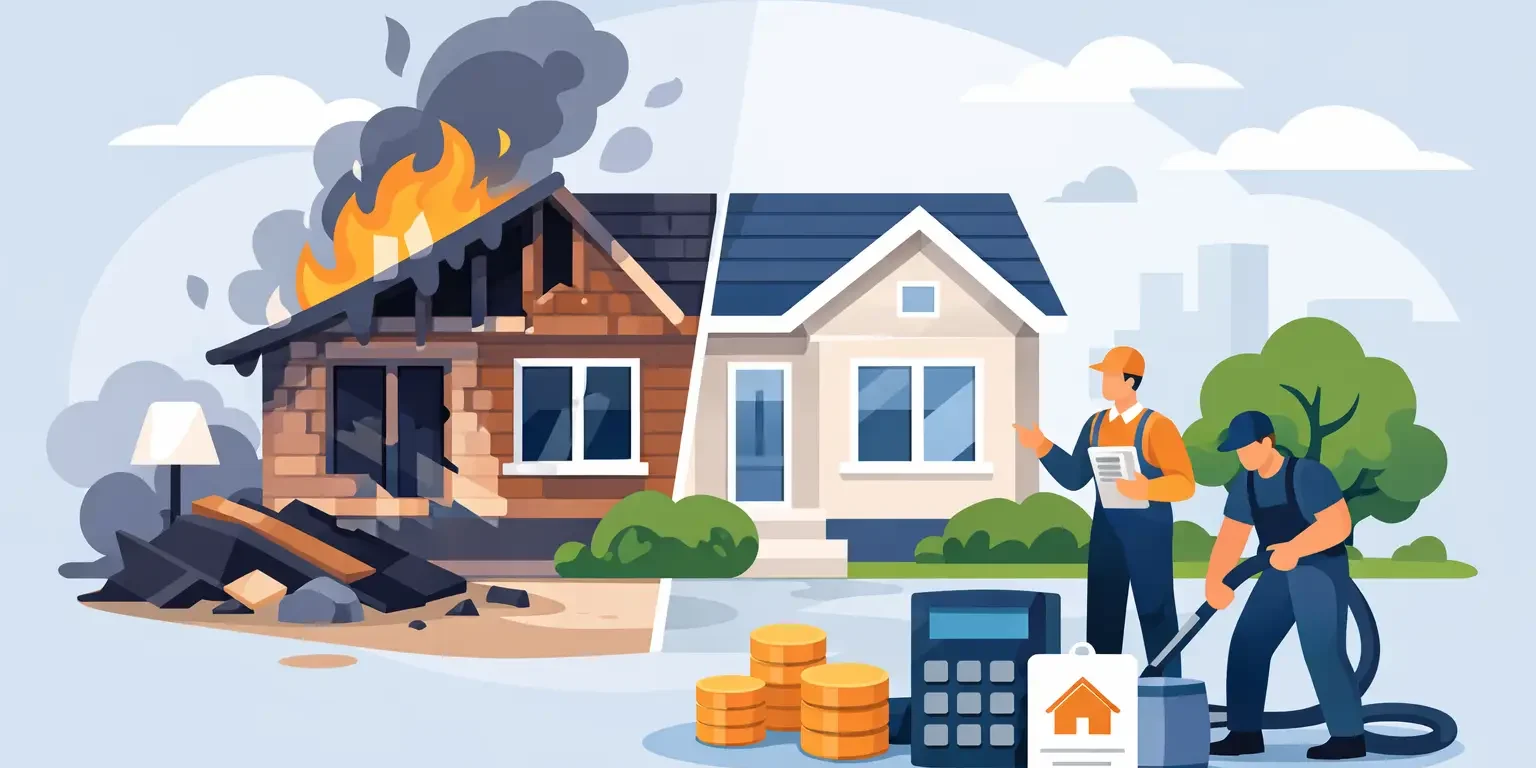
The first question most property owners ask after the fire department leaves is simple: how much does fire damage restoration cost? The hard part is that fire loss is never just fire loss. By the time restoration begins, you are often dealing with smoke residue, soot contamination, water intrusion, odor removal, debris disposal, and repairs to damaged structural materials. That is why pricing can move quickly from a manageable cleanup bill to a major restoration project.
In most cases, fire damage restoration for a small, contained loss may start in the low thousands, while larger or more complex losses can climb into the tens of thousands. Severe structural fire damage in a home or commercial building can go much higher. The real answer depends on the size of the affected area, how deeply smoke and soot traveled, how much water was used to extinguish the fire, and whether the structure is still sound enough to restore.
How much does fire damage restoration cost on average?
For a minor fire affecting a limited area, such as a kitchen fire that was stopped quickly, restoration may fall around $3,000 to $8,000 if the damage is mostly surface-level and contained. Once the fire spreads beyond one room, or smoke moves through the HVAC system and into multiple parts of the property, costs often rise into the $8,000 to $25,000 range.
For major losses involving structural framing, roofing systems, electrical components, insulation, flooring, drywall, and content damage, the total can exceed $30,000 and in serious cases move well past $50,000. Commercial properties can see even wider cost swings because downtime, code compliance, larger square footage, and specialty materials all affect the scope.
These numbers are not flat-rate prices. They are broad working ranges. A property with light visible fire damage can still produce a high restoration bill if smoke residue spread throughout the building and caused contamination in hidden spaces.
What drives fire restoration costs higher or lower?
The biggest pricing factor is the extent of the damage. A fast-extinguished stovetop flare-up is very different from a fire that burns through walls, ceilings, and support members. Contractors need to assess not only what burned, but what was exposed to heat, corrosive smoke, and suppression water.
Size matters too. A 150-square-foot damaged kitchen does not take the same labor, equipment, demolition, cleaning, and repair effort as a 2,500-square-foot home with smoke spread from end to end. The larger the affected footprint, the more materials and labor hours are needed.
The type of residue also changes the work. Dry smoke from fast-burning fires can sometimes be easier to clean from certain surfaces. Wet smoke, protein residue from kitchen fires, and thick soot from synthetic materials are usually harder to remove and more damaging. Some residues smear easily, embed into porous materials, and leave strong odors that require specialized cleaning methods.
Water damage is another major cost driver. Most fire scenes include a water mitigation component. If water sits in flooring, wall cavities, insulation, or subfloors, the restoration scope expands to extraction, drying, dehumidification, moisture monitoring, and often additional demolition to prevent mold growth.
Accessibility also matters. Fire in attics, crawl spaces, duct systems, or concealed cavities takes longer to inspect and restore. If materials contain hazardous substances, or if portions of the building are unstable, the job becomes more controlled and more expensive.
The line items behind the total bill
When owners see a restoration estimate, they sometimes focus on the repair line and miss everything that comes before it. Fire restoration is usually a sequence of emergency and technical services, not just reconstruction.
Emergency board-up or roof tarping may come first if the structure is exposed. That protects the property from weather, theft, and further deterioration. Then comes site stabilization, debris removal, water extraction if needed, and drying.
After that, the cleaning phase can become labor-intensive. Soot and smoke residues have to be removed from surfaces, contents, and often HVAC components. Odor treatment may involve thermal fogging, hydroxyl generation, ozone in controlled conditions, or other professional deodorization methods depending on the property and contamination level.
If materials cannot be salvaged, demolition and disposal costs increase the total. Drywall, insulation, cabinets, flooring, trim, and even framing may need to come out. Once the damaged materials are removed and the structure is clean and dry, repairs or rebuild work begins.
That means the final cost often includes emergency response, mitigation, cleanup, deodorization, demolition, disposal, and reconstruction. A lower estimate may reflect only part of that process, so it is important to understand whether the quote covers true full restoration or only the mitigation phase.
Why smoke damage can be expensive even after a small fire
One of the most misunderstood parts of fire restoration is smoke spread. A fire may be limited to one room, but smoke can move far beyond the burn area within minutes. It enters cabinets, porous furnishings, insulation, vents, and wall cavities. It also leaves acidic residues that continue to damage surfaces if not cleaned quickly.
That is why small fires sometimes come with surprisingly high restoration costs. You may not be paying for major rebuild work, but you are paying for detailed cleaning in multiple rooms, odor treatment, HVAC cleaning, and content handling. In properties with heavy smoke migration, labor becomes the biggest cost.
For landlords and property managers, this is especially important. If odor remains after incomplete treatment, tenants may not be able to reoccupy the space comfortably or safely. Cutting corners on smoke remediation often leads to repeat work and longer vacancy.
Residential vs. commercial fire damage restoration cost
Homes and commercial buildings are priced differently because the risks and restoration requirements are different. In a residential property, the focus is often on habitable conditions, personal contents, and restoring the living space quickly. In a commercial property, operations, liability, specialized equipment, inventory, and regulatory issues can raise the stakes fast.
A small office with limited smoke damage may still require substantial cleaning if electronics, documents, shared air systems, or customer-facing areas were exposed. Restaurants, healthcare spaces, multi-unit properties, and industrial sites usually involve more complicated remediation protocols. The cost per square foot can also shift based on finish level, occupancy type, and business interruption concerns.
For that reason, commercial owners should be careful with generic online averages. They can be useful for orientation, but not for budgeting a real loss.
Will insurance cover the cost?
In many cases, yes, but coverage depends on the policy, the cause of loss, and the scope of covered damage. A standard property policy may cover fire, smoke, and firefighting-related water damage, but that does not mean every part of the claim is automatic. Deductibles, exclusions, policy limits, and documentation all affect the payout.
This is where detailed scope matters. If the property owner waits too long to begin mitigation, secondary damage can create claim issues. Fast action protects the building and creates a clearer record of what the fire caused versus what happened afterward.
Professional documentation also helps. Moisture readings, photo records, room-by-room damage notes, and itemized estimates make it easier to support the claim. A specialist restoration contractor understands that the job is not only to clean and repair the property, but also to document the loss in a way that supports the recovery process.
How to keep fire restoration costs from escalating
Speed matters more than most people realize. The longer soot stays on surfaces, the more staining and corrosion it can cause. The longer water sits, the greater the chance of swelling, delamination, and mold growth. Delays usually increase labor, demolition, and replacement costs.
The other key step is using a restoration specialist, not a general handyman approach. Fire loss is a technical cleanup problem before it becomes a repair problem. If the smoke residue is not cleaned correctly, or if moisture is left behind, the rebuild may look finished while hidden issues remain.
That is one reason property owners call specialists like Fire and Flood Experts. The goal is to control the damage early, define the scope accurately, and move from emergency response to full restoration without losing time.
What property owners should expect from an estimate
A credible estimate should explain the affected areas, identify whether work is mitigation only or full repair, and separate salvageable materials from items that require removal and replacement. It should also account for smoke cleaning, odor treatment, water mitigation, and any structural concerns discovered during inspection.
If the estimate feels unusually low, ask what is missing. If it feels high, ask what conditions drove the scope. Fire restoration pricing is not really about a single national average. It is about what happened inside your property, how far the damage traveled, and what it takes to make the building clean, dry, safe, and usable again.
After a fire, the cheapest number on paper is rarely the number that matters most. The better question is whether the work will fully address the damage the first time, so you can move forward without hidden contamination, recurring odor, or delayed repairs.