A small kitchen fire can be out in minutes and still leave soot on walls, ceilings, vents, cabinets, and electronics throughout the property. That residue is not just a cosmetic issue. Professional soot cleanup services are designed to remove contamination quickly, reduce corrosion, control odor, and keep damage from spreading after the fire is over.
If soot is left in place, the cleanup gets harder by the hour. Metal can discolor or corrode. Painted surfaces can stain permanently. HVAC systems can move fine particles into rooms that were never near the original fire. For homeowners, landlords, and commercial property managers, that means higher repair costs, longer downtime, and more confusion during an already stressful situation.
What soot cleanup services actually involve
Soot cleanup is a specialized restoration process, not standard housekeeping. After a fire, restoration crews assess what burned, how far the residue traveled, what materials were affected, and whether there are related issues like water damage from firefighting efforts. The type of soot matters because different fires leave different residues, and each one behaves differently on drywall, wood, tile, insulation, upholstery, and hard surfaces.
A proper response usually starts with containment and air management. Technicians may isolate affected areas to stop cross-contamination, use filtration equipment to capture airborne particles, and inspect the HVAC system if smoke moved through the ductwork. From there, the work shifts to dry removal, surface cleaning, odor control, and evaluation of what can be restored versus what needs to be replaced.
This is where experience matters. Aggressive scrubbing can grind soot deeper into porous materials. Using the wrong cleaning agent can set stains or damage finishes. Wet cleaning methods can also create secondary problems if moisture is introduced into materials that are already compromised.
Why soot is more dangerous than it looks
Soot is made up of fine carbon particles mixed with other combustion byproducts. Depending on what burned, it may contain acids, chemicals, plastics residue, or oily deposits. That combination can affect both property and indoor air quality.
The immediate concern is often visibility and odor, but the less obvious problem is surface damage. Soot can etch glass, tarnish metal, yellow plastics, and stain porous materials fast. In commercial settings, it can affect inventory, office equipment, and shared ventilation systems. In residential properties, it can settle inside closets, behind doors, and inside cabinets, even when the visible fire damage seems limited to one room.
There is also a health component. Disturbing soot without proper controls can send particles back into the air where they may be inhaled or spread to clean areas. That risk is especially relevant for children, older adults, and anyone with asthma or other respiratory conditions.
Not all fire residue is the same
One reason soot cleanup services should not be treated as a one-size-fits-all job is that the residue itself varies based on the source of the fire. A slow, smoldering fire tends to leave a dense, sticky residue that clings to surfaces and penetrates porous materials. A hotter, fast-burning fire may leave a finer, drier soot that spreads farther through the property.
Protein residue from kitchen fires is another common issue. It may be nearly invisible at first, but it can leave strong odors and discolor painted surfaces over time. Fires involving synthetic materials often produce heavier chemical contamination and more aggressive odor problems.
That is why a professional inspection matters early. The cleaning approach for charred framing is different from the approach for soot on ceiling paint, finished wood, stone counters, HVAC registers, or electronics. A generic cleaning crew may treat everything the same. A restoration specialist will not.
What happens during professional soot cleanup services
The first step is usually a damage assessment. The crew identifies affected rooms, material types, moisture conditions, and any immediate safety concerns. If the fire department used water, drying and dehumidification may begin alongside soot cleanup to prevent mold and secondary damage.
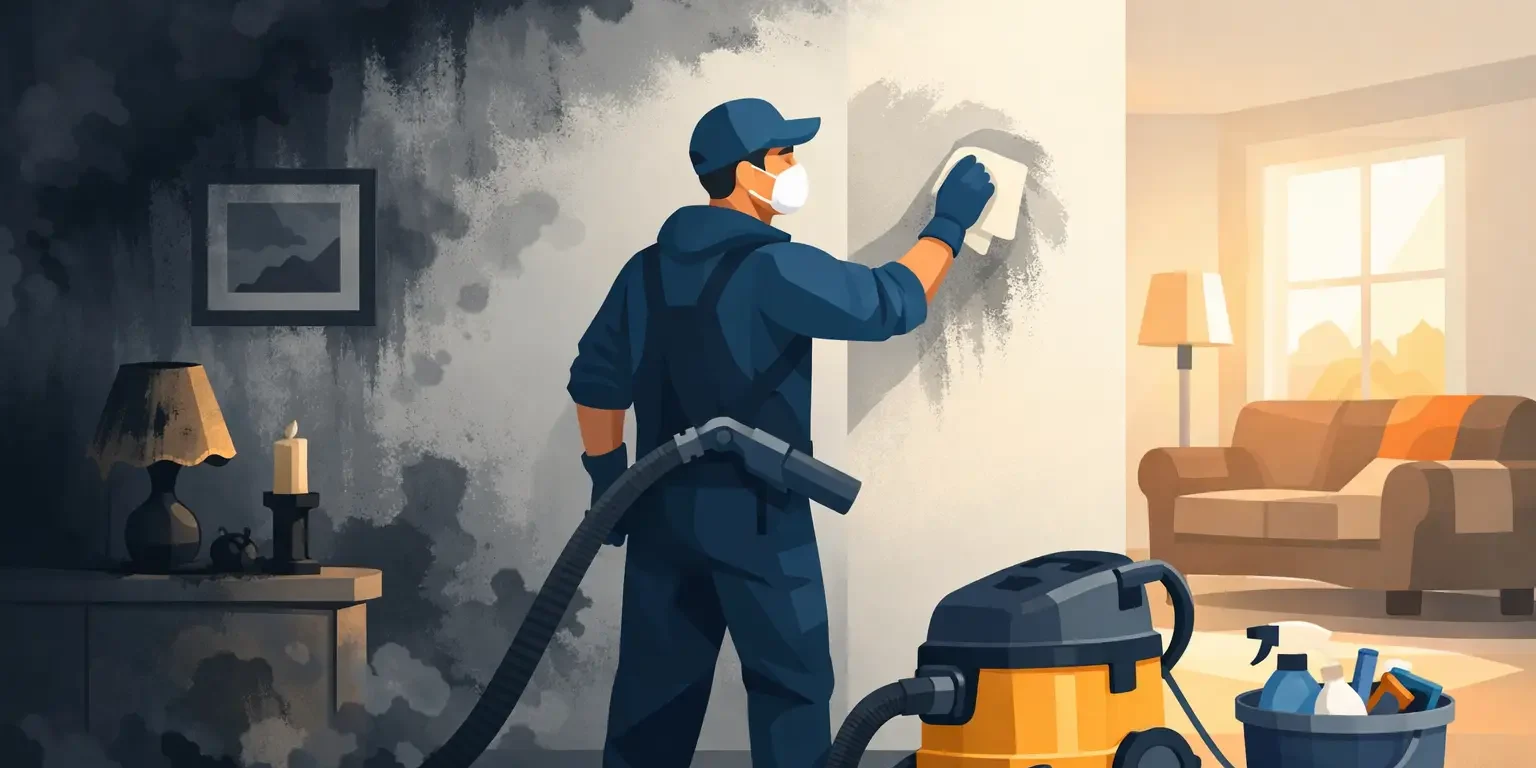
Next comes debris removal and dry soot removal where appropriate. Technicians often use specialized vacuums, soot sponges, and controlled cleaning methods to lift residue without smearing it deeper into the surface. Once loose particles are removed, they move to targeted cleaning based on the material.
Hard, non-porous surfaces may be restorable with the right products and process. Porous materials are more complicated. Some can be cleaned and sealed. Others, such as heavily affected insulation, low-grade ceiling tile, or smoke-saturated soft goods, may need replacement. The right decision depends on the level of penetration, the odor load, and whether the material can be returned to a safe and acceptable condition.
Odor treatment is another major part of the process. If soot is cleaned but odor sources remain inside structural cavities, soft materials, or HVAC components, the property will not feel fully restored. Effective odor control may include filtration, thermal methods, sealing damaged materials, and deep cleaning of affected contents and surfaces.
When DIY cleanup causes more damage
After a minor fire, many property owners want to start wiping down surfaces right away. That instinct is understandable, but it often creates larger problems. Dry soot smears easily. Oily residue from kitchen or synthetic fires can spread with common household cleaners. Painted drywall and acoustic ceilings are particularly easy to damage during amateur cleanup.
There is also the issue of hidden contamination. A room may look manageable while soot has already settled into return vents, window tracks, light fixtures, and adjacent rooms. By the time a property owner realizes the cleanup is beyond basic wiping, the residue may be more embedded and the odor more difficult to remove.
DIY efforts can also complicate insurance documentation. Before-and-after conditions, affected contents, and the extent of residue should be properly recorded. If the cleanup starts without a plan, it becomes harder to show what was damaged and what professional restoration was required.
Choosing the right soot cleanup services
Speed matters, but so does specialization. A contractor who handles general repairs is not automatically equipped to manage post-fire residue, odor migration, air filtration, and material-specific cleaning. Ask whether the company handles fire and smoke restoration regularly, whether they can coordinate water mitigation if needed, and how they determine what can be cleaned versus replaced.
It also helps to ask about containment, air scrubbers, contents cleaning, deodorization methods, and documentation for insurance claims. A strong restoration company should be able to explain the process in plain terms, move quickly to stabilize the property, and give you a realistic view of timelines and trade-offs.
For example, some contents can be cleaned off-site for better results, but that may extend turnaround time. Sealing a smoke-affected surface may be appropriate in one area and not in another. The right answer depends on the material, the severity of contamination, and the recovery goals for the property.
Residential and commercial needs are different
In a home, the focus is often on restoring safe living conditions, protecting personal belongings, and removing odor completely enough that the property feels livable again. In a commercial building, there may be added pressure around employee access, tenant disruption, regulatory requirements, and business continuity.
That difference affects the cleanup plan. A retail space may need phased work to reopen part of the property quickly. A multifamily property may need unit-by-unit containment. An office may require extra attention to electronics, shared HVAC systems, and document recovery. Soot cleanup services should be built around the property type, not forced into a standard script.
Why fast action saves money
The longer soot remains on surfaces, the greater the chance of permanent staining, corrosion, and odor absorption. Fast action does not always mean full reconstruction starts immediately. It means the property is stabilized, contamination is controlled, and the right cleaning process begins before damage becomes harder to reverse.
That is one reason specialized firms like Fire and Flood Experts focus on emergency response and technical restoration rather than general cleanup. In post-fire conditions, delays are expensive. A fast, informed response gives you the best chance to restore more, replace less, and move the property back toward normal use.
If your property has soot residue after a fire, treat it as a time-sensitive restoration issue, not a surface cleaning project. The right response protects materials, air quality, and the value of the building while giving you a clearer path through a difficult situation.