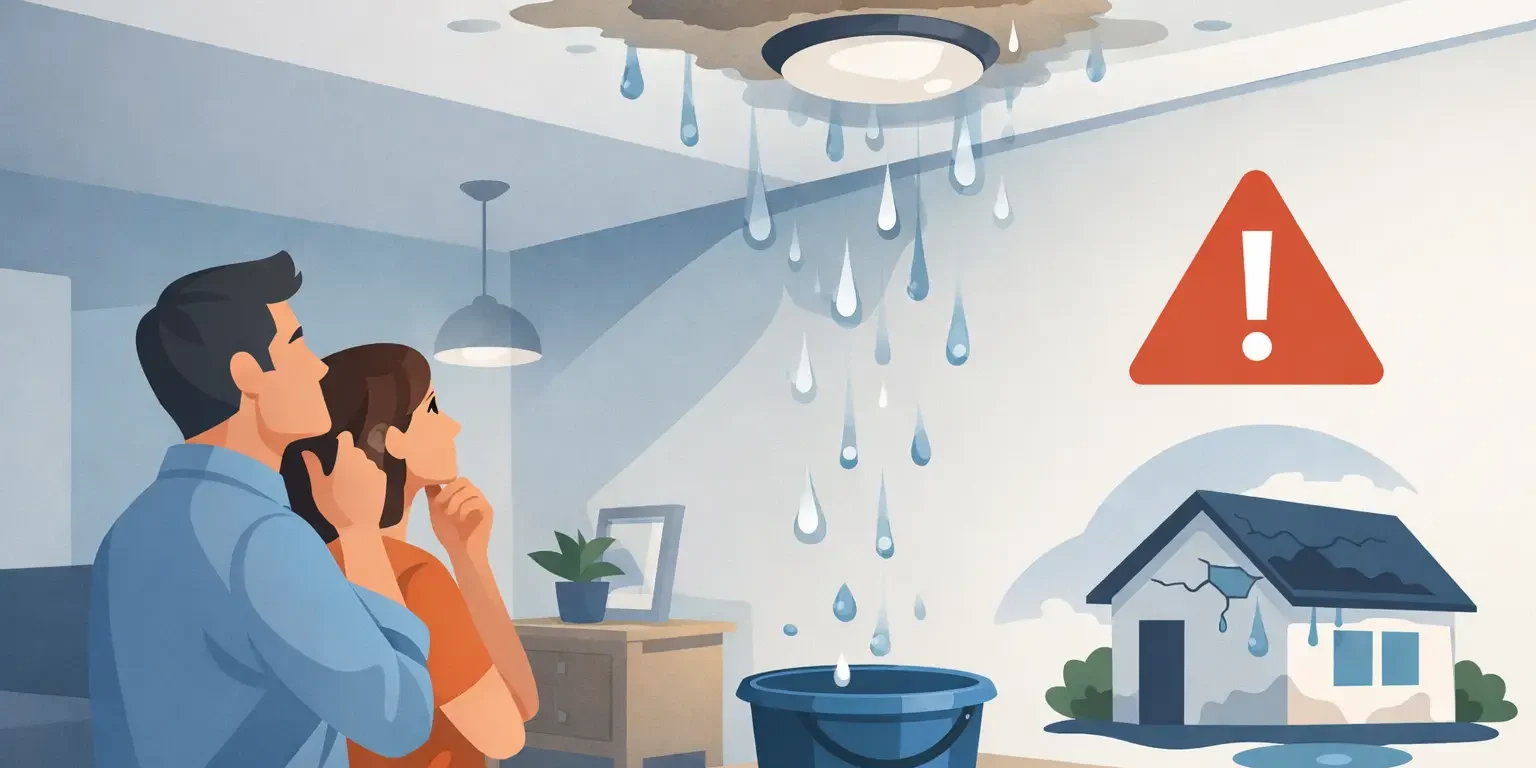
A brown ceiling stain can look like a minor maintenance issue, but the real concern is what may be happening above the drywall. Is ceiling water damage dangerous? It can be. Active leaks can create electrical hazards, weaken ceiling materials, promote mold growth, and allow contaminated water to spread through a home or commercial building. The right response is to treat ceiling water damage as a safety and containment issue first, not a cosmetic repair.
When Ceiling Water Damage Becomes Dangerous
The level of danger depends on the water source, how long the area has been wet, and where the water has traveled. A small, old-looking stain beneath a repaired plumbing leak may not present an immediate emergency. A sagging ceiling that is actively dripping, however, requires prompt action.
Water adds substantial weight to drywall, plaster, insulation, and ceiling tiles. As those materials absorb moisture, they can soften, separate from framing, and eventually collapse. A ceiling does not have to look severely damaged to be compromised. If it is bulging, sagging, cracking, or dropping debris, keep people out of the area.
Electrical exposure is another major concern. Water can travel along joists, pipes, wiring, and insulation, reaching light fixtures or outlets away from the visible stain. If water is near a ceiling light, recessed fixture, smoke detector, fan, or electrical panel, do not touch the fixture or attempt to remove it. Turn off power to the affected area at the breaker only if you can do so safely and without entering a wet area.
The water itself may also be unsafe. Clean water from a supply line is different from water that has backed up from a drain, toilet, roof drainage system, or flood event. Water involving sewage, stormwater, or unknown contamination should be handled with greater caution. It may carry bacteria, chemicals, or other contaminants that require controlled cleanup and removal of affected materials.
Warning Signs That Require Immediate Action
An active ceiling leak can worsen quickly, especially during heavy rain or when a plumbing line is still running. Do not wait for the stain to dry before deciding whether help is needed. Watch for these signs:
- A ceiling that is bowed, swollen, soft, cracked, or visibly sagging
- Dripping water, spreading discoloration, or damp walls below the ceiling
- Water near lights, outlets, ceiling fans, or electrical equipment
- A musty odor, visible mold, or damp insulation falling from an opening
- A leak after a flood, sewage backup, appliance overflow, or fire sprinkler discharge
- Water appearing across multiple rooms, floors, or ceiling sections
A bulge filled with water deserves particular caution. It may burst without warning and release a large volume of water and damaged material. Move furniture, electronics, documents, and people out from beneath it. Do not puncture a sagging ceiling if wiring, contaminated water, or structural instability may be involved.
The Hidden Damage Above the Stain
Ceiling stains are often the last visible symptom of a larger moisture problem. Water can collect inside insulation, travel along framing, soak subflooring on an upper level, and spread behind walls before it reaches the ceiling surface below.
That is why simply painting over discoloration is not a repair. Paint may cover the evidence temporarily, but it cannot dry wet insulation, stop microbial growth, or restore weakened drywall. If moisture remains trapped in the assembly, the damage may continue behind a clean-looking surface.
Mold is a common concern after prolonged water exposure, though mold does not appear instantly. Many materials can begin supporting mold growth within 24 to 48 hours under the right wet conditions. Drywall paper, wood framing, insulation, and dust accumulation can all provide a food source once moisture is present. For property owners, the practical point is simple: fast drying matters. The longer materials remain wet, the more likely the cleanup will require removal rather than drying alone.
In commercial properties, ceiling water damage may also disrupt operations beyond the immediate leak area. Wet ceiling tiles can fall into workspaces, water can affect inventory or equipment, and hidden moisture can spread across suites or common areas. Property managers should document the affected spaces, protect occupants, and address the source before reopening an area for normal use.
What to Do First After You Find Water Damage
Start by protecting people and preventing additional water from entering the structure. If a plumbing leak is suspected, shut off the local fixture valve or the main water supply if necessary. If rainwater is entering through a roof, place containers under active drips only when the ceiling is stable and it is safe to do so. Move valuables away from the affected area.
Next, consider electricity. Avoid standing water, avoid touching wet fixtures, and do not use electrical appliances near the damaged area. If water is approaching electrical components, contact a qualified professional or emergency restoration provider immediately.
Take clear photos and videos before moving damaged materials whenever practical. Documentation can help establish the source, show the extent of the loss, and support an insurance claim. Record the date, time, rooms affected, and any actions taken, such as shutting off the water supply.
Then arrange for the source of the water to be identified and stopped. A restoration team can assess moisture and begin mitigation, but a plumbing, roofing, HVAC, or appliance failure must also be corrected. Effective restoration requires both sides of the job: stopping the intrusion and drying or removing affected materials before secondary damage develops.
Why Professional Drying Is Different From Letting It Air Out
Opening windows and running household fans may help with a very small surface spill, but they are not a reliable solution for water trapped above a ceiling. Air movement alone cannot confirm that insulation, framing, wall cavities, and subfloor materials are dry.
Professional water mitigation uses moisture detection tools to identify affected areas that are not visible from the room below. Depending on the situation, the process may include controlled demolition of unsalvageable drywall or ceiling tiles, extraction, commercial dehumidification, air movement, and ongoing moisture monitoring. The goal is not merely to make the room feel dry. It is to return affected building materials to an acceptable moisture condition and reduce the chance of hidden deterioration.
There are trade-offs. In some cases, opening part of the ceiling is necessary to dry the structure correctly, even though it creates a larger visible repair in the short term. Leaving wet materials enclosed can create a more expensive problem later. A professional assessment helps determine whether materials can be dried in place or need to be removed.
When to Call for Emergency Water Damage Help
Call for immediate assistance when the ceiling is actively leaking, sagging, near electrical fixtures, or affected by contaminated water. The same is true if the source cannot be identified, the leak has spread beyond one small area, or water has entered from an upper floor, roof failure, burst pipe, sprinkler event, or appliance malfunction.
Fast response is especially valuable during the first day or two after a loss. Early containment can limit how far water migrates and may reduce the amount of drywall, flooring, insulation, and contents that need replacement. Fire and Flood Experts can help assess the affected area, contain the damage, document conditions, and begin a structured drying and restoration plan.
Do Not Ignore a Ceiling That Has Stopped Dripping
A leak that stops is not always a problem that is solved. Water may have stopped because the pipe is no longer in use, the rain has passed, or the ceiling cavity has temporarily absorbed what entered. The moisture can remain above the ceiling and continue damaging materials out of sight.
If you see staining, peeling paint, a new musty odor, or a change in the shape or texture of the ceiling, act before the next use of the plumbing system or the next storm turns a hidden issue into a collapse. A prompt inspection protects the building, the people inside it, and the cost of the eventual repair.