A hardwood floor can look nearly normal while moisture is still trapped beneath the boards. That hidden water is what turns a manageable leak into cupping, buckling, mold growth, and subfloor damage. Knowing how to dry hardwood floors quickly and correctly can preserve the floor, but the wrong drying method can cause further damage.
The priority is not simply getting the surface dry. Effective drying means removing standing water, reducing humidity, and confirming that the wood flooring and materials below it are returning to an acceptable moisture level. After a clean-water appliance leak, some owners may be able to begin the process safely. After flooding, sewage backup, or water that has been present for more than a day, professional mitigation is usually the safer decision.
Act Fast Before Hardwood Floors Swell
Hardwood absorbs water through board edges, seams, unfinished areas, and gaps around walls or transitions. The longer moisture remains, the deeper it moves into the wood and subfloor. Within hours, boards may begin to cup, where the edges rise above the center. If moisture is trapped below the floor for too long, the boards can crown, separate, loosen, or buckle off the subfloor.
First, stop the source of water if it is safe to do so. Shut off the appliance supply, address the plumbing leak, or move the water source away from the area. If the event involves electrical hazards, standing water near outlets, or a ceiling leak, do not enter the affected area until it is safe.
Remove rugs, furniture, floor mats, and other items holding moisture against the floor. Wet rugs can transfer water back into the hardwood and prevent air from reaching the surface. Move furniture carefully rather than dragging it across softened or dirty flooring.
How to Dry Hardwood Floors Step by Step
Remove standing water without soaking the floor further
Use a wet/dry vacuum to extract standing water from the surface. Make slow, overlapping passes, especially along board seams and around room edges. A wet vacuum removes far more water than towels alone and is one of the most useful tools for a small, clean-water incident.
Use clean, absorbent towels after extraction to blot remaining surface moisture. Avoid aggressively rubbing the wood, which can damage the finish or push water into seams. Do not use a household vacuum cleaner on wet flooring.
If water has migrated under baseboards, remove the baseboards carefully if you can do so without causing unnecessary damage. This exposes the wall-floor joint and allows air to reach a common moisture trap. Save and label trim pieces for reinstallation later.
Create controlled airflow across the floor
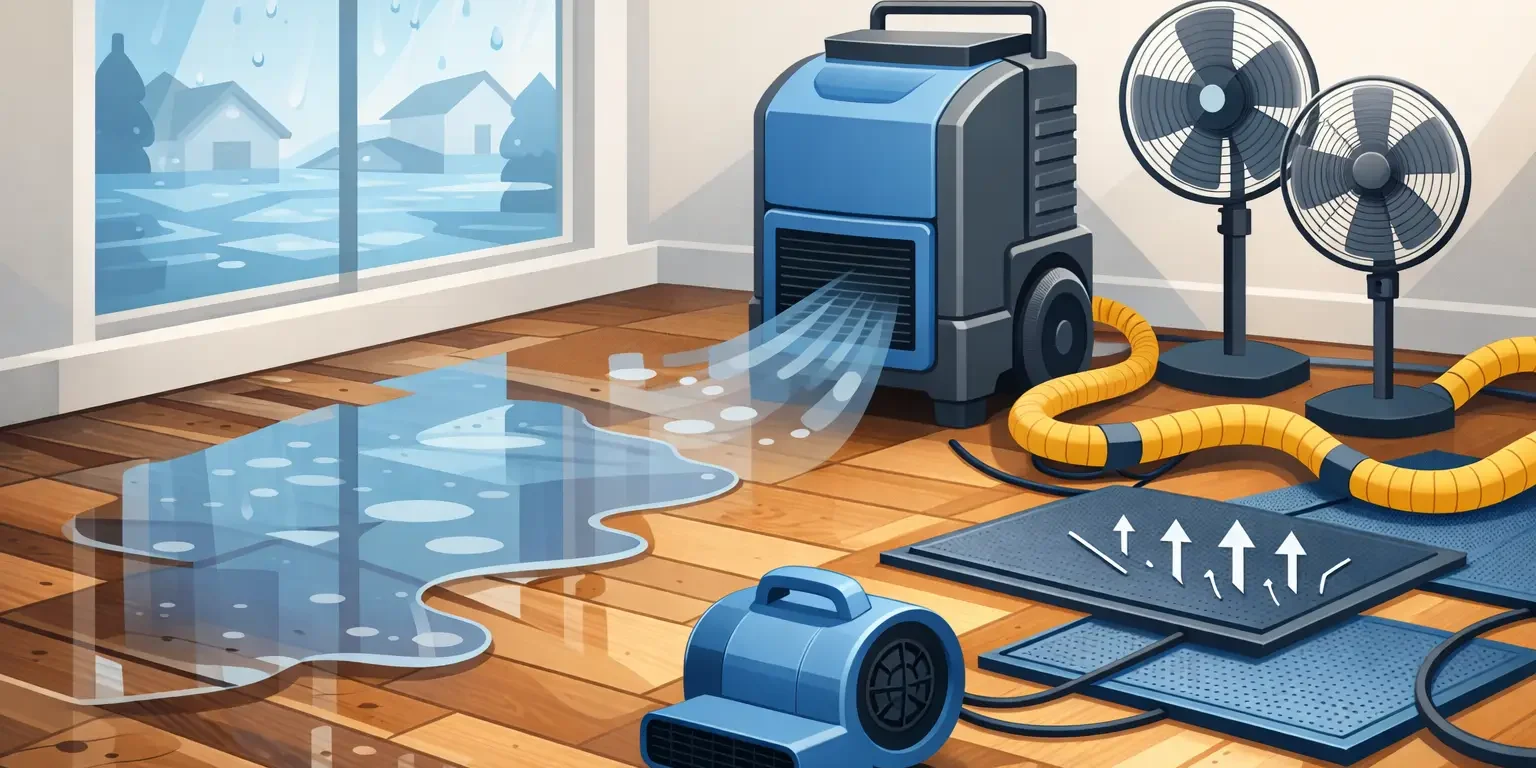
Set up air movers so they blow across the floor rather than directly down at one small area. Low, horizontal airflow helps evaporate surface moisture evenly. Position fans to move air across the affected flooring and toward an open area, then adjust them as drying progresses.
Do not rely on ceiling fans or open windows alone. Outdoor air can raise indoor humidity, particularly in humid weather, and can slow drying instead of helping. The goal is controlled drying conditions, not simply more air movement.
For a small spill that was caught immediately, fans and a dehumidifier may be enough. For water that covered a room, entered from outdoors, or sat overnight, basic fans are rarely sufficient because moisture may already be beneath the hardwood.
Use dehumidification to pull moisture from the air
A dehumidifier is critical because water evaporating from the floor has to go somewhere. Without dehumidification, the moisture stays in the room air and can be absorbed by walls, cabinets, insulation, and unaffected flooring.
Keep windows and exterior doors closed while running drying equipment. Empty a portable dehumidifier regularly or set it up to drain continuously if the unit allows. Residential units can help with minor losses, but commercial-grade dehumidifiers provide substantially better performance during a significant water event.
Avoid turning the thermostat excessively high. Extreme heat can dry the top of hardwood too rapidly while moisture remains below, increasing stress on the boards. Moderate temperature, consistent airflow, and humidity control produce safer results.
Check beneath the surface
This is where many DIY efforts fall short. The floor may feel dry underfoot while the subfloor remains wet. If water reached the perimeter of the room, entered through a gap, or soaked through seams, moisture may be trapped below the hardwood.
Look for darkened edges, raised boards, swelling near walls, gaps that were not present before, or a musty odor. These conditions suggest moisture is still active. If the floor is over a crawlspace, basement, or accessible ceiling below, inspect that area for wet insulation, dripping, staining, or damp framing.
Restoration professionals use moisture meters to compare affected wood with dry, unaffected materials in the same structure. This establishes a drying target and helps determine whether the floor can remain in place or needs selective removal. Visual inspection alone cannot confirm that hardwood and subflooring are dry.
Do Not Make These Drying Mistakes
Do not use a steam cleaner, mop, or large amount of cleaning solution on water-damaged hardwood. Additional liquid can drive moisture deeper into seams and worsen the problem.
Do not sand, refinish, or apply wax while the floor is drying. These steps can seal in moisture or create cosmetic damage that has to be corrected later. Hardwood should reach an appropriate moisture content and stabilize before repair decisions are made.
Do not assume cupped boards need immediate replacement. In some cases, cupping improves after controlled drying. Replacing boards too early can be wasteful if the flooring later settles. On the other hand, waiting too long to begin professional drying can turn salvageable flooring into a replacement project.
Do not run high heat directly on the floor with space heaters, hair dryers, or heat guns. Concentrated heat can crack finishes, dry the wood unevenly, and create a fire risk.
When Hardwood Floor Drying Requires a Professional
Call a restoration professional promptly if the water came from a flood, sewer backup, toilet overflow containing waste, stormwater intrusion, or any source that may be contaminated. Porous materials exposed to contaminated water may require removal rather than drying alone.
Professional help is also warranted when water was present for more than 24 hours, the affected area is larger than a minor spill, boards are buckling, or water may have reached the subfloor, walls, cabinets, or adjacent rooms. Commercial properties should act quickly because moisture can spread below large flooring areas and disrupt operations long after the visible water is gone.
A qualified mitigation team can extract water, assess the floor assembly, establish drying chambers where appropriate, place commercial air movers and dehumidifiers, monitor moisture readings, and document the loss for insurance purposes. That documentation can be valuable when repair or replacement costs are being reviewed.
Fire and Flood Experts approaches hardwood drying as part of the entire affected structure, not as a surface-cleaning job. The condition of the subfloor, wall cavities, trim, adjacent finishes, and indoor humidity all affect whether the floor can be saved.
After the Floor Is Dry
Continue monitoring the hardwood for several weeks. Some movement is normal as wood equalizes with the building environment, but new gaps, persistent cupping, loose boards, discoloration, or odors should be evaluated. Delay cosmetic repairs until moisture readings confirm the materials are stable.
If the floor was exposed to a small amount of clean water and dried promptly, it may need little more than cleaning and observation. If the finish is damaged or boards remain distorted after drying, a flooring specialist can advise whether refinishing, localized repairs, or replacement is appropriate.
Water damage does not always mean a hardwood floor is lost. Fast extraction, controlled drying, and moisture verification give the floor its best chance. When water has traveled below the surface or the source is unsafe, getting professional help early protects more than the wood – it protects the structure beneath it.