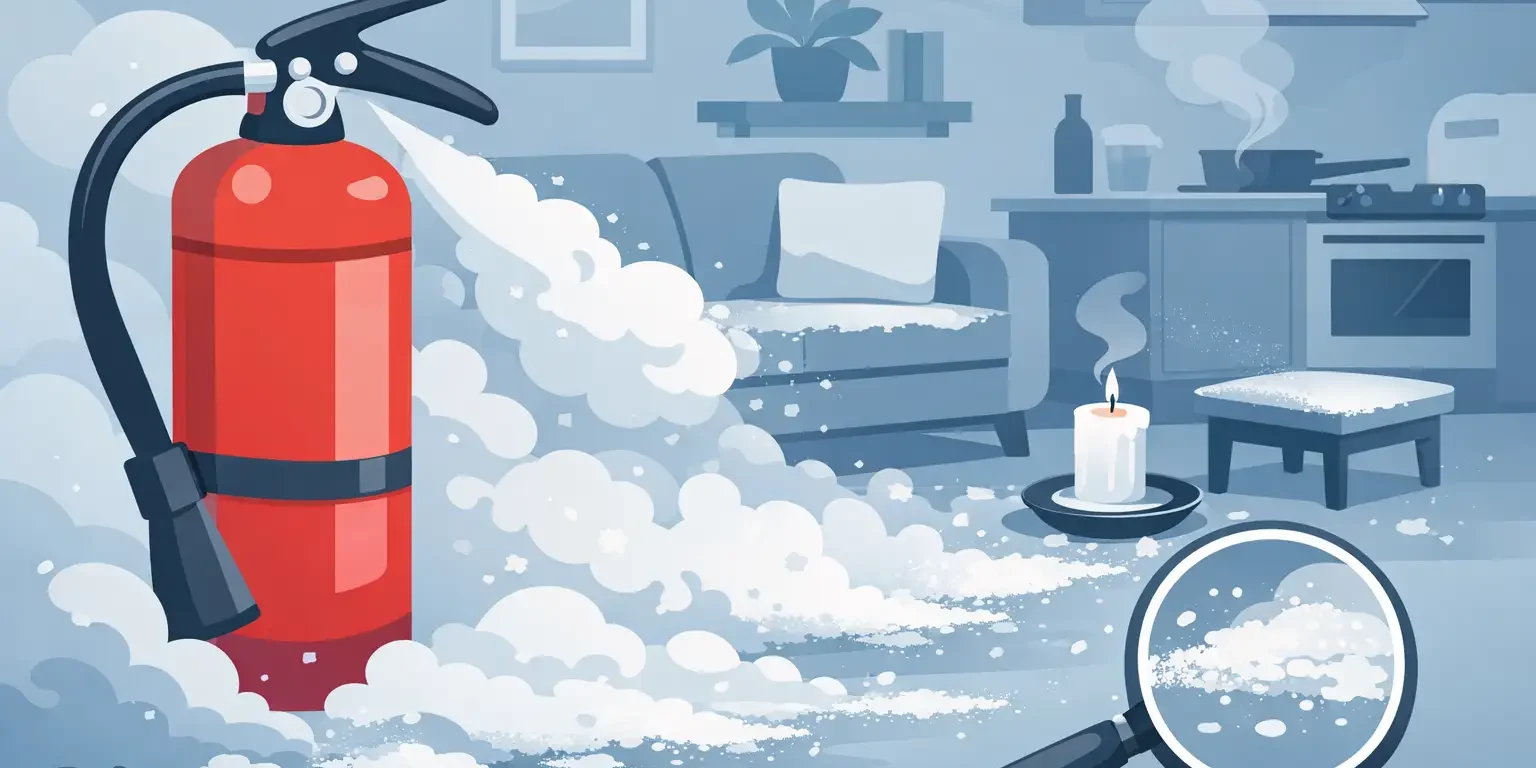
A fire extinguisher can stop a small fire from becoming a total loss. But once the immediate danger is over, many property owners ask: is fire extinguisher residue dangerous? The answer is yes, potentially. The residue may irritate eyes, skin, and lungs, contaminate surfaces, damage sensitive equipment, and cause corrosion if it is left in place.
The level of risk depends on the extinguisher agent, how much was discharged, where it settled, and whether the fire also produced smoke, soot, or water damage. A light discharge in an open garage is very different from a powder extinguisher emptied through a commercial kitchen, server room, apartment, or HVAC system.
Why fire extinguisher residue can be a problem
Most portable extinguishers used in homes and businesses contain dry chemical agents. The common multipurpose ABC extinguisher uses monoammonium phosphate, a fine yellow powder designed to interrupt combustion across ordinary combustibles, flammable liquids, and energized electrical equipment. It is effective in an emergency, but it spreads quickly and settles into cracks, ducts, appliances, textiles, and electronics.
Dry chemical residue is not usually considered highly toxic from a brief, limited exposure. Still, it is a fine particulate that can irritate the eyes, nose, throat, and respiratory system. People with asthma, COPD, allergies, or other breathing conditions may be more sensitive. Children and pets should also be kept away from affected areas until cleanup is complete.
The property risk can be just as serious as the immediate health risk. Monoammonium phosphate can become acidic when it contacts moisture. Left on metal surfaces, it may contribute to corrosion. It can also leave stubborn residue on flooring, painted finishes, furniture, appliances, and electronics. Smoke and soot from the fire may compound that damage, particularly if the affected space is humid or has been exposed to firefighting water.
Is fire extinguisher residue dangerous for each agent type?
Not every extinguisher leaves the same cleanup problem. Identifying the extinguisher type helps determine what can be handled safely and what needs professional attention.
ABC dry chemical extinguishers
ABC extinguishers are the most common units in homes, apartments, offices, and retail spaces. Their residue is fine, widespread, and difficult to remove completely. It can cause short-term respiratory and eye irritation, and it is particularly harmful to delicate electronics if it enters vents, ports, circuit boards, or mechanical components.
Do not assume that a device is safe because it appears clean from the outside. Powder can migrate into computers, printers, HVAC equipment, commercial controls, security panels, and kitchen appliances. Cleaning or restarting contaminated equipment without proper inspection can lead to corrosion-related failures later.
BC dry chemical extinguishers
BC extinguishers often contain sodium bicarbonate or potassium bicarbonate. These agents are generally less acidic than ABC powder, but they can still irritate the respiratory system and leave residue throughout the property. They can also interfere with electronics and machinery, especially when moisture is present.
Carbon dioxide extinguishers
CO2 extinguishers leave no powder residue. However, they can create an oxygen-displacement hazard in small, enclosed areas during or immediately after use. Once the space is ventilated and the fire is confirmed out, there is usually no residue cleanup issue. There may still be smoke, soot, or fire damage to address.
Foam and wet chemical extinguishers
Foam extinguishers and Class K wet chemical extinguishers leave liquid residue. Class K units are common around commercial cooking equipment because they suppress grease fires effectively. The residue can be slippery, alkaline, and difficult to remove from cooking surfaces, hoods, floors, and equipment.
In food-service settings, treat exposed food, utensils, single-use packaging, and food-contact surfaces as contaminated until they are properly cleaned and sanitized. A business may also need to coordinate with its local health department before reopening.
What to do immediately after using an extinguisher
Do not begin cleanup until the fire department or qualified personnel confirms that the fire is fully extinguished. A fire can continue smoldering behind walls, above ceilings, under flooring, or inside appliances. If there is any doubt, leave the property and call 911.
Once it is safe to return, ventilate the area by opening exterior doors and windows if doing so does not compromise the property or spread smoke to unaffected spaces. Keep people, pets, and unnecessary foot traffic away from the affected room. Walking through dry chemical powder can carry it into clean areas and grind it into carpet, grout, and flooring seams.
Photograph the extinguisher, residue, damaged items, and fire source before moving or cleaning anything. This documentation may be useful for insurance reporting. Do not discard the extinguisher, even if it appears empty. It may be needed to identify the agent used or document the incident.
If the fire involved wiring, appliances, a furnace, a commercial hood, or any electrical panel, do not restore power until the system has been evaluated. Extinguisher powder and water used during firefighting can both create electrical and corrosion concerns.
How to clean extinguisher residue safely
A small, contained discharge may be manageable for a property owner. Wear gloves, eye protection, and a properly fitted particulate mask while working. Avoid dry sweeping, blowing the powder with fans, or using a standard household vacuum. Those methods can put fine particles back into the air and spread contamination through the building.
For hard, nonporous surfaces, carefully remove loose powder with a HEPA-filtered vacuum. Follow with controlled damp wiping using clean cloths, changing cloths frequently so residue is not redistributed. Use minimal moisture around metal, electrical components, and unfinished materials. Dry the surface promptly after cleaning.
Soft goods are more complicated. Powder can settle deep into carpet fibers, upholstered furniture, draperies, bedding, and clothing. Surface vacuuming alone may not remove it. Washable textiles may be laundered according to their care labels after loose debris is removed, but heavily contaminated or smoke-affected items may need professional contents cleaning.
Do not use household cleaning methods on electronics, circuit boards, control panels, or equipment interiors. Do not spray water, vinegar, or cleaning solution into vents or openings. These items require careful inspection and specialized cleaning to prevent further damage.
When professional restoration is the safer choice
Professional cleanup is recommended when an extinguisher discharged inside a large area, near sensitive equipment, into an HVAC system, or across porous materials. It is also the right call when residue is mixed with smoke, soot, water, grease, or biological contamination.
A restoration team can contain the affected area, use HEPA air filtration and specialized vacuuming, assess hidden migration, and coordinate cleaning for structural materials and contents. This matters because extinguisher residue does not always stay where it lands. Air movement can carry powder into adjacent rooms, return vents, ceiling cavities, and equipment enclosures.
For commercial properties, fast, documented cleanup also supports reopening decisions, tenant communication, equipment recovery, and insurance claims. Fire and Flood Experts approaches these losses as more than a surface-cleaning job. The goal is to identify all affected materials, prevent secondary damage, and return the property to a safe, functional condition.
Do not overlook the fire itself
The extinguisher residue may be visible, but the fire that caused it can leave less obvious hazards. Smoke particles can travel far beyond the burn area. Soot may contain irritating compounds and can stain or corrode surfaces. Firefighting water can soak insulation, drywall, flooring, and cabinetry, creating conditions for microbial growth if drying is delayed.
That is why the cleanup plan should account for the full event, not just the powder on the floor. A small stovetop flare-up contained with an extinguisher may need limited cleaning. A fire involving an appliance, wall, electrical system, or commercial operation requires a broader assessment.
Treat extinguisher residue as a signal to inspect carefully, not as a mess to rush through. Prompt, controlled cleanup protects the people in the building and can prevent a manageable fire loss from becoming a larger restoration problem.