A burst supply line can soak framing, flooring, insulation, and contents long before water becomes visible in the next room. That is why understanding water mitigation vs restoration matters. These are related services, but they are not interchangeable. Mitigation stops water damage from getting worse. Restoration repairs or replaces what the loss damaged after conditions are stable.
For property owners, the distinction affects the first calls you make, the work your insurance carrier may document, and how quickly your home or business can return to normal use. The right response is not to choose one service over the other. In most significant water losses, mitigation must happen first so restoration can be done correctly.
What Is Water Mitigation?
Water mitigation is the emergency work performed to control a water loss and prevent additional damage. Its purpose is immediate: stop the source, remove standing water, dry affected materials, and reduce the risk of mold growth or structural deterioration.
Mitigation begins with identifying where the water came from and whether it is still active. A failed appliance hose, overflowing toilet, roof leak, broken pipe, backed-up drain, and floodwater each require different safety precautions and cleanup methods. If the source cannot be safely stopped, water removal alone will not solve the problem.
A professional mitigation crew uses moisture meters, thermal imaging, extraction equipment, air movers, dehumidifiers, and containment when needed. They do more than place fans in a wet room. The goal is to find moisture that has traveled beneath flooring, behind walls, into cabinets, or through ceiling cavities before it creates a larger problem.
Typical water mitigation work includes:
- Stopping or isolating the water source when possible
- Extracting standing water from floors, carpets, and building materials
- Removing unsalvageable wet materials, such as saturated padding or damaged drywall
- Setting drying equipment and monitoring moisture levels
- Cleaning and applying antimicrobial treatment where conditions require it
- Documenting affected areas, equipment readings, and the drying process
Mitigation is considered successful when the structure and remaining materials have reached acceptable dry standards and the immediate risk of further water-related damage has been controlled.
What Is Water Restoration?
Water restoration is the repair and reconstruction phase that follows mitigation. Once the property is dry, safe, and stable, restoration addresses the damage left behind. This may involve minor repairs, or it may require a coordinated rebuild of multiple rooms.
Restoration can include replacing drywall, insulation, trim, flooring, cabinets, doors, and damaged finishes. It may also involve repainting, repairing structural components, reinstalling fixtures, and returning commercial spaces to safe operating condition. The scope depends on how long water was present, what materials were affected, and whether contaminated water was involved.
A small clean-water leak caught quickly may need limited mitigation and a simple repair. A major pipe break that saturates walls and hardwood flooring may require extensive drying, selective demolition, and reconstruction. Floodwater or sewage backup can create an even broader restoration scope because contaminated porous materials often cannot be safely saved.
Restoration is not just cosmetic work. It is the final stage of returning the property to its pre-loss condition as closely as practical. Starting repairs before the drying process is complete can trap moisture inside walls or under flooring, creating conditions for mold, odors, and repeat damage.
Water Mitigation vs Restoration: The Key Difference
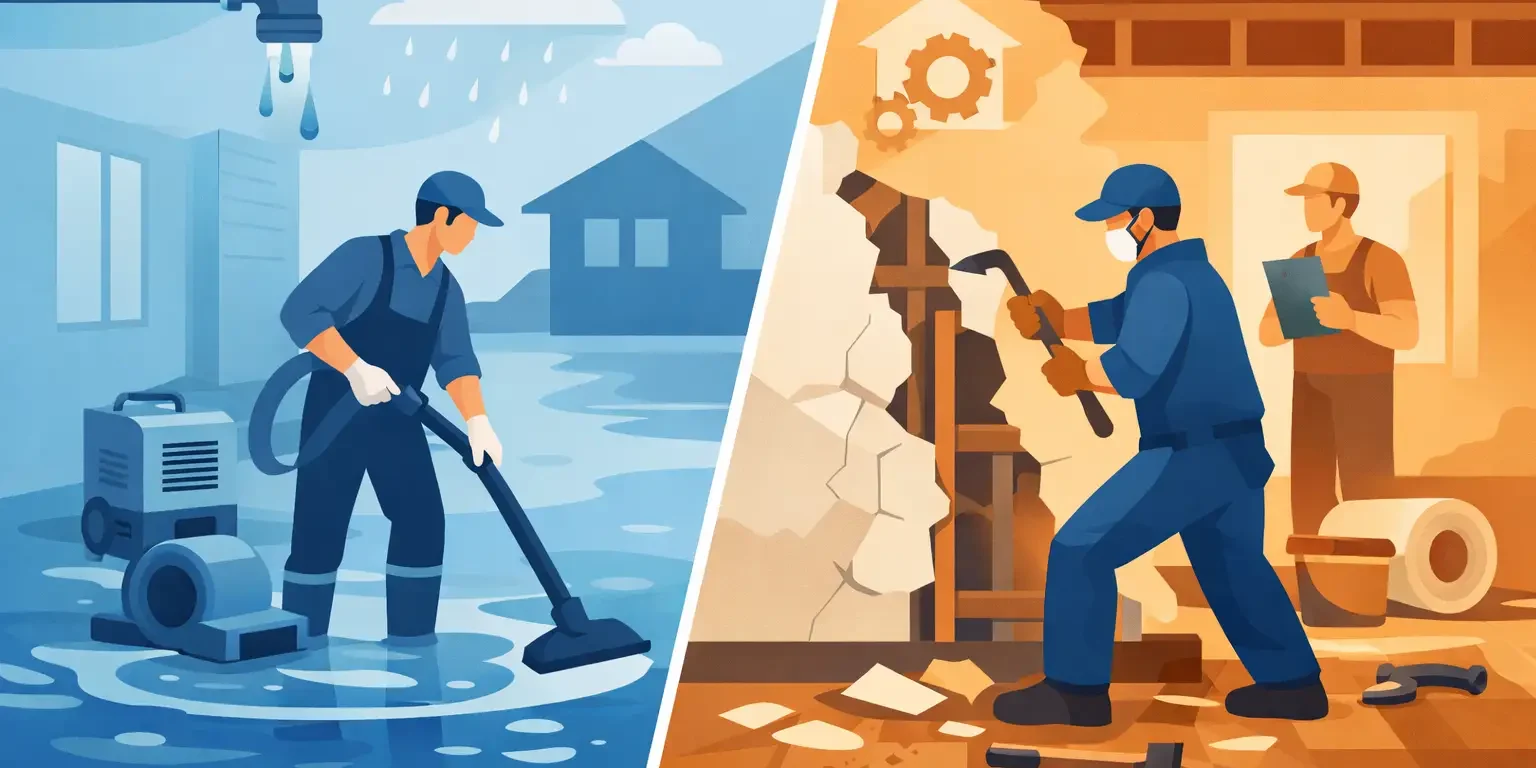
The simplest way to separate water mitigation vs restoration is by purpose and timing. Mitigation is emergency damage control. Restoration is the repair work that brings the property back.
Mitigation answers: “How do we stop this loss from spreading right now?” Restoration answers: “How do we rebuild what the loss damaged?” Both are necessary after many water events, but they happen in sequence.
For example, imagine a washing machine supply line fails while you are away. Water runs through the laundry room, into an adjacent hallway, and down into the ceiling below. Mitigation professionals would extract water, inspect hidden moisture, remove saturated materials if necessary, and dry the affected structure. After drying is verified, restoration may include replacing ceiling drywall, baseboards, flooring, and paint.
The line between the two services can sometimes overlap. Removing a damaged section of drywall during mitigation may look like a repair task, but it is performed to expose wet framing and allow the building to dry. Replacing that drywall after drying is restoration.
Why Fast Mitigation Protects the Restoration Budget
Water damage changes quickly. Materials that may be salvageable during the first hours can become permanently damaged after prolonged saturation. Wood can swell, laminate flooring can buckle, drywall can lose structural integrity, and moisture can migrate beyond the original loss area.
Fast extraction and controlled drying can reduce the amount of demolition and replacement required later. That does not mean every material can be saved. It means the restoration scope is based on actual damage rather than damage allowed to grow because the response was delayed.
Speed also matters because mold can begin developing when moisture remains in a favorable environment. Not every water loss results in mold, and visible mold is not the only concern. Hidden moisture behind cabinets, inside wall cavities, or below flooring can create conditions that require additional remediation if drying is incomplete.
For commercial properties, delay can also mean lost operating time. A wet office, retail space, apartment unit, or facility may need mitigation immediately to protect equipment, inventory, tenant spaces, and business continuity. The sooner the property is stabilized, the sooner restoration planning can move forward.
The Water Category Changes the Work
Not all water is treated the same. The source affects what can be cleaned, what must be removed, and the safety controls needed during mitigation and restoration.
Clean water generally comes from a sanitary source, such as a broken supply line or an appliance leak. Gray water may contain contaminants from sources like washing machines, dishwashers, or some plumbing overflows. Black water is highly contaminated and may come from sewage backups, toilet overflows containing waste, or outside flooding.
A clean-water loss that is addressed promptly may allow more materials to be dried and saved. Contaminated water may require removal of carpet, padding, insulation, drywall, contents, or other porous materials that cannot be reliably cleaned. This is one reason a professional assessment matters. The visible amount of water does not tell the full story.
What Property Owners Should Do First
If water is actively entering the property, prioritize safety. Avoid electrical hazards, do not enter areas with standing water near outlets or equipment, and keep people away from contaminated water. If you can safely shut off the water source, do so. For a plumbing failure, that may mean closing a local valve or the main water shutoff.
Then document visible conditions with photos or video if it is safe and does not delay emergency action. Move dry valuables away from the affected area when possible, but avoid lifting heavy, soaked materials or disturbing contaminated areas. Contact your insurance carrier according to your policy requirements, and arrange professional mitigation as soon as possible.
Do not assume that surface drying is enough. Towels, household fans, and a wet vacuum may help with a very minor spill, but they usually cannot verify moisture inside structural materials. If water reached walls, floors, cabinets, ceilings, insulation, or multiple rooms, professional moisture inspection is the safer decision.
How Mitigation and Restoration Work With Insurance Claims
Insurance coverage depends on the cause of loss, policy language, deductibles, exclusions, and the condition of the property. A sudden accidental pipe break may be handled differently from long-term seepage, repeated leaks, groundwater intrusion, or a maintenance-related issue.
Mitigation documentation is valuable because it records the initial condition, affected materials, moisture measurements, equipment used, and drying progress. Restoration estimates then identify the repairs needed after mitigation. Clear separation of these phases helps everyone understand what was done to prevent additional damage and what is required to rebuild.
Property owners should not wait for every insurance conversation to be completed before taking reasonable steps to prevent further damage. Most policies require policyholders to protect the property from additional loss. Keep records, save receipts, and ask questions when an estimate or scope is unclear.
When You Need Both Services
You may need mitigation only after a small, quickly addressed leak with no lasting material damage. You may need restoration only when a prior water event was dried correctly but repairs were deferred. In a substantial loss, however, the answer is usually both.
Fire and Flood Experts approaches water losses in the proper order: control the emergency, dry the affected structure, document the conditions, and then plan repairs based on the verified scope. That sequence protects the property and avoids rebuilding over unresolved moisture.
When water enters your property, the most useful question is not whether mitigation or restoration is more important. Ask whether the water is fully stopped, whether hidden materials are dry, and whether the repair plan addresses every damaged area. Those answers determine whether the property is truly on the path back to normal.