A supply line bursts at 2 a.m., a toilet overflows into the hallway, or stormwater starts creeping under the back door. In those first few minutes, most property owners ask the same question: when to call water mitigation, and when is it something you can handle yourself? The answer depends on how much water is involved, where it went, how long it has been there, and whether contamination or hidden moisture is part of the problem.
Water damage moves fast. Drywall absorbs it, flooring traps it, insulation holds it, and wood framing can start swelling before the surface even looks severe. Waiting to see if it dries on its own is where a small cleanup turns into structural drying, demolition, mold remediation, and a much larger insurance claim.
When to call water mitigation immediately
If water is still actively entering the property, call right away after you shut off the source and address any immediate safety issue. That includes broken pipes, overflowing appliances, roof leaks during heavy rain, slab leaks, sprinkler failures, water heater ruptures, and storm or flood intrusion. Active water loss is not a wait-and-watch situation.
You should also call immediately if the water has spread beyond a small, contained area. A single soaked bathroom floor is one thing. Water running into adjacent rooms, under baseboards, into carpet padding, behind cabinets, or through ceilings is different. At that point, surface drying with fans and towels will not solve the actual problem.
Contaminated water is another clear trigger. Sewage backups, toilet overflows involving waste, stormwater entering from outside, and discharge from some appliance failures may contain bacteria and other hazards. In those cases, the issue is not just moisture. It is sanitation, material safety, and proper removal.
If water affects electrical systems, outlets, light fixtures, or equipment, stop and call professionals. The same goes for ceiling bulges, sagging drywall, or any sign that water is sitting overhead. Structural and electrical risks change the job from cleanup to emergency response.
Signs the damage is already bigger than it looks
One reason people wait too long is that visible water often disappears before the structure is dry. Carpet may feel only damp while the pad underneath is saturated. A wall may show one stain while insulation inside the cavity is holding moisture across a much larger section. Vinyl and laminate flooring are especially deceptive because they can trap water below the surface.
If you notice buckling floors, swollen baseboards, peeling paint, soft drywall, musty odor, or discoloration spreading over time, the moisture has likely moved beyond what you can air-dry with household equipment. This is one of the most common points when to call water mitigation becomes obvious. The visible damage is catching up to what the hidden moisture has already been doing.
Time matters here. In the first 24 to 48 hours, the priority is extraction and controlled drying. After that, materials can deteriorate faster, odors set in, and mold risk rises. That does not mean mold appears on a fixed schedule in every case, but the longer moisture remains in enclosed materials, the less room you have for simple drying.
Situations that may not need full mitigation
Not every water event requires a mitigation crew. If a small amount of clean water spills on a hard, non-porous floor and is dried quickly with no seepage into surrounding materials, you may not need professional help. The same applies to a minor sink overflow that stayed contained, was cleaned up immediately, and did not affect cabinets, drywall, or flooring assemblies.
The key difference is whether the water stayed on the surface and whether you can confirm the area is truly dry. Once moisture gets into porous materials or hidden cavities, the decision changes. Property owners often underestimate how often that happens.
A practical rule is this: if you cannot confidently verify where the water traveled, how long it sat, and whether everything affected is drying properly, it is safer to call. Water mitigation is not just for major floods. It is also for moderate losses that can become major if the response is delayed.
When to call water mitigation for commercial properties
Commercial water losses tend to get expensive faster. Even a limited leak can affect tenant operations, inventory, electronics, shared walls, or building systems. In offices, retail spaces, restaurants, medical spaces, and multifamily buildings, the cost of downtime often exceeds the visible repair cost.
That is why commercial property managers and facility operators should call early when water affects occupied areas, multiple units, common areas, server or electrical rooms, or any business-critical operation. Fast mitigation helps contain the spread, document conditions, and shorten interruption. It also creates a clearer record for owners, tenants, and insurers.
For multifamily properties, another issue is migration. Water from one unit can move laterally and vertically, affecting units that do not show obvious damage right away. Waiting on the first complaint can lead to several more.
What water mitigation professionals actually do
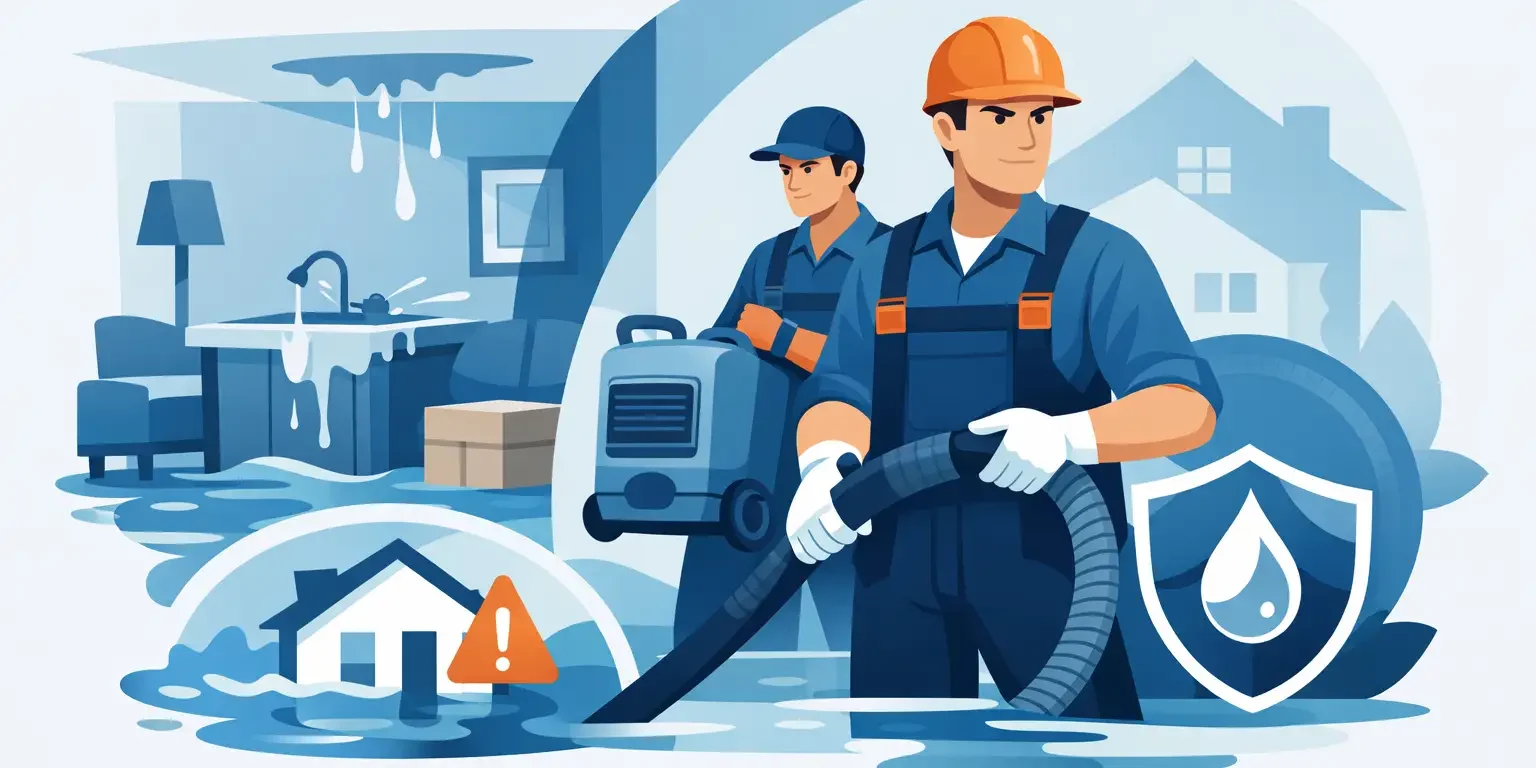
Many property owners hear the term but are not sure what it includes. Water mitigation is the emergency phase focused on stopping damage from getting worse. That usually starts with assessing the source, identifying the affected areas, extracting standing water, removing unsalvageable materials where needed, and setting up drying equipment based on the structure and moisture load.
A professional team uses moisture meters, thermal imaging, and other tools to map wet materials, not just what is visible on the surface. Drying is then monitored and adjusted. In a serious loss, controlled demolition may be required to expose trapped moisture and prevent secondary damage.
This is different from basic cleanup or later reconstruction. Mitigation is about stabilization. It protects the structure, helps salvage materials when possible, and reduces the chance that a straightforward water loss becomes a larger restoration project.
The insurance question
A lot of people delay the call because they are trying to decide whether to file a claim. That hesitation can cost them. If the loss is significant, the best move is usually to document conditions, stop further damage if you can do so safely, and get mitigation involved quickly. Insurers generally expect property owners to take reasonable steps to prevent additional damage.
That does not mean every loss should become a claim. Small, contained incidents may be better handled out of pocket depending on your deductible and policy. But the claim decision and the mitigation decision are not always the same. You can need immediate drying even while you are still sorting out coverage.
Photos, a record of when the damage was discovered, and a clear timeline of what happened are all helpful. So is professional documentation of moisture conditions and affected materials.
What to do before the crew arrives
If it is safe, stop the water source. Shut off the local supply valve or main water line if needed. Turn off electricity to affected areas if water is near outlets or fixtures and you can do so safely. Move valuables, paper goods, electronics, rugs, and furniture out of wet areas when possible.
Avoid using a standard household vacuum on standing water. Do not pull up flooring or open walls unless you know what you are dealing with. Well-intended tear-out can complicate drying plans, spread contamination, or remove materials that could have been saved.
If the source is sewage or potentially contaminated water, limit access to the area and keep occupants and pets away. In those cases, containment matters as much as cleanup.
The cost of waiting
The biggest mistake in water losses is treating time like a neutral factor. It is not. Every hour changes the drying load, the condition of materials, and the probability of secondary issues. Flooring adhesives can fail. Drywall can lose integrity. Cabinets can swell. Odors can settle in. Hidden moisture can remain active long after standing water is gone.
There is also a practical business issue. The longer you wait, the harder it becomes to separate original damage from preventable secondary damage. That can create problems for repair planning and insurance documentation.
For homeowners, landlords, and commercial property operators, the threshold is simpler than many expect. If water is spreading, has soaked into materials, may be contaminated, or has been sitting long enough that you cannot be sure what is still wet, call. That is when water mitigation provides the most value – early enough to contain the loss, dry the structure correctly, and keep the next phase of repairs from becoming bigger than it needs to be.
When property damage is moving faster than you can control with basic cleanup, decisive action is the smartest form of damage control.