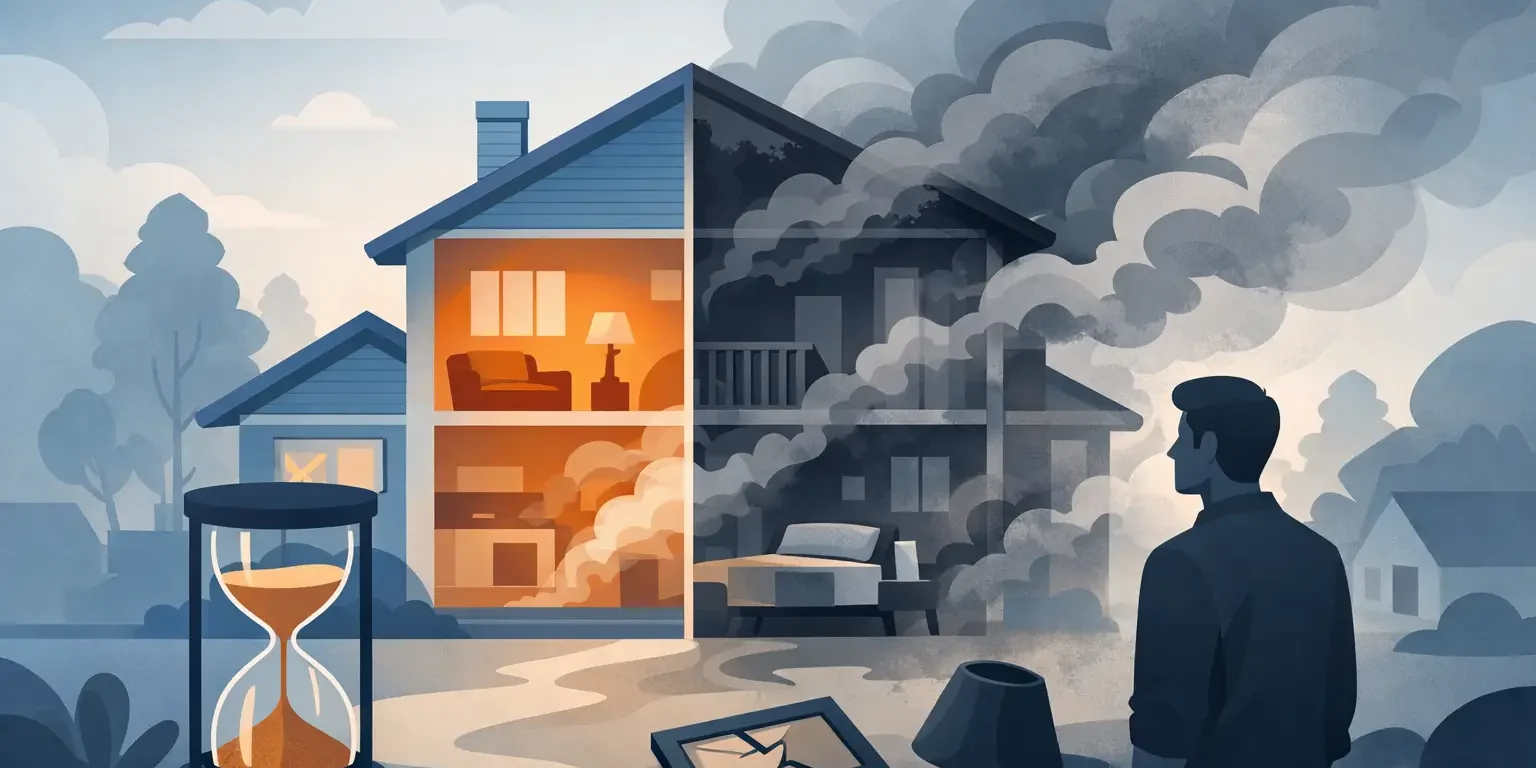
A fire can be out in minutes, yet the smell may still be in the hallway, the HVAC system, and the fabric of the building weeks later. So, how long does smoke damage linger? Without proper cleaning, smoke residue and odor can remain for months or years – and in some materials, it may become a long-term problem that gets worse when humidity or heat rises.
Smoke is not just a bad smell. It is a combination of microscopic particles, soot, oils, and chemicals that settle on walls, ceilings, furniture, insulation, clothing, and mechanical systems. The right response depends on the fire, the materials burned, how quickly cleanup begins, and whether the property was exposed to firefighting water as well.
How Long Does Smoke Damage Linger After a Fire?
Light smoke odor from a small, contained event may fade within days after thorough ventilation and professional cleaning. That is the best-case scenario, not the standard. Smoke from a kitchen fire, electrical fire, vehicle fire, or structure fire can remain detectable for several weeks or longer when residue is left behind.
In homes and commercial buildings with significant fire damage, smoke odor often persists indefinitely until the affected surfaces and contents are properly treated. Opening windows, burning candles, or using room sprays may cover the smell temporarily, but they do not remove the particles causing it.
The timeline is especially unpredictable because smoke travels far beyond the burn area. It moves through door gaps, wall cavities, ductwork, closets, and upper floors. A fire contained to one room can leave residue throughout the property.
Why smoke odor returns
Many property owners notice that a building smells better after the first cleanup, then the odor returns on a warm or humid day. This happens because smoke particles can remain embedded in porous materials. Heat and moisture reactivate the odor and release it back into the air.
Porous materials are common odor reservoirs. Upholstery, carpet padding, mattresses, curtains, unfinished wood, insulation, paper products, and drywall can all hold smoke contamination. If those materials cannot be cleaned effectively, sealing or replacement may be necessary.
What Determines How Long Smoke Damage Lasts?
The type of fire has a major effect on cleanup difficulty. Different fuels create different kinds of soot, and each requires a different cleaning approach.
Dry smoke, often produced by fast-burning wood or paper, leaves a fine powdery residue that can spread widely. It may be easier to remove from hard, nonporous surfaces, but it still enters cracks and HVAC systems. Wet smoke, usually associated with slow-burning plastics, rubber, or synthetic materials, leaves a sticky, smeared residue with a strong odor. It is more difficult to remove and can cause serious surface damage if handled incorrectly.
Protein residue from burned food is another common issue. It can be nearly invisible, yet it creates a strong, persistent odor that spreads through a home. Petroleum-based soot, common after furnace puff-backs or fuel-related fires, can be oily and cling aggressively to finishes and contents.
Other factors that affect the timeline include:
- The size, temperature, and duration of the fire
- The type of materials that burned
- How long residue sits before cleanup begins
- Whether the HVAC system was operating during the fire
- The amount of water and humidity introduced during firefighting
- The age and condition of building materials and contents
A newer painted wall with a washable finish may be restored successfully. Older drywall, exposed framing, or a heavily contaminated insulation cavity may require more extensive work. This is why a visual inspection alone is not enough to determine the full scope of smoke damage.
Smoke Damage Is More Than an Odor Problem
Soot is acidic and corrosive. Left in place, it can discolor paint, stain grout, tarnish metal, etch glass, and damage electronics. The longer it remains on a surface, the harder it can be to remove without causing additional damage.
Smoke residue can also affect indoor air quality. Fine particles may be disturbed by normal activity, cleaning attempts, or HVAC operation. People with asthma, allergies, respiratory conditions, or chemical sensitivities may be particularly affected. Children, older adults, and pets can also be more vulnerable to poor indoor air conditions after a fire.
For commercial properties, lingering smoke can create operational issues even when visible fire damage appears limited. Employees and customers may notice odor immediately. Inventory, files, upholstered office furniture, and electronics may need evaluation before the building returns to normal use.
Why DIY Cleanup Often Leaves Smoke Behind
A quick wipe-down with household cleaner rarely solves a smoke problem. In some cases, it makes matters worse. Dry soot can smear when rubbed, driving residue deeper into painted surfaces, fabrics, or carpet fibers. Vacuuming without appropriate filtration can also redistribute fine particles into the air.
Painting over smoke-damaged walls before cleaning and sealing is another frequent mistake. If odor-causing residue remains, it can bleed through paint or continue to release odor. The surface needs to be properly cleaned, dried, and treated with the appropriate odor-blocking sealer before repainting, when repainting is part of the restoration plan.
Air fresheners, fragrance machines, and candles are not smoke remediation tools. They add another scent to the air but leave the source intact. Ozone generators are also not a casual DIY solution. They require controlled use, unoccupied conditions, and professional judgment because ozone can irritate lungs and damage certain materials.
What Professional Smoke Restoration Involves
Effective restoration begins with identifying where smoke traveled and what type of residue is present. Technicians inspect the fire area, adjacent rooms, hidden cavities when indicated, contents, and HVAC components. They also assess water damage, because fire suppression water can introduce moisture and mold risk within a short period.
The cleanup process may include specialized HEPA vacuuming, dry or wet soot cleaning methods, detailed cleaning of structural surfaces, deodorization, duct cleaning when contamination is confirmed, and content cleaning. Depending on the property, technicians may use thermal fogging, hydroxyl treatment, or other odor-neutralization methods designed to reach areas ordinary cleaning cannot.
Some materials can be restored. Others should be removed because they are too contaminated, too damaged, or too porous to clean reliably. That decision should be based on the material, contamination level, cost, and whether the item can safely return to use. A restoration professional can document those findings for insurance purposes while helping prevent unnecessary replacement where cleaning is appropriate.
What to Do While You Wait for Help
If the property has been cleared as safe to enter, avoid touching soot-covered surfaces or moving damaged contents from room to room. Keep children, pets, and occupants away from heavily affected areas. Do not run the HVAC system until it has been evaluated if smoke may have entered the ducts.
Take photos for insurance documentation before discarding damaged property, but do not delay emergency mitigation while waiting for an adjuster. Fast action matters. Smoke residue becomes more difficult to remove as it sits, while moisture from firefighting can begin creating separate damage concerns.
If the fire was significant, secure the structure and arrange for a professional assessment as soon as possible. Fire and Flood Experts approaches fire losses as a combined restoration problem: smoke, soot, water, odor, structural materials, and contents all need to be considered together.
The practical answer is that smoke damage lasts only as long as the contamination remains. Early, targeted restoration gives a property the best chance of being clean, safe, and usable again without allowing a short fire event to become a permanent reminder in every room.