A few hours can be the difference between a manageable water loss and a major restoration project. Flood and water damage cleanup starts the moment water enters the property, not when it becomes convenient to deal with. The longer water sits, the more it spreads into flooring, drywall, insulation, framing, and contents.
For homeowners, landlords, and property managers, the first priority is not appearance. It is control. Water migration is aggressive, and even a small intrusion can create hidden damage behind walls, under baseboards, and inside subfloor materials. Acting quickly protects the structure, reduces mold risk, and gives you a better chance of salvaging materials that would otherwise need replacement.
Why flood and water damage cleanup has to happen fast
Water damage does not stay in one place. It moves downward, outward, and into porous materials fast. Carpet padding, drywall, insulation, wood trim, cabinetry, and laminate flooring can all absorb moisture and hold it long after standing water is gone.
That is why cleanup is only one part of the job. Removing visible water is necessary, but it is not enough. A proper response also includes moisture detection, controlled demolition where needed, structural drying, contamination assessment, and documentation. If those steps are skipped, you may end up with swelling, staining, odor, microbial growth, and structural deterioration weeks after the initial event.
The source of water also matters. Clean water from a supply line is handled differently than gray water from an appliance discharge or black water from sewage backup or floodwater intrusion. Once contamination is involved, disposal rules, cleaning methods, and safety precautions change immediately.
The first actions to take before cleanup begins
If water is actively entering the property, stop the source if you can do it safely. Shut off the water supply for broken plumbing lines. If the issue involves storm intrusion, roof failure, or exterior flooding, keep people out of affected areas until hazards are identified.
Electricity is the next concern. Do not walk into standing water in areas where electrical systems may be energized. If there is any doubt, leave the area and have power disconnected safely. Wet outlets, appliances, extension cords, and electrical panels can create serious shock risk.
Then document the damage. Take clear photos and video before moving contents if conditions allow. This helps with insurance, scope development, and tracking the extent of loss. After that, remove valuables, important records, electronics, and loose contents from affected areas when it is safe to do so.
This is also the point where many property owners make a costly mistake. They assume fans, towels, and a wet vacuum are enough. For a minor spill, maybe. For anything involving saturation, recurring leaks, contaminated water, or structural materials, professional mitigation is usually the difference between contained damage and a much larger repair bill.
What professional flood and water damage cleanup should include
A real mitigation process is systematic. It is not just pumping out water and setting a few air movers in the room. The goal is to remove water, find trapped moisture, stabilize the environment, and prevent secondary damage.
Water extraction and containment
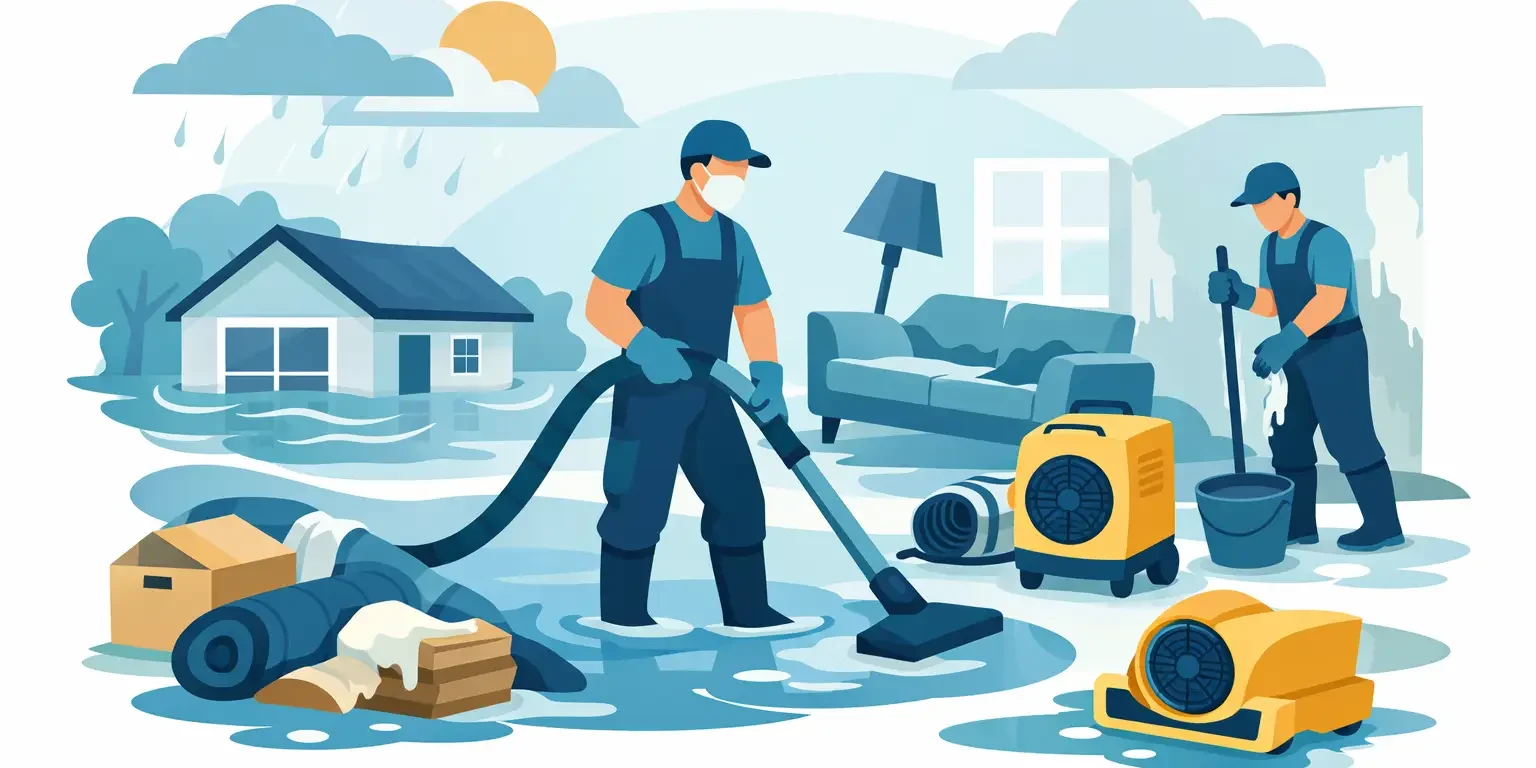
The first phase is bulk water removal. High-capacity extractors, pumps, and specialized equipment remove standing water from floors, carpet, and other accessible materials. At the same time, affected areas should be isolated when necessary to control humidity, contamination, and cross-impact to unaffected parts of the property.
Moisture mapping and inspection
Not all water damage is visible. Moisture meters, thermal imaging, and direct inspection help determine where water has traveled. This step matters because materials can appear dry at the surface while remaining wet underneath. If hidden moisture is left behind, damage continues after the visible cleanup is done.
Removal of unsalvageable materials
Some materials can be dried in place. Others cannot. It depends on the water category, the duration of exposure, and the type of material. Swollen particle board, contaminated carpet pad, wet insulation, sewage-affected drywall, and heavily impacted ceiling materials often need removal. Controlled demolition is part of mitigation, not a sign that the job got worse. It is how damaged materials are removed before they create larger problems.
Structural drying and dehumidification
After extraction and demolition, the building has to be dried correctly. Air movers increase evaporation. Commercial dehumidifiers remove moisture from the air so materials can continue drying. Temperature, airflow, and humidity need to be managed together. If the environment is not controlled, drying slows down and moisture lingers inside the structure.
Cleaning, sanitizing, and odor control
If the loss involves gray water, black water, or floodwater, cleaning standards become more strict. Surfaces may need antimicrobial treatment, sanitation, and deodorization. Porous contents may require disposal if contamination cannot be fully addressed. The right method depends on what kind of water entered the property and how far it spread.
Flood cleanup is different from a simple water loss
Not every water event is a flood, and that distinction matters. A broken pipe in a second-floor bathroom usually creates a different damage profile than storm surge, rising groundwater, or surface water entering a commercial building.
Floodwater is often contaminated with soil, chemicals, sewage, and debris. It can affect a much larger footprint, soak wall systems from the bottom up, and leave behind hazardous residues even after the water recedes. In those cases, flood and water damage cleanup is more invasive because materials cannot be evaluated on moisture alone. Contamination has to be considered in every decision.
This is why flood-damaged drywall, insulation, flooring, and low wall cavities often require removal rather than drying in place. The trade-off is obvious. More demolition means more rebuild work, but keeping contaminated materials can create a health and liability issue that costs more later.
Common mistakes that make water damage worse
The most common mistake is delay. Property owners wait to see if materials will dry on their own, especially after a weekend leak or a storm event that seems minor. Meanwhile, moisture spreads under flooring, behind trim, and inside walls.
Another mistake is relying on surface drying. A room can feel dry and still have elevated moisture in framing, subfloors, or insulation. That hidden moisture is where odor, warping, and mold can begin.
Improper demolition is another problem. Tearing out too little leaves damaged materials behind. Tearing out too much increases rebuild costs unnecessarily. The right scope depends on testing, inspection, and the water category involved.
There is also the issue of contamination. Shop vacs and household cleaners are not a substitute for proper sewage or flood remediation. If water came from outside the building envelope, a toilet backup, or any source with likely contaminants, safety protocols matter.
Residential and commercial cleanup are not exactly the same
The core science is the same, but the response strategy changes with the property type. In a home, the priority is usually protecting living areas, personal contents, and structural components while reducing displacement time. In a commercial property, downtime can be just as damaging as the water itself.
Offices, retail spaces, medical facilities, warehouses, and multi-unit properties often need phased mitigation to keep parts of the building operational. Access control, tenant communication, documentation, and after-hours work can become part of the cleanup plan. A contractor who understands emergency mitigation should be able to adapt the response to the building, not force the building into a generic process.
Insurance, documentation, and scope control
Good documentation helps everyone. It supports the insurance claim, establishes the extent of loss, and creates a record of what was removed, dried, cleaned, and monitored. Photos, moisture readings, equipment logs, and itemized notes are not paperwork for its own sake. They help prevent disputes about what happened and why certain steps were necessary.
It also helps to understand that insurance and mitigation are related, but not identical. Insurance determines coverage. Mitigation determines what has to happen now to prevent further damage. If emergency work is delayed while waiting for perfect clarity on the claim, the property can deteriorate in the meantime.
That is one reason specialized restoration firms matter. Companies focused on fire and flood losses understand how to stabilize the site first while maintaining the records needed for the next phase.
When to call for professional flood and water damage cleanup
If water has affected drywall, insulation, wood flooring, cabinetry, multiple rooms, or any area for more than a short period, it is time to bring in professionals. The same applies if the source is unknown, the water is contaminated, there is visible swelling or staining, or the property has a strong damp odor.
For landlords and property managers, speed is even more critical. Tenant impact, habitability concerns, and liability exposure all increase when water damage is not addressed correctly. For commercial owners and facility operators, delayed action can affect operations, inventory, equipment, and tenant retention.
A serious water event is not the time for guesswork. The right response is fast, measured, and based on what the structure is actually holding, not just what the surface looks like.
When water hits a property, the best next move is simple: treat it like a time-sensitive structural problem, because that is exactly what it is.