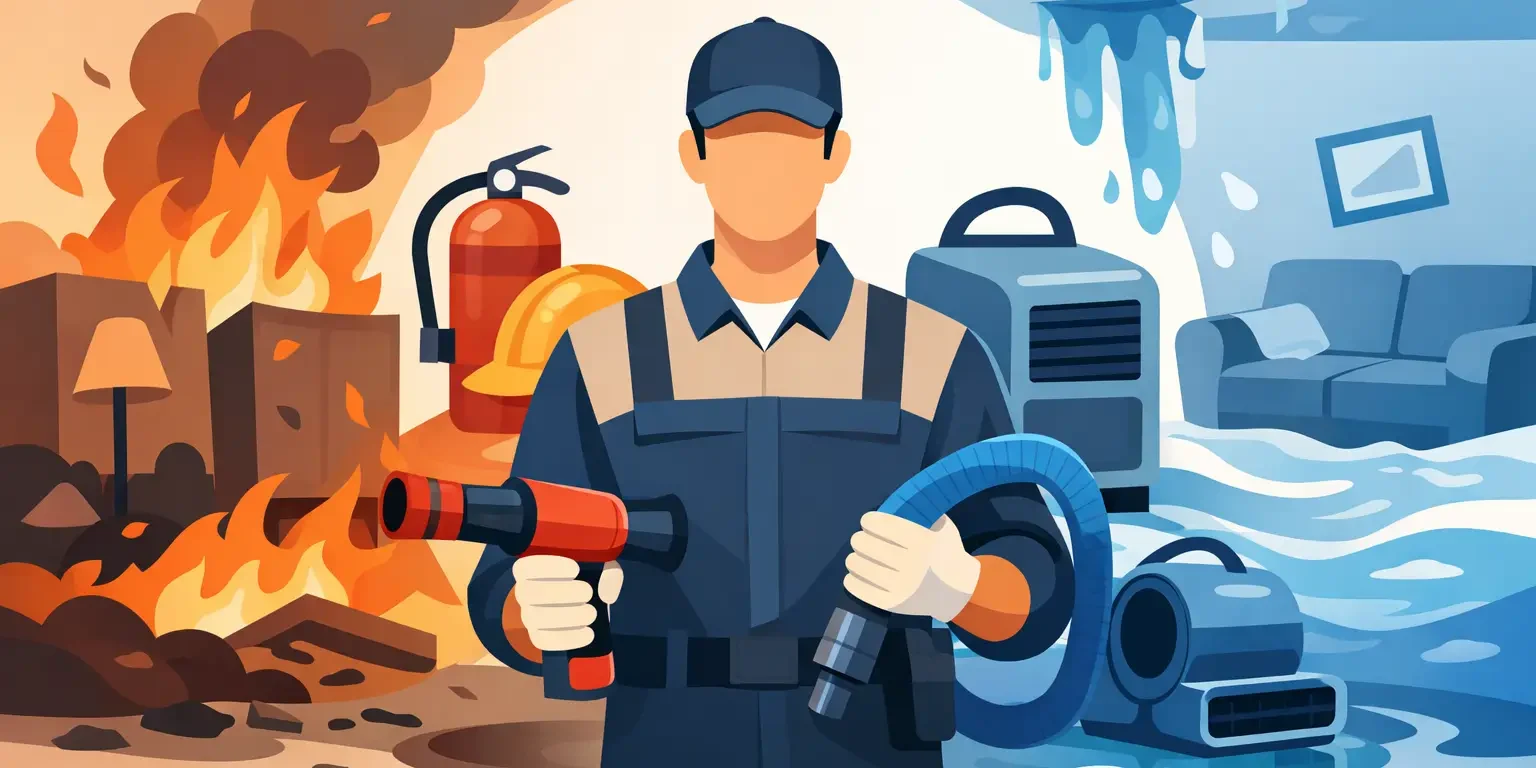
When a pipe bursts after a fire suppression effort or smoke damage spreads far beyond the burned room, most property owners ask the same question: what is a fire and water restoration technician, and what exactly do they do on site? The short answer is that this is the trained professional responsible for stabilizing a damaged property, limiting further loss, cleaning contaminated materials, drying affected areas, and helping move the structure from emergency damage toward safe, usable condition.
This is not the same job as general housekeeping, janitorial work, or standard construction repair. A fire and water restoration technician works in active loss conditions where timing, safety, and technical decisions directly affect repair cost, salvageability, and health risk. In many cases, the first 24 to 72 hours matter most.
What Is a Fire and Water Restoration Technician Responsible For?
A fire and water restoration technician handles the immediate and controlled response after a property has been damaged by fire, smoke, water, flooding, or the water used to put out a fire. Their job starts with assessment and mitigation, not cosmetic repair. Before walls are rebuilt or flooring is replaced, the property has to be made safer, drier, cleaner, and more stable.
That means identifying affected materials, checking for hidden moisture, removing unsalvageable debris, setting drying equipment, cleaning smoke residue, addressing odor sources, and documenting the damage. In some cases, the technician also helps isolate unaffected areas so contamination does not spread through the rest of the structure.
The role changes based on the type of loss. A fire-damaged property often includes soot, smoke particles, corrosion risk, weakened materials, and water damage from suppression. A flood or plumbing loss may involve category 2 or category 3 water, microbial risk, swollen building materials, and hidden moisture behind walls or under floors. The technician has to know the difference because the response is not one-size-fits-all.
The Real Work Happens Before Repairs Begin
A lot of owners assume restoration starts when new materials go in. In reality, the technical work starts earlier. The first phase is mitigation. That is where a skilled technician can save materials, shorten downtime, and reduce the overall scope of damage.
For water loss, that often means extracting standing water, removing saturated materials when needed, placing air movers and dehumidifiers, monitoring moisture levels, and adjusting the drying plan based on actual readings. Drying a structure is not just about blowing air around. Different materials release moisture at different rates, and trapped moisture can remain behind cabinets, under hardwood, or inside wall cavities.
For fire loss, the technician may board up openings, tarp damaged roofing, remove charred debris, clean smoke residue from surfaces, and use specialized methods to address odor. Smoke behaves differently depending on what burned and how it burned. A slow, smoldering fire creates a different cleaning problem than a fast-burning, high-heat event. Using the wrong method can set stains, spread residue, or damage salvageable contents.
What Skills Does a Fire and Water Restoration Technician Need?
A qualified technician needs a mix of technical knowledge, field judgment, and discipline under pressure. This is hands-on work in unstable conditions, but it also requires process control and accurate documentation.
Moisture mapping is a core skill. Technicians use meters, thermal imaging, and inspection methods to locate water migration that may not be visible. They also need to understand psychrometrics in practical terms – how temperature, humidity, and airflow affect structural drying.
On the fire side, technicians need to recognize soot types, know which cleaning methods fit which surfaces, and understand how smoke and acidic residues continue damaging materials if left untreated. They also need to know when contents can be restored and when they cannot.
Safety matters just as much. These jobs may involve electrical hazards, compromised structures, sharp debris, contaminated water, mold risk, or poor air quality. A strong technician follows containment procedures, uses personal protective equipment correctly, and does not cut corners to speed through a job.
Communication is another major part of the role. Property owners, tenants, insurance adjusters, and managers all want answers fast. A good technician explains what is happening, what needs to happen next, and what conditions may affect timeline or cost.
What a Fire and Water Restoration Technician Actually Does on Site
The daily work is practical and highly situational. On one loss, the technician may arrive for emergency extraction and set up drying equipment across multiple units in an apartment building. On another, they may be cleaning soot from structural surfaces after a kitchen fire and packing out salvageable contents.
Typical responsibilities can include inspecting the site, identifying safety concerns, documenting affected areas, extracting water, removing unsalvageable materials, setting containment, cleaning smoke and soot residue, deodorizing the property, placing and monitoring drying equipment, and recording moisture data. In some companies, technicians also assist with content cleaning, demolition, and coordination with reconstruction teams.
That last point matters. Restoration and reconstruction often overlap, but they are not identical. The technician’s first responsibility is to stop damage from getting worse and bring the property into a condition where repairs can begin correctly. If the mitigation work is sloppy, the rebuild phase becomes more expensive and more complicated.
Why Specialized Training Matters
If you are hiring after a loss, this is where the difference between a specialist and a generic contractor becomes clear. Fire and water damage are technical losses. Drywall that looks fine may be wet inside. Hardwood that feels dry may still hold moisture below the surface. Smoke odor that seems gone can return when residues were masked instead of removed.
A trained restoration technician follows industry procedures, uses moisture and contamination data, and understands the sequence of mitigation. That helps avoid common failures like trapping moisture behind new materials, missing secondary damage, or underestimating contamination.
It also helps with documentation. Insurance-related jobs often require clear records of conditions, actions taken, equipment used, and moisture progress. Strong documentation does not replace coverage decisions, but it supports a more organized claim process and reduces confusion about the work performed.
Is a Fire and Water Restoration Technician the Same as a Contractor?
Not exactly. There can be overlap, especially in smaller operations, but the core functions are different. A contractor typically focuses on repair, rebuilding, and replacement. A fire and water restoration technician focuses on mitigation, cleanup, drying, stabilization, and contamination control.
Some companies handle both sides under one roof. Others separate emergency restoration from reconstruction. Neither model is automatically better. What matters is whether the people on site have the right training for the phase of work they are performing.
If your property has active water intrusion, smoke residue, or emergency contamination issues, you need restoration expertise first. Repair decisions made before the property is fully assessed and stabilized can create larger problems later.
When Should You Call a Fire and Water Restoration Technician?
Immediately after a fire, flood, major leak, sewage backup, or water discharge from suppression systems. Waiting rarely improves the situation. Water continues to migrate. Humidity rises. Odors set in. Soot residues spread through HVAC systems and settle into porous materials. The longer damaged materials sit, the less likely they are to be saved.
There are cases where the loss looks minor and still is not. A small fire in one room can push smoke into adjoining spaces. A clean water line break can become a contamination issue if left untreated. A ceiling stain may point to far more moisture above the visible area.
That is why fast assessment matters. A skilled technician is not there just to clean what you can already see. They are there to determine the true extent of loss and respond before hidden damage drives up cost.
What Property Owners Should Look For
When evaluating a restoration provider, ask who will actually be on site and what their role is. The company name matters less than the technician’s training, response capability, equipment, documentation practices, and experience with your type of loss.
You want a team that can explain the scope clearly, show you how they are measuring progress, and distinguish between emergency mitigation and reconstruction. You also want realistic expectations. A trustworthy technician will not promise that every material can be saved or that every job follows the same timeline. Drying times, smoke penetration, contamination level, and material type all affect the outcome.
At Fire and Flood Experts, that specialist mindset is the standard. The goal is not just to show up fast. It is to make the right technical decisions while the loss is still controllable.
When your property has been hit by fire or water, the right technician brings more than equipment. They bring order to a chaotic situation, protect what can still be saved, and give the next phase of recovery a solid starting point.