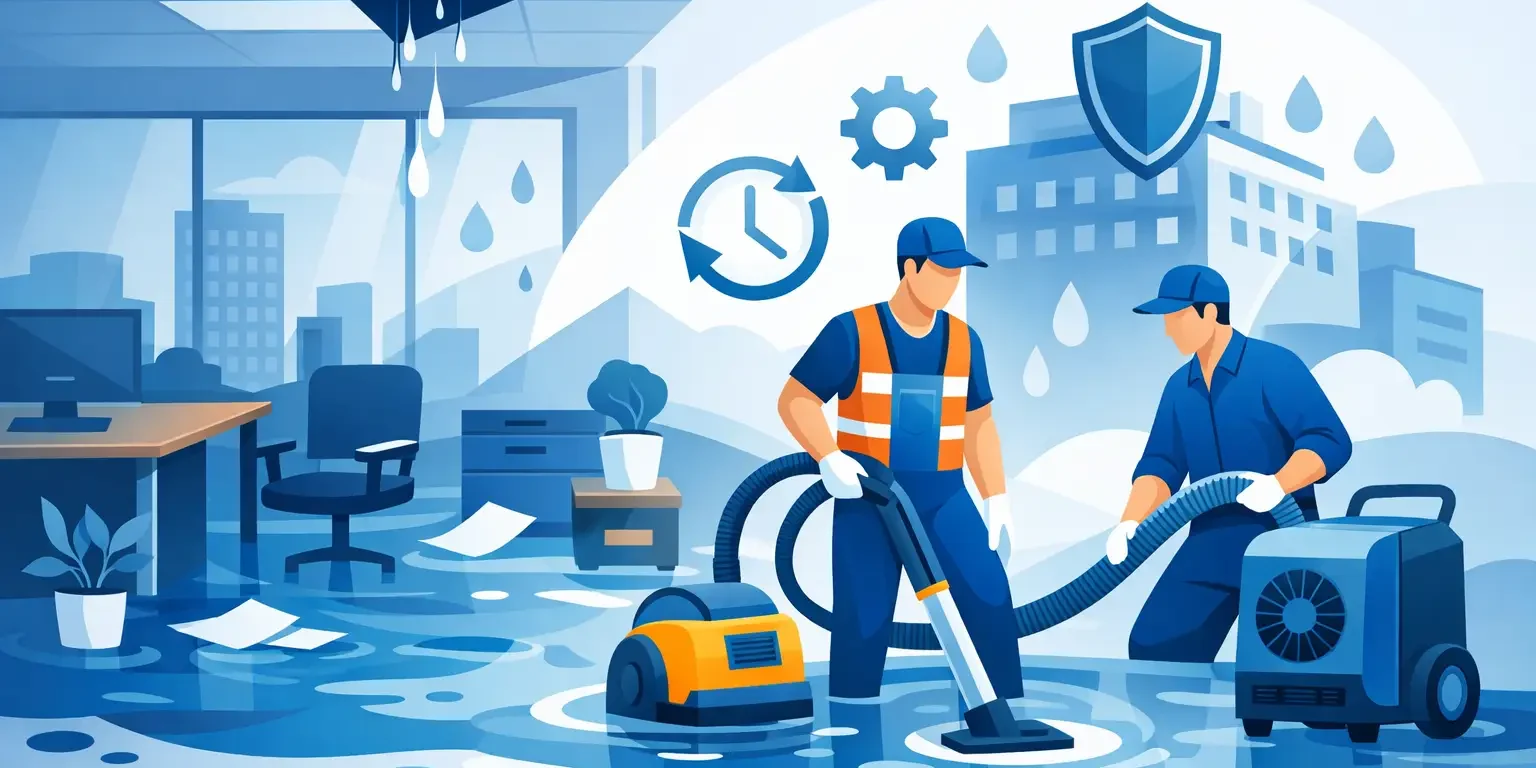
A broken supply line above a finished office can soak ceilings, insulation, inventory, wiring, and flooring long before water reaches the lobby. A commercial water damage guide is most useful in those first minutes, when the goal is not to make the building look normal. The goal is to stop the loss, protect people, document conditions, and begin controlled drying before moisture becomes a larger business interruption.
Commercial losses move fast because buildings are complex. Water can travel through wall cavities, elevator shafts, mechanical chases, tenant spaces, and multiple floor levels. A fast, organized response limits the scope of demolition, reduces downtime, and creates a clearer record for the insurance claim.
Commercial Water Damage Guide: What to Do First
The first priority is life safety. Keep employees, tenants, customers, and vendors out of affected areas until hazards are identified. Standing water near electrical equipment, sagging ceiling materials, damaged sprinkler systems, contaminated water, and slippery hard surfaces all require immediate control.
If it is safe to do so, stop the source. Shut off the local water valve, isolate the affected plumbing line, turn off equipment that is leaking, or contact the utility or building engineer. Do not enter areas with active electrical exposure or attempt to handle damaged electrical panels. Those conditions require qualified professionals.
Once the source is controlled, focus on four immediate actions:
- Restrict access with barriers, signs, or security staff so people do not enter unsafe areas.
- Move dry inventory, records, electronics, and portable furniture away from the wet zone when it can be done safely.
- Notify property ownership, facility leadership, affected tenants, and your insurance carrier according to your reporting procedures.
- Call a qualified water mitigation team that can respond with extraction equipment, moisture detection tools, commercial drying capacity, and trained technicians.
Avoid the urge to turn on household fans and hope for the best. In a large commercial structure, poorly directed airflow can spread humidity and contamination into unaffected areas. It can also delay a proper assessment of where water has migrated.
Identify the Water Source and Contamination Level
Not all water losses can be handled the same way. Restoration professionals classify water based on its source and potential contamination. Water from a clean supply line may begin as Category 1 water, but it can become more contaminated after moving through building materials or sitting for an extended period.
Category 2 water may contain significant contaminants, such as discharge from appliances or water that has passed through dirty building areas. Category 3 water includes sewage, floodwater, rising groundwater, and other highly contaminated sources. This category requires strict containment, personal protective equipment, specialized cleaning, and removal of materials that cannot be safely restored.
The source affects nearly every recovery decision. A clean-water leak caught early may allow for targeted extraction and drying with limited material removal. A sewage backup in a restaurant, medical office, daycare, or multi-tenant building has a far different scope. In those cases, reopening too early can create health concerns and liability exposure.
Time also changes the equation. Even clean water can support microbial growth when porous materials remain wet. Carpet padding, drywall, insulation, engineered wood, ceiling tiles, paper records, and upholstered furnishings may require removal depending on saturation, contamination, and how quickly drying begins.
Document Before Cleanup Changes the Scene
A commercial claim needs more than a final invoice. It needs a clear record of what happened, what was affected, what actions were taken, and why those actions were necessary.
Take wide photos and video of each affected room before moving contents whenever conditions allow. Capture the source of the loss, water lines on walls, damaged finishes, inventory, equipment, and visible deterioration. Then document serial numbers, asset tags, and the condition of valuable equipment or stock.
Keep a simple event log. Record when the loss was discovered, when the source was stopped, who was notified, when mitigation started, and which areas were restricted. If operations are interrupted, track canceled appointments, closed departments, tenant impacts, temporary relocation costs, and emergency purchases. These details may support business-interruption discussions, although policy terms and coverage limits will determine what applies.
Do not discard damaged property before the insurer and restoration team have had a reasonable opportunity to inspect it, unless it presents an immediate health or safety risk. When disposal is necessary, photograph the item and record why it could not be retained.
What Professional Commercial Drying Should Include
Commercial mitigation is not simply removing visible water. The work should begin with a site assessment that identifies the water source, affected materials, contamination level, safety hazards, and the likely path of migration.
Technicians should use moisture meters, thermal imaging, hygrometers, and other diagnostic tools to locate hidden moisture. Water beneath vinyl flooring, behind baseboards, above suspended ceilings, or inside wall assemblies may not be obvious from a visual walkthrough. Missing it can lead to odor, material failure, microbial growth, and a second round of repairs after the building reopens.
Extraction Comes Before Drying Equipment
Removing liquid water is typically the fastest way to reduce drying time. Commercial extractors, pumps, weighted tools for carpet, and specialty equipment can remove water from affected surfaces before air movers and dehumidifiers are placed.
The right method depends on the material. Some carpet can be restored if contamination is low and the response is quick. Saturated padding often cannot. Hardwood flooring may require controlled drying and monitoring rather than aggressive heat. Wet ceiling tiles and insulation frequently need removal because they lose integrity and hold moisture.
Drying Requires Measurement, Not Guesswork
A professional team establishes drying goals by comparing wet materials with known dry standards or unaffected areas of the building. Equipment placement is adjusted as readings change. Daily monitoring shows whether materials are drying as expected or whether concealed moisture, limited airflow, or an ongoing leak is slowing progress.
This matters because equipment should not be removed solely because surfaces feel dry. Materials can appear normal while moisture remains trapped below or behind them. Final documentation should show that affected structural materials reached an acceptable drying standard.
Protect Operations While the Building Recovers
For many businesses, the practical question is whether operations can continue. The answer depends on the affected area, water category, building systems involved, regulatory requirements, and the ability to isolate the work zone.
A warehouse may be able to shift inventory and continue limited shipping from dry areas. An office may relocate staff to another floor or allow remote work. A healthcare facility, food service operation, school, or childcare center may face stricter sanitation and occupancy requirements. Do not assume a partial reopening is safe simply because the water has been extracted.
Containment is often the difference between a manageable project and a building-wide disruption. Plastic barriers, negative air control when contamination is present, protected pathways, and scheduled work around operating hours can reduce exposure to dust, noise, and drying equipment. There are trade-offs: working overnight or in phases may preserve revenue, but it can increase labor costs and extend the coordination required.
Communicate early with tenants, employees, customers, and vendors. Give them clear instructions about closed areas, temporary entrances, service changes, and expected updates. Uncertainty creates frustration. Specific information helps people plan around the disruption.
Coordinate the Claim Without Losing Control of the Work
Insurance carriers may recommend preferred vendors, but the policyholder or property owner should still understand the mitigation scope. Ask for clear explanations of emergency services, demolition recommendations, drying equipment, monitoring, contents handling, and anticipated reconstruction needs.
Separate emergency mitigation from reconstruction when possible. Mitigation is the urgent work that stops further damage and dries or stabilizes the property. Reconstruction restores finishes, walls, flooring, ceilings, and other damaged components. Keeping those phases distinct can make approvals, budgeting, and scheduling easier to manage.
Review your policy for deductibles, reporting requirements, ordinance and law coverage, business-interruption provisions, and limits that may affect equipment, inventory, or tenant improvements. Coverage varies substantially. A restoration contractor can document technical conditions and completed work, but coverage decisions remain with the insurer.
Build a Better Response Plan After the Loss
Once the immediate emergency is under control, use the event to identify weak points. Inspect aging supply lines, roof penetrations, HVAC condensate drains, sprinkler systems, appliances, and areas with recurring plumbing issues. Confirm that shutoff valves are labeled and accessible.
Facility teams should know who has authority to approve emergency work after hours, where critical records are stored, and how to reach building engineers, plumbers, electricians, insurers, and restoration specialists. Water sensors in mechanical rooms, server rooms, and high-risk plumbing areas can provide an early warning that prevents a major loss.
A commercial water loss does not have to become a long-term operational crisis. Fast reporting, safe containment, accurate documentation, and measured drying give property decision-makers the best chance to protect the building and get people back to work. When water enters your facility, act early and insist on a recovery plan built on evidence, not assumptions.